
Politics
Venezuela Announces Release of a Significant Number of Political Prisoners


Significant Move in Venezuela: Political Prisoner Releases
Introduction
In a surprising development for many observers of Venezuelan politics, the head of the country’s legislature, Jorge Rodríguez, announced that Venezuela is set to release an “important number” of political prisoners, including some foreign nationals. This decision could signal a new chapter in the government’s approach to civil liberties and international relations.
Unilateral Gesture for Peace
Rodríguez characterized this measure as a “unilateral gesture to maintain peace” and emphasized the government’s commitment to “consolidate peace in the Republic and promote peaceful coexistence.” His statement hints at a potential shift in the current political climate, suggesting that the new administration might be more open to dialogue and reform than previously anticipated.
The Process of Release
Rodríguez highlighted that the release process has already commenced, stating, “The process of release is occurring from this very moment.” However, details regarding the identities of those being released or the timeline for these releases are still unclear. The ambiguity surrounding these specifics raises questions about the government’s intentions and the broader implications for human rights in Venezuela.
Political Prisoners in Venezuela
According to various human rights organizations, Venezuela is currently holding between 800 and 900 political prisoners. Most of these individuals have been detained under the regime of Nicolás Maduro, known for his authoritarian governance. The context of these detentions has led to international condemnation and calls for accountability.
International Pressure and Past Releases
This latest announcement comes in the wake of increasing pressure from opposition groups within Venezuela and the broader international community, particularly the United States. Historically, negotiations have led to the release of detained Americans. For instance, earlier this year, six Americans were freed after U.S. envoy Richard Grenell engaged with Maduro’s administration directly. Such diplomatic maneuvers illustrate the complex interplay of local and international politics surrounding this issue.
Call for Action from Families and Advocates
Families of those imprisoned have actively campaigned for the release of political prisoners. These families, along with various human rights organizations, have exerted substantial pressure on both the Venezuelan government and the U.S. administration to take action. Their collective voices have been pivotal in driving this request to the forefront of the political agenda.
Barriers Ahead
While the announcement may be viewed as a positive step, many remain skeptical. Critics argue that without clear communication and transparency regarding which prisoners will be freed, the gesture may simply be a political maneuver meant to placate dissenters and improve Venezuela’s global image. The State Department has refrained from commenting on the announcement, further complicating perceptions of this development.
A Glimpse into the Future
Overall, this move by the Venezuelan government could represent an important step toward greater freedom of expression and cooperation with international allies. However, the journey ahead is fraught with challenges. The world will be watching to see whether this initial gesture leads to more meaningful reforms or remains an isolated instance amid ongoing repression.
The developments in Venezuela highlight the fragile nature of political freedom in the region and underscore the urgent need for continued advocacy and oversight.
This structured and engaging article aims to inform readers about the complexities surrounding the recent political prisoner releases in Venezuela, emphasizing the importance of context, the evolving political landscape, and the voices of those impacted.
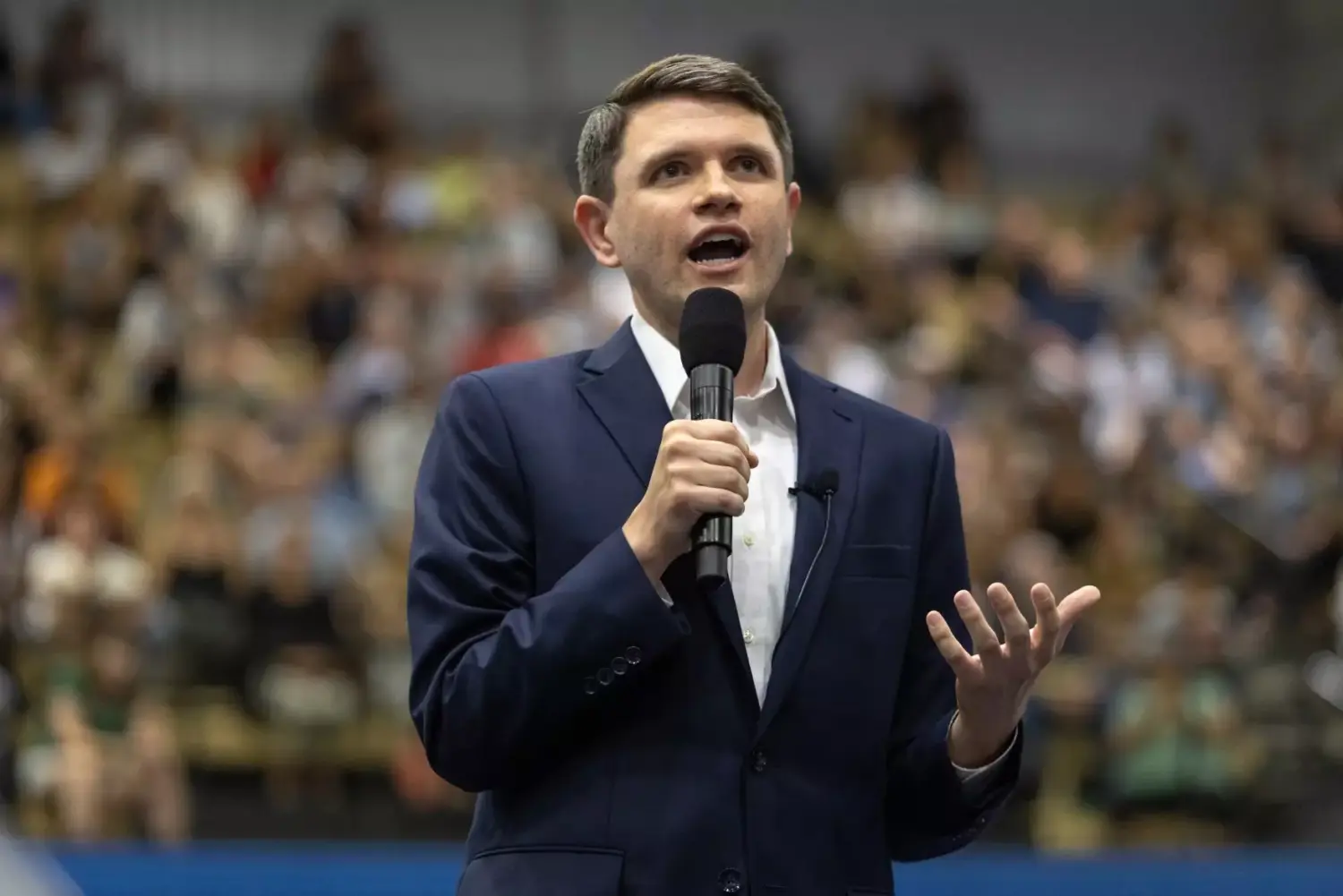
James Talarico: Faith and Politics in Texas
In the vibrant, complex landscape of Texas politics, State Rep. James Talarico’s candidacy for the U.S. Senate represents a refreshing shift. While it has become commonplace for Republicans to engage with the religious vote, Talarico’s approach brings a progressive Christian message to the forefront—a strategy that is both novel and deeply rooted in the state’s history.
A New Perspective on Faith
Talarico’s campaign has tackled the intertwining of faith and politics in a way that resonates with many Texans who may feel disenfranchised by the far-right narrative. Joseph Locke, an esteemed historian and the author of “One State Under God: A History of Religion in Texas,” notes that Talarico is effectively holding a mirror to the far-Christian-right, prompting them to reconsider the authenticity of their beliefs. This engagement challenges the prevailing rhetoric, catalyzing discussions around what Christianity should represent in the political arena.
Historical Context of Religious Politics
Texas has a long history where politics and religion have coexisted, often influencing one another. Locke emphasizes that Talarico’s approach allows for a re-examination of the state’s religious landscape, pinning down whether current political leaders are genuinely rooted in Christian traditions.
This reflective candidacy prompts a broader discussion about the evolution of religious politics in Texas. Historically, figures such as Lyndon B. Johnson advocated for economic justice and compassion rooted in Christian values. It was in the late 20th century, with the rise of the Christian right, that the political discourse increasingly shifted towards cultural wars—discussions focused heavily on issues of sexuality and morality rather than community support and economic justice.
Progressive Policies Echoing Spiritual Teachings
At the heart of Talarico’s campaign lies a commitment to progressive policies that align closely with the compassionate teachings of Jesus. By advocating for healthcare for all and equitable tax policies targeting billionaires, he embodies a Christian ethos that prioritizes the welfare of the marginalized. This alignment reintroduces a conversation reminiscent of earlier civil rights movements that leveraged Christian values for social change.
Locke points out that Talarico’s message about love and redemption recalls the rich tapestry of religious activism in Texas’s past, where faith served as a vessel for collective action, particularly during times of social upheaval.
Drawing from Historical Traditions
Historically, the Black church has been a cornerstone of political activism, particularly in the civil rights movement. Talarico’s advocacy resonates with that legacy, as religious institutions have often been crucial in mobilizing communities for social justice. Throughout Texas, churches—both Black and Hispanic—have played pivotal roles in these movements, linking spiritual beliefs with essential civil rights campaigns.
Locke notes that Talarico’s Presbyterian background and his church’s commitment to social issues echo this tradition, suggesting that his platform has potential reach across various demographics, including communities that have been traditionally underrepresented in the political process.
Engaging with the Hispanic Community
One of Talarico’s notable successes has been his appeal to Hispanic voters, particularly in southern Texas. Catholic churches along the border have been instrumental in providing support to migrants, often embodying compassion amidst a backdrop of harsh immigration policies. This alignment of Talarico’s message with the humanitarian efforts of these churches positions him well among voters who may feel the politics of fear resonate poorly with their values.
Locke emphasizes that the deeply rooted Catholic tradition of social justice in these communities aligns with Talarico’s campaigns, suggesting that his approach could significantly influence the way voters engage with politics in the region.
A Possible Shift in Texas Politics
As Talarico continues to garner attention for his unique message, observers are keen to see how his approach will play out in the upcoming general elections. Advocating faith in a manner that rejects Christian nationalism could very well signal a turning point in Texas politics. It offers a template not just for state Democrats but for allies across the country.
Locke argues that Talarico exemplifies a new breed of political engagement that could propagate similar strategies in other states, particularly in the context of red-state Democrats. His success may inspire a broader reevaluation of how religious traditions can be leveraged authentically to resonate with the electorate, transcending conventional party lines.
James Talarico’s campaign emerges as a pivotal moment in Texas politics, merging faith with progressive action in a landscape desperately in need of new narratives. By tapping into the historical depths of religious activism and addressing contemporary issues with compassion, Talarico invites Texas voters to rethink the relationship between their faith and political choices.

On a somber Wednesday, family, friends, and elected officials from across generations gathered to honor the legacy of Ronnie Eldridge, a remarkable figure in New York City politics who passed away at the age of 95. Her career, extending over six decades, was marked by groundbreaking contributions, profound wisdom, and an unyielding commitment to public service.
Ronnie Eldridge was more than just a political leader; she was an icon of the Reform Democrat movement in New York City, primarily based on the Upper West Side. Her influence spanned various platforms, serving as a trusted adviser to notable figures including Senator Robert F. Kennedy, Mayor John Lindsay, and Congresswoman Bella Abzug. In addition, Eldridge played a pivotal role in Governor Mario Cuomo’s administration and went on to serve three terms as a City Council member, solidifying her status as a key player in the political landscape.
The memorial service saw numerous tributes that celebrated Eldridge’s multifaceted legacy. Former Congresswoman Carolyn Maloney referred to her as “an icon in New York City political history.” Her impact on local governance, women’s rights, and social issues echoed through the words of those who knew her and were influenced by her work.
What You Need To Know
- Ronnie Eldridge, an adviser to Robert F. Kennedy and Mayor John Lindsay who later served three terms on the City Council, died last week at 95.
- Family, friends, and elected officials remembered her as an icon of New York politics at a memorial service Wednesday.
- Eldridge, who was married for almost 35 years to columnist Jimmy Breslin, spent her final decades hosting a talk show on CUNY TV.
Her contributions extended beyond traditional political roles; she was a pioneer in the women’s movement, standing shoulder to shoulder with peers like Bella Abzug. Congressman Jerrold Nadler highlighted Eldridge’s position as a leader of second-wave feminism, emphasizing her consistent advocacy for women’s perspectives in public policy.
In a 1970 profile in New York Magazine written by feminist icon Gloria Steinem, there was speculation about her potential candidacy for mayor—a trailblazer who never shied away from tackling issues that mattered. Though the mayoral run did not materialize, her activism sparked vital conversations, particularly regarding women’s rights. “There is a woman’s perspective to public policy,” Eldridge declared in a 2006 television interview, emphasizing how women bring unique sensibilities to governance.
Manhattan Borough President Brad Hoylman-Sigal certainly resonated with Eldridge’s wide-ranging impact, describing her as an “iconic figure in so many movements,” including anti-war efforts, women’s rights, and advocacy for the vulnerable members of society. This comprehensive approach to activism and public service set her apart and earned her a special place in the hearts of many New Yorkers.
Despite her significant contributions, former Congresswoman Elizabeth Holtzman remarked on Eldridge’s modesty, suggesting that younger generations might not be familiar with her name. However, she noted that anyone who was involved in politics during the 60s, 70s, and 80s certainly recognized Eldridge as a gold standard in political service and dedication.
For nearly 35 years, Ronnie Eldridge was married to the legendary columnist Jimmy Breslin, sharing a life intertwined with journalism and a commitment to truth. In her later years, she remained a vital part of public discourse, hosting a talk show on CUNY TV, where her thoughtful insights continued to resonate with audiences.
As she reached her 75th birthday in 2006, her wishes were reflective of her lifelong commitment to the future. Eldridge expressed hope that her grandchildren and step-grandchildren would “live in a world that’s filled with peace and justice and happiness and health.” These words encapsulate the essence of her life’s work and her unwavering belief in a better tomorrow.

The National People’s Congress Signals Firm Stance Against Corruption as China’s 15th Five-Year Plan is Approved
Setting the Economic Tone
As China’s annual legislative meeting, the National People’s Congress (NPC), concludes, it has officially set the nation’s economic growth target at the lowest level in almost three decades—ranging from 4.5 to 5 percent. This target, laid out in the recently approved five-year plan for 2026 to 2030, underscores a cautious approach as the country grapples with numerous economic challenges.
The Five-Year Plan: A Roadmap for Growth
The newly approved 15th iteration of the five-year plan offers a comprehensive economic roadmap that addresses key issues, including inflation, fiscal deficits, and urban unemployment. Aiming to elevate China to a “moderately developed” status by 2035, the plan aspires to raise GDP per capita to an ambitious $20,000, compared to $13,303 in 2024.
Tackling Economic Challenges Head-On
Amidst this ambitious growth agenda, Chinese officials are confronting substantial economic hurdles: a declining property sector, declining consumer confidence, and a persistent deflationary period have all raised alarms. This backdrop adds urgency to the strategic focus on enhancing industrial self-reliance and state backing for emerging sectors such as artificial intelligence, aerospace, and quantum technology.
The Digital Yuan: A Modern Currency Initiative
One intriguing aspect of the new five-year plan is the push for the digital yuan, or e-CNY. This digital currency initiative, spearheaded by the People’s Bank of China, aims not only to facilitate domestic transactions but also to enhance cross-border payment systems. As the world witnesses a shift towards digital transactions, China is positioning itself at the forefront of this economic evolution.
A Renewed Commitment to Anti-Corruption
One of the most notable announcements during the NPC was the impending legislation aimed at combatting cross-border corruption, reinforcing President Xi Jinping’s longstanding anti-corruption campaign. This initiative seeks to fortify governance not only within the spheres of the state and military but also extends to the private sector, signaling a holistic approach towards fostering integrity in all areas of Chinese governance.
Rising Corruption Cases
The urgency of these anti-corruption measures is underscored by rising statistics. The Supreme People’s Court reported a staggering 22.4 percent increase in corruption cases over the past year, involving approximately 36,000 individuals. This spike indicates that, despite ongoing efforts, the fight against corruption remains a pressing issue for the Chinese government.
Substantial Financial Recoveries
As a testament to the effectiveness of the current anti-corruption drive, state authorities successfully recovered a substantial 18.14 billion yuan (around $2.63 billion) in the previous year. These recoveries not only represent financial restitution but also serve as a deterrent against future malpractices—reinforcing public confidence in the government’s commitment against corruption.
Military Focus on Integrity
The military also features prominently in the corruption conversation, identifying anti-corruption as a core objective in its annual work report. This initiative aims to ensure political allegiance to both President Xi and the Chinese Communist Party, emphasizing that integrity in leadership is critical for national stability.
The “Two Sessions”: A Platform for Policy Discussion
The NPC, which occurs alongside the Chinese People’s Political Consultative Conference, brings together thousands of delegates to deliberate on mid- and short-term policies. Known as the “Two Sessions,” this period is essential for shaping the legislative and political landscape of China, allowing for public discourse and strategic planning on key issues facing the nation.
Future Directions
Looking ahead, the NPC’s focus on combining anti-corruption strategies with comprehensive economic growth plans signifies a harmonious approach to national governance. By tackling corruption while striving for ambitious economic goals, China aims to create a stable and prosperous future for its citizens.

Celebrity Pets: Famous Animals in the Spotlight

Belly-Laugh Worthy Rottweiler Antics: The Ultimate Funny Dog Compilation. #youtube #funnydog #dog

The Message Fueling James Talarico’s Democratic Victory – Houston Public Media

“Diamond In The Fluff” Winners Announcement – by Celebrity Judge, Jonathan David
![🦆 Cute and Funny Ducks! 🦆 Duck Videos to Make You Smile 🦆 [Funny Pets]](https://i0.wp.com/i.ytimg.com/vi/seJmEmq2sNQ/maxresdefault.jpg?resize=80%2C80&ssl=1 "🦆 Cute and Funny Ducks! 🦆 Duck Videos to Make You Smile 🦆 [Funny Pets]")
🦆 Cute and Funny Ducks! 🦆 Duck Videos to Make You Smile 🦆 [Funny Pets]

Ronnie Eldridge: A Legendary Figure in New York Politics

2026 World Baseball Classic: Quarterfinal Matchups in MLB

RTL Group Places Its Bets on Streaming Transition

Explore Various Career Opportunities | Hartford HealthCare

Potential Hate Crime, Series of Car Thefts, and Alysa Liu’s Debut at Paris Fashion Week – NBC Bay Area

Who Is Really Voting in These Polls? The Shocking Truth Behind America’s Approval Numbers

Tyler Jaggers: Coast Guard Rescue Swimmer Passes Away Days After Mission Incident; Fiancée Honors His Memory

Blueprint for a “Tax-Free America” That Actually Works

Police Issue Warrant for Bar Patron Alleged to Have Assaulted Multiple Individuals

Winter Storm Provides Much-Needed Surge for Tug Hill Snowmobile Industry

Four Forecasts for 2026

It Took 35 Years for T. rex to Reach Full Maturity

Major Indices Experience Weekly Declines as Treasury Yields Reach Four-Month High

EXCLUSIVE: Will Smith’s Former Best Friend Bilaal Breaks Silence in Explosive Tasha K Interview — Lawsuit, Scientology Allegations, and Claims of an Attempt on His Life

2026 NFL Coaching Update: John Harbaugh Nearing Deal with Giants; Mike Tomlin Not Expected to Coach Next Season
Celebrity Pets: Famous Animals in the Spotlight
Belly-Laugh Worthy Rottweiler Antics: The Ultimate Funny Dog Compilation. #youtube #funnydog #dog
“Diamond In The Fluff” Winners Announcement – by Celebrity Judge, Jonathan David
🦆 Cute and Funny Ducks! 🦆 Duck Videos to Make You Smile 🦆 [Funny Pets]

funniest celebrity audience reactions

Funniest Cats And Dogs Videos 😁 – Best Funny Animal Videos 2024 🥰#7
![Buenos Aires, Argentina via Celebrity Infinity Holiday Cruise [2017]](https://i0.wp.com/i.ytimg.com/vi/jxVdOMONzVM/hqdefault.jpg?resize=80%2C80&ssl=1 "Buenos Aires, Argentina via Celebrity Infinity Holiday Cruise [2017]")
Buenos Aires, Argentina via Celebrity Infinity Holiday Cruise [2017]

2021 Funny videos of little bunnies 🐇 cute bunnies

MERU Celebrity trip enjoyed ever lasting

Dressage riding lesson be like.. | 😂 Funny Horse Videos
-
 Entertaiment6 days ago
Tyler Jaggers: Coast Guard Rescue Swimmer Passes Away Days After Mission Incident; Fiancée Honors His Memory
-

 Comedy1 week ago
feeding carrot beans and radish to the hungry monkey
-

 World News5 days ago
Oil and Gas Prices Surge Amid Escalating Conflict in Iran
-

 Business6 days ago
Netflix Withdraws from Meghan Markle’s $64 Candle Venture
-

 Crime & Justice5 days ago
Over 30 Injured in Nightclub Bombing in Northern Peru | Crime News
-

 US News2 days ago
Trump Assures Republicans: Iran Conflict Could Conclude ‘Fairly Soon’ | Donald Trump News
-

 Science5 days ago
Domino Unveils the Quickest and Safest Way to Scale Enterprise-Agent AI Systems
-

 Crime & Justice6 days ago
Police Report: March 6, 2026 | Latest Updates