
Politics
Honduran Conservative Lawmaker Wounded by Explosion | Government News

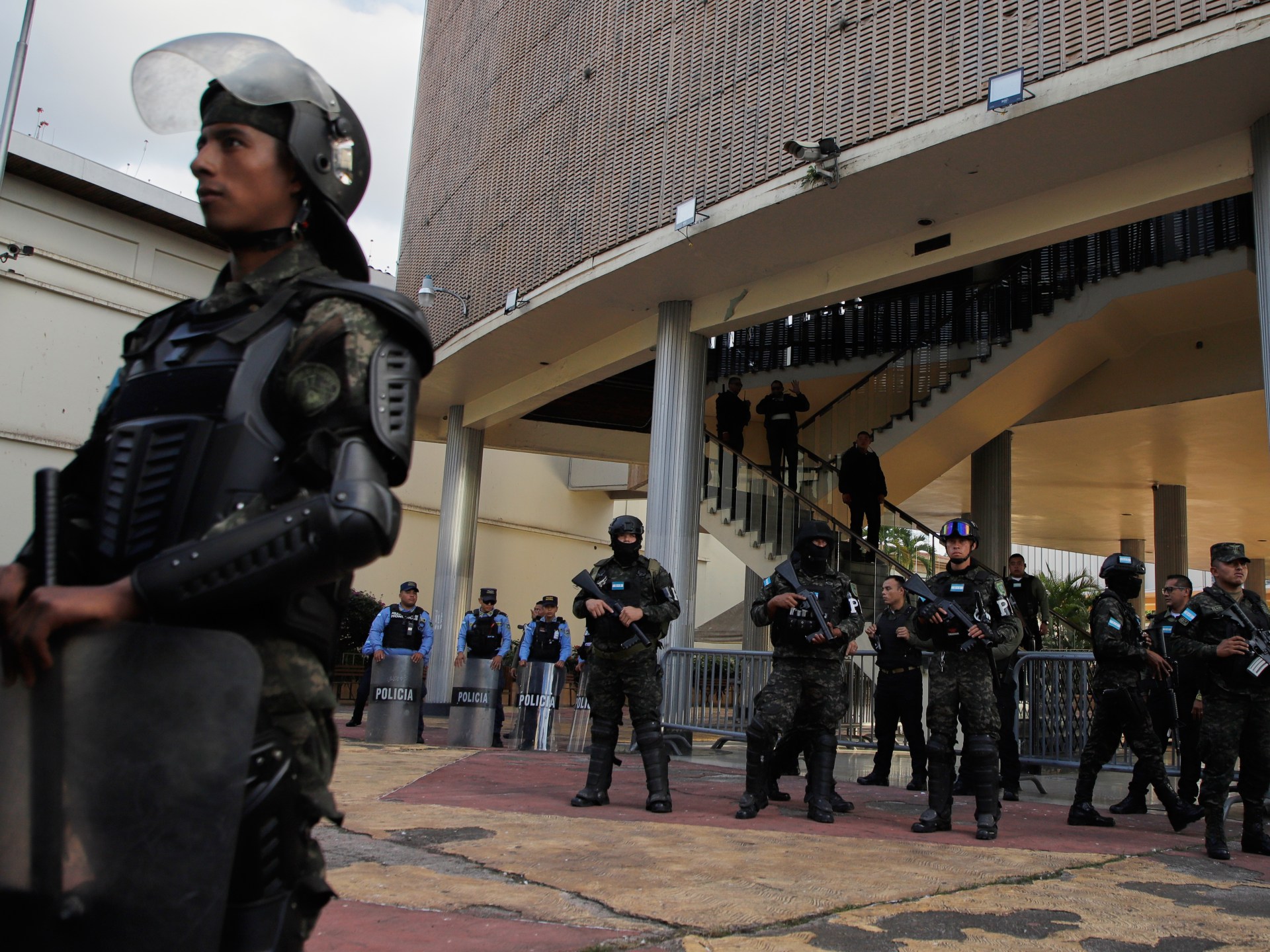
Political Turmoil in Honduras: An Attack in the Legislature
In a shocking incident that highlights the ongoing political tensions in Honduras, a lawmaker from the conservative National Party was injured when an unidentified assailant threw what appeared to be an explosive device into the outdoor hallway of the legislature. This incident occurred during a news briefing attended by party members, prompting immediate condemnation from the National Party.
National Party’s Response
The National Party of Honduras swiftly condemned the act of violence. In a statement released on social media, the party emphasized its commitment to protecting democratic institutions and the lives of its members. They remarked, “The National Party of Honduras condemns all acts of political violence that threaten the life, integrity, and democratic institutions of the country.” This powerful message reflects the party’s grave concerns about political violence undermining their authority.
Context of Tension
The attack underscores an increasingly fraught political climate in Honduras, particularly as the nation approaches the November 30 presidential race. The election has been marred by controversies, culminating in a prolonged vote-counting period filled with disputes regarding its integrity. The National Electoral Council ultimately declared Nasry Asfura, the National Party candidate, as the victor after a contentious and narrow race.
The Incident Unfolds
On the day of the attack, members of Congress were gathered to discuss a potential recount of the votes, a proposal from the outgoing left-wing governing party, Libertad y Refundacion (LIBRE). While the National Electoral Council confirmed Asfura’s victory, the LIBRE party contested the results, citing alleged electoral irregularities. The atmosphere was tense as lawmakers debated these controversial issues.
Injury to Lawmaker Gladis Aurora Lopez
The explosion occurred as Gladis Aurora Lopez, a conservative deputy representing La Paz, approached a row of journalists. Video footage circulating on social media captured the moment a smoking object struck her, resulting in a fall to the ground amid chaos. Thankfully, Lopez’s injuries were reported as non-life-threatening, but the event left a mark on the political landscape.
Images shared online showed Lopez with visible injuries, prompting outrage among her colleagues. Fellow party member Antonio Cesar Rivera expressed his solidarity and condemnation of the attack, calling it a “cowardly” act against democracy.
Finger-Pointing Between Parties
Accusations quickly surfaced from National Party members, who blamed the LIBRE party for the violence. Leaders like Tommy Zambrano did not hold back in their criticism, claiming that the act symbolized the dangers posed by the LIBRE party. They directly targeted prominent LIBRE figures such as Congress President Luis Redondo and former president Manuel “Mel” Zelaya, alleging their involvement in fostering a climate of hostility.
Escalating Rhetoric
The general election campaign had already been characterized by heated exchanges and allegations of electoral interference. Accusations from both sides flew high, with LIBRE members suggesting conspiracies involving military intervention. As polls drew near, even international figures like former U.S. President Donald Trump weighed in, expressing support for Asfura, further complicating national sentiments.
Reflections on the Electoral Process
This attack and the preceding electoral battle reveal deep fractures within Honduran politics. The slow and chaotic nature of vote counting has led to accusations of fraud, adding to the already charged atmosphere. Asfura’s victory, achieved with a narrow margin over his opponents, signaled a return to National Party rule after a period of left-leaning governance, heightening concerns about potential instability.
Looking Ahead
As Honduras moves forward, the assault on Lopez serves as a stark reminder of the risks faced by political figures in the quest for power. The wounds from this incident may run deep, impacting future political discourse and public sentiment in a country grappling with its democratic identity.

Understanding the Importance of Address Fields in Online Forms
In today’s digital age, effective communication and transactions often require customers to fill out online forms. One critical component of these forms is the address information, which typically comprises fields for state, zip code, and country. This article delves into why these fields are essential, how they function, and best practices for implementing them.
The Role of State Selection
Selecting a state is crucial for several reasons. First and foremost, states often have different tax rates, regulations, and shipping policies. For businesses, knowing a customer’s state helps in calculating sales tax accurately and determining shipping costs. In the sample code, you can see a dropdown menu that lists all U.S. states, ensuring users can easily select the appropriate one.
Additionally, states play a role in personalizing customer interactions. Different regions may have unique cultural and marketing considerations that can enhance user experience. By collecting state data, businesses can tailor their offerings to suit local preferences.
Zip Code as a Key Identifier
The zip code is more than just a postal requirement; it’s a vital piece of information that serves various purposes. Zip codes help businesses identify precise delivery locations and understand demographic variables associated with particular regions. This information can help tailor advertising strategies, logistics, and market analysis.
Interestingly, zip codes can also reveal regional trends. For example, a zip code from an affluent area may indicate different consumer behavior compared to one from a rural region. By implementing a field for zip codes, companies can gain insights that inform product availability and marketing campaigns.
Selecting the Country
With an increasingly globalized world, a country’s selection field is becoming more essential than ever. This allows businesses to:
-
Understand Market Reach: Knowing where customers are located helps businesses assess their market reach and identify potential new markets.
-
Adjust Shipping Logistics: Different countries come with varying shipping requirements, costs, and regulations. Accurate country selection mitigates the risk of errors during delivery.
-
Comply with Regulations: International trade entails navigating various legal requirements, such as customs fees or taxes. A proper country field ensures that businesses can stay compliant.
The inclusion of countries such as Canada, Mexico, and various global nations indicates an awareness of the expanding market and the need for comprehensive data collection.
Enhancements to User Experience
User experience (UX) is impacted by how these address fields are designed and implemented. A well-structured form, as shown in the sample, promotes ease of use and can lead to higher completion rates. Implementing features like auto-fill based on the zip code can significantly speed up the process for users, reducing form abandonment.
Moreover, employing validation checks can improve data accuracy. For instance, ensuring that the zip code corresponds with the chosen state can prevent errors before they occur.
The Importance of Accessibility
Additionally, accessibility must not be overlooked when designing address fields. Making sure that all labels are clear and easy to read enhances usability across the board, particularly for individuals with disabilities. Using ARIA labels or additional descriptive text can guide users and ensure that everyone has a seamless experience.
The Future of Address Input Fields
As technology advances, address input fields may become more innovative. Concepts like geolocation services could automatically fill in state and country fields based on a user’s device location. This not only improves efficiency but also enhances user satisfaction by minimizing the amount of manual information required.
Such developments could also see the integration of artificial intelligence to predict user needs, recommend services, and adjust options based on previous interactions or preferences.
The evolution of these fields is directly tied to the broader landscape of digital commerce and user interactions. Understanding their significance will enable businesses to create smarter, more responsive systems that cater to customer needs expertly and efficiently.
Politics
Ex-Rapper’s New Political Party Clinches Victory in Nepal’s First Post-Revolt Election :: WRAL.com

Rastriya Swatantra Party: A New Dawn in Nepalese Politics
In a surprising turn of events in Nepal’s political landscape, the Rastriya Swatantra Party (RSP), a relatively new political force led by ex-rapper Balendra Shah, has captured the spotlight by sweeping the recent parliamentary poll. The results were released on Thursday by the electoral commission, highlighting a significant moment in the country’s electoral history.
A Revolutionary Choice
The election marks the first since the youth-led revolt last year that reshaped the political arena. The RSP emerged victorious, signaling a shift towards a fresher political narrative in a country long dominated by established parties. Shah, the driving force behind the RSP, transitioned from the music stage to the political arena, embodying a new generation of leaders eager to address deep-seated issues like corruption and governance failures.
Impressive Electoral Performance
The RSP’s performance was nothing short of remarkable. Out of 275 seats in the House of Representatives, 125 were won directly by the party, alongside an additional 57 seats allocated through a proportional representation system. This totals a staggering 182 seats, positioning the RSP well ahead of its closest rival, the Nepali Congress party, which managed to secure only 38 seats.
In Nepal’s electoral system, voters directly elect 165 members to the House of Representatives. The remaining 110 seats utilize a proportional representation method, ensuring that parties receive seats corresponding to their share of the vote. This electoral framework not only underscores the significance of the RSP’s win but also amplifies the voices of diverse groups within the electorate.
The Path to Government Formation
As the electoral commission initiates the process of seat allocation, the RSP will select members to fill positions obtained through proportional representation. This process involves collaboration with the president to summon the newly elected parliament, which will subsequently undertake the critical task of electing a new prime minister.
Given that the RSP commands nearly two-thirds of the seats in the legislature, Shah is poised to assume the position of prime minister. However, the official formation of the government may take several days, creating a period of anticipation among the public and political observers alike.
From Music to Mayorship
Balendra Shah, a familiar face to many Nepalese, previously gained recognition as the mayor of Kathmandu after winning the 2022 mayoral race. His popularity surged during the youth-led protest of 2025, which was pivotal in ousting former Prime Minister Khadga Prasad Oli. Shah’s rise to political prominence is representative of a broader trend in Nepal, where young leaders are challenging established norms and advocating for systemic change.
Challenging the Status Quo
The RSP’s ascent is significant, as it poses a formidable challenge to the historical dominance of the Nepali Congress and the Communist Party of Nepal (Unified Marxist–Leninist). The 2023 parliamentary elections are a culmination of frustrations that erupted during a tumultuous period marked by widespread protests against corruption and ineffective governance.
The protests were ignited by a controversial social media ban, eventually evolving into a full-scale popular revolt. The tragic loss of life and injuries sustained during clashes between protesters and police underscored the urgent need for political reform and responsive governance.
A New Era for Nepal?
As the RSP prepares to take the reins of power, the implications of this shift could reshape Nepal’s governance in unprecedented ways. The youth, who played such a crucial role in the recent electoral outcome, are now looking for accountability and integrity from their leaders. Balendra Shah and his party face the dual challenge of fulfilling the promises made during their rise while also navigating a political landscape marked by legacy parties and entrenched interests.
In light of these developments, the unfolding political narrative in Nepal holds the potential for exciting changes in policy and governance, echoing the voices of a new generation eager to carve out a brighter future for their country. The nation stands at a pivotal crossroads, where hope and unease coexist as citizens eagerly await the unfolding of a new political chapter.

James Talarico: Faith and Politics in Texas
In the vibrant, complex landscape of Texas politics, State Rep. James Talarico’s candidacy for the U.S. Senate represents a refreshing shift. While it has become commonplace for Republicans to engage with the religious vote, Talarico’s approach brings a progressive Christian message to the forefront—a strategy that is both novel and deeply rooted in the state’s history.
A New Perspective on Faith
Talarico’s campaign has tackled the intertwining of faith and politics in a way that resonates with many Texans who may feel disenfranchised by the far-right narrative. Joseph Locke, an esteemed historian and the author of “One State Under God: A History of Religion in Texas,” notes that Talarico is effectively holding a mirror to the far-Christian-right, prompting them to reconsider the authenticity of their beliefs. This engagement challenges the prevailing rhetoric, catalyzing discussions around what Christianity should represent in the political arena.
Historical Context of Religious Politics
Texas has a long history where politics and religion have coexisted, often influencing one another. Locke emphasizes that Talarico’s approach allows for a re-examination of the state’s religious landscape, pinning down whether current political leaders are genuinely rooted in Christian traditions.
This reflective candidacy prompts a broader discussion about the evolution of religious politics in Texas. Historically, figures such as Lyndon B. Johnson advocated for economic justice and compassion rooted in Christian values. It was in the late 20th century, with the rise of the Christian right, that the political discourse increasingly shifted towards cultural wars—discussions focused heavily on issues of sexuality and morality rather than community support and economic justice.
Progressive Policies Echoing Spiritual Teachings
At the heart of Talarico’s campaign lies a commitment to progressive policies that align closely with the compassionate teachings of Jesus. By advocating for healthcare for all and equitable tax policies targeting billionaires, he embodies a Christian ethos that prioritizes the welfare of the marginalized. This alignment reintroduces a conversation reminiscent of earlier civil rights movements that leveraged Christian values for social change.
Locke points out that Talarico’s message about love and redemption recalls the rich tapestry of religious activism in Texas’s past, where faith served as a vessel for collective action, particularly during times of social upheaval.
Drawing from Historical Traditions
Historically, the Black church has been a cornerstone of political activism, particularly in the civil rights movement. Talarico’s advocacy resonates with that legacy, as religious institutions have often been crucial in mobilizing communities for social justice. Throughout Texas, churches—both Black and Hispanic—have played pivotal roles in these movements, linking spiritual beliefs with essential civil rights campaigns.
Locke notes that Talarico’s Presbyterian background and his church’s commitment to social issues echo this tradition, suggesting that his platform has potential reach across various demographics, including communities that have been traditionally underrepresented in the political process.
Engaging with the Hispanic Community
One of Talarico’s notable successes has been his appeal to Hispanic voters, particularly in southern Texas. Catholic churches along the border have been instrumental in providing support to migrants, often embodying compassion amidst a backdrop of harsh immigration policies. This alignment of Talarico’s message with the humanitarian efforts of these churches positions him well among voters who may feel the politics of fear resonate poorly with their values.
Locke emphasizes that the deeply rooted Catholic tradition of social justice in these communities aligns with Talarico’s campaigns, suggesting that his approach could significantly influence the way voters engage with politics in the region.
A Possible Shift in Texas Politics
As Talarico continues to garner attention for his unique message, observers are keen to see how his approach will play out in the upcoming general elections. Advocating faith in a manner that rejects Christian nationalism could very well signal a turning point in Texas politics. It offers a template not just for state Democrats but for allies across the country.
Locke argues that Talarico exemplifies a new breed of political engagement that could propagate similar strategies in other states, particularly in the context of red-state Democrats. His success may inspire a broader reevaluation of how religious traditions can be leveraged authentically to resonate with the electorate, transcending conventional party lines.
James Talarico’s campaign emerges as a pivotal moment in Texas politics, merging faith with progressive action in a landscape desperately in need of new narratives. By tapping into the historical depths of religious activism and addressing contemporary issues with compassion, Talarico invites Texas voters to rethink the relationship between their faith and political choices.

Reacting To My South Park Episode!

15 minutes of funny cat behavior / No music, just lovely cats sounds

Ireland-Britain Political Update | The Daily News

Trump advises against Iranian soccer team attending the World Cup due to safety concerns.

For Restaurants, ‘Fake News’ is Turning into a Serious Issue

Crypto News: Pepeto Update Surpasses $7.96 Million Raised, with Ethereum Price Predictions Pointing to New All-Time High

Senate Approves Legislation to Enhance Accessibility and Affordability of Housing in the US

Suspect Killed in Temple Attack; Security Guard Struck by Vehicle

Stryker, a Medical Technology Firm, Faces Global Disruption Due to Cyberattack

Groundbreaking Analysis Uncovers Structural Variant Landscape Fueling Pediatric Cancer Development

Who Is Really Voting in These Polls? The Shocking Truth Behind America’s Approval Numbers

Tyler Jaggers: Coast Guard Rescue Swimmer Passes Away Days After Mission Incident; Fiancée Honors His Memory

Blueprint for a “Tax-Free America” That Actually Works

Police Issue Warrant for Bar Patron Alleged to Have Assaulted Multiple Individuals

Winter Storm Provides Much-Needed Surge for Tug Hill Snowmobile Industry

Four Forecasts for 2026

It Took 35 Years for T. rex to Reach Full Maturity

Major Indices Experience Weekly Declines as Treasury Yields Reach Four-Month High

EXCLUSIVE: Will Smith’s Former Best Friend Bilaal Breaks Silence in Explosive Tasha K Interview — Lawsuit, Scientology Allegations, and Claims of an Attempt on His Life

2026 NFL Coaching Update: John Harbaugh Nearing Deal with Giants; Mike Tomlin Not Expected to Coach Next Season
Reacting To My South Park Episode!
15 minutes of funny cat behavior / No music, just lovely cats sounds

Amy McCones Celebrity Cruise Line Audition Reel

Boston Terrier — Funny And Adorable Videos And Tik Toks Compilation

Celebrity Pets: Famous Animals in the Spotlight

Belly-Laugh Worthy Rottweiler Antics: The Ultimate Funny Dog Compilation. #youtube #funnydog #dog

“Diamond In The Fluff” Winners Announcement – by Celebrity Judge, Jonathan David
![🦆 Cute and Funny Ducks! 🦆 Duck Videos to Make You Smile 🦆 [Funny Pets]](https://i0.wp.com/i.ytimg.com/vi/seJmEmq2sNQ/maxresdefault.jpg?resize=80%2C80&ssl=1 "🦆 Cute and Funny Ducks! 🦆 Duck Videos to Make You Smile 🦆 [Funny Pets]")
🦆 Cute and Funny Ducks! 🦆 Duck Videos to Make You Smile 🦆 [Funny Pets]

funniest celebrity audience reactions

Funniest Cats And Dogs Videos 😁 – Best Funny Animal Videos 2024 🥰#7
-
 Entertaiment6 days ago
Tyler Jaggers: Coast Guard Rescue Swimmer Passes Away Days After Mission Incident; Fiancée Honors His Memory
-

 Comedy1 week ago
feeding carrot beans and radish to the hungry monkey
-

 World News5 days ago
Oil and Gas Prices Surge Amid Escalating Conflict in Iran
-

 Crime & Justice5 days ago
Over 30 Injured in Nightclub Bombing in Northern Peru | Crime News
-

 Business6 days ago
Netflix Withdraws from Meghan Markle’s $64 Candle Venture
-

 US News3 days ago
Trump Assures Republicans: Iran Conflict Could Conclude ‘Fairly Soon’ | Donald Trump News
-

 Science5 days ago
Domino Unveils the Quickest and Safest Way to Scale Enterprise-Agent AI Systems
-

 Crime & Justice2 days ago
Video Captures SJPD Probe into Possible Hate Crime Following Attack on Two Jewish Men at Santana Row in San Jose