
Politics
Denmark Voiced Strong Disagreement with US Ownership of Greenland

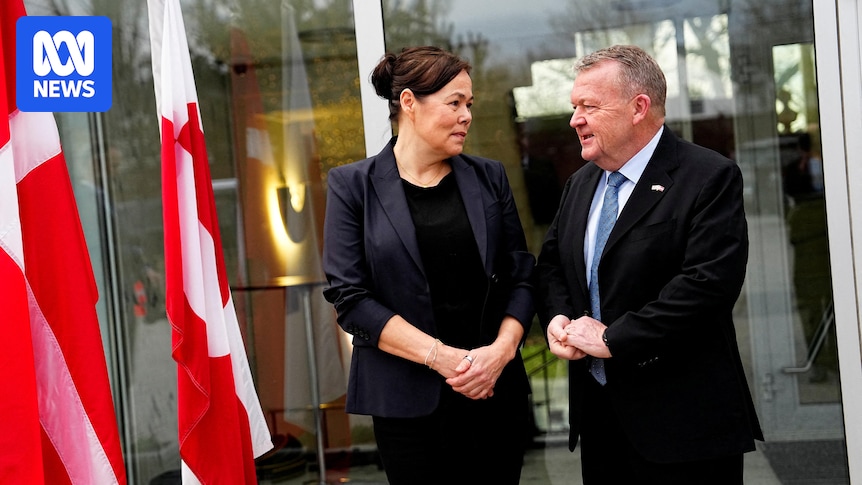
Denmark and the United States: A Diplomatic Standoff Over Greenland
Denmark has firmly stated that it has “agreed to disagree” with the United States regarding the future of Greenland, reiterating its position that any attempt for a U.S. takeover of the territory is “totally unacceptable.” This assertion follows recent discussions that have raised eyebrows about the strategic importance of Greenland in the context of global geopolitics.
The High-Stakes Meeting
The diplomatic conversation unfolded during a meeting in Washington, where U.S. Vice President JD Vance and Secretary of State Marco Rubio engaged with Danish Foreign Minister Lars Rasmussen and Greenlandic Foreign Minister Vivian Motzfeldt. The backdrop to these discussions was President Donald Trump’s renewed assertions about the necessity for U.S. control over Greenland as a countermeasure against perceived threats from Russia and China.
Trump hinted at the possibility of taking control of the island by force, a statement that understandably incited opposition from Danish officials.
Denmark’s Stance on Arctic Security
While acknowledging the shifting security landscape in the Arctic, Rasmussen emphasized that the U.S. does not need to acquire Greenland to address its security concerns. “The big difference,” he noted, “is whether that must lead to a situation where the U.S. acquires Greenland, and that is absolutely not necessary.” This distinction sets the tone for Denmark’s commitment to maintaining its territorial integrity while cooperating with the U.S. on broader security issues in the region.
In an effort to facilitate dialogue, Denmark has proposed the formation of a high-level working group aimed at exploring collaborative solutions that prioritize both American security interests and Denmark’s sovereignty. Rasmussen expressed hope that this dialogue would help to navigate the nuances of their concerns rather than perpetuating a black-and-white narrative.
Military Movements in Greenland
In light of increasing tensions, Denmark, alongside Sweden and Norway, has begun deploying armed forces to Greenland. This military repositioning is further complemented by Germany’s decision to send 13 soldiers as part of a reconnaissance mission aimed at enhancing regional security. This collaborative buildup underscores a commitment within NATO to assert a presence in the Arctic while also showcasing Denmark’s strategic response to evolving threats.
Addressing Misconceptions
During the meeting, Rasmussen took the opportunity to counter Trump’s claims regarding a potential Chinese military presence in Greenland. “According to our intelligence, we haven’t had a Chinese warship in Greenland for a decade or so,” he clarified, thereby dispelling notions of imminent threats from foreign aggression.
Greenland’s Foreign Minister, Vivian Motzfeldt, also contributed to the discussions by reinforcing the island’s desire for increased cooperation with the U.S. but firmly rejected any notion of being governed or owned by it. “We are allies and friends,” she stated, “but that doesn’t mean that we want to be owned by the United States.”
The Territorial Integrity of Denmark
Rasmussen’s remarks highlighted an essential point of contention: any ideas that disrespect Denmark’s territorial integrity are “totally unacceptable.” His insistence on this principle reflects the broader ethos within Danish governance, emphasizing national sovereignty, particularly in light of Greenland’s semi-autonomous status.
Greenland, the world’s largest island, is located in a strategically vital area between Russia and North America. Its geopolitical significance cannot be overstated, especially as it harbors vital resources and serves as a potential military outpost.
Trump’s Perspective
The U.S. viewpoint continued to emphasize Greenland’s strategic importance. In a statement made through his social media platform, Trump characterized Greenland as crucial to America’s national security interests. He argued that without American strength, NATO would not effectively deter threats from Russia and China.
Despite his prior controversial remarks, Trump clarified he had not yet been briefed about the recent diplomatic meeting and sidestepped questions regarding NATO membership, suggesting that Denmark would face vulnerability without U.S. backing against aggressors.
Moving Forward
As the discussions progress, the U.S. officials have yet to comment further on the engagements. The diplomatic complexities surrounding Greenland illustrate the intricate balance of international relations, security concerns, and national sovereignty, leaving both sides navigating a critical and sensitive geopolitical landscape.

Denmark Voiced Strong Disagreement with US Ownership of Greenland

Supreme Court Reinstates GOP Congressman’s Absentee Ballot Case, Potentially Triggering Increased Election Litigation

France to Open Greenland Consulate as ‘Political Signal’ to the US | Donald Trump News

Greenland Summit at the White House: A Potential Turning Point for the Arctic’s Future

Disney+ Secures First-Look Deal with Stephen Graham and Hannah Walters in the UK

Trump Claims “We’re in Trouble” if Supreme Court Opposes His Tariffs

Trump Cautions Iran on Executing Protesters as Activists Report Death Toll Surpassing 2,500

New Criminal-Catching Cameras Activated in North Providence

Tech in Education | Latest News

Scientists Explain Why Central Turkey’s Crust is Gradually Sinking

EXCLUSIVE: Will Smith’s Former Best Friend Bilaal Breaks Silence in Explosive Tasha K Interview — Lawsuit, Scientology Allegations, and Claims of an Attempt on His Life

Four Forecasts for 2026

Carbon Industries Group Signs Major Carbon Credit Agreements with Senegalese Government | Currency News | Financial and Business Insights

Elon Musk’s Return to Politics: Why Not Explore a New Hobby Instead? | Arwa Mahdawi

Wall Street Sees Modest Gains in Unsteady Start to 2026 | News, Sports, Jobs

Nvidia’s Groq Acquisition Highlights How the AI Chip Leader Leverages Its Robust Balance Sheet to Maintain Dominance

Top Picks from CES 2026: Editors Select the Best Products and Technologies

Trump Issues Order Pausing Offshore Wind Projects for a Minimum of 90 Days

Top 2026 NFL Draft Targets for the Chiefs: Kenyon Sadiq and Jeremiyah Love Lead the Way for Patrick Mahomes and Andy Reid

Best Of The Funny Animal Videos 😹🐶 Funniest Cat & Dog Moments Ever Recorded 🤣

Splash Dogs Take Over The Pool…And We Love It! | Dodo Kids | 1 Hour Of Animal Videos

The Funniest Animal Videos Compilation 😹🐶 Crazy Funny Dogs That Will Make You Laugh Nonstop 🤣

#54 Funniest Cats And Dogs videos 🐶🐱 #funny #animals #cuteanimals

Hilarious Animal Videos to Make You Laugh | Funny Dog & Cat Videos

Super Crazy Pets | FUNNIEST Animals You Have Ever Seen

Funniest Farm Animals

Funny Animal Videos 2023 – Comedy Voiceover! #12😹🐶🤣
Best Of The Funny Animal Videos 😹🐶 Funniest Cat & Dog Moments Ever Recorded 🤣

You Laugh You Lose 😅 Best Funny Cats and Dogs Videos 😹🐶

FUNNIEST Pet Fails! 🤣 😂 | Best Compilation 2023
-
 Entertaiment2 weeks ago
EXCLUSIVE: Will Smith’s Former Best Friend Bilaal Breaks Silence in Explosive Tasha K Interview — Lawsuit, Scientology Allegations, and Claims of an Attempt on His Life
-
 Finance2 weeks ago
Four Forecasts for 2026
-
 Finance1 week ago
Carbon Industries Group Signs Major Carbon Credit Agreements with Senegalese Government | Currency News | Financial and Business Insights
-
 Politics1 week ago
Elon Musk’s Return to Politics: Why Not Explore a New Hobby Instead? | Arwa Mahdawi
-
 Business2 weeks ago
Wall Street Sees Modest Gains in Unsteady Start to 2026 | News, Sports, Jobs
-
 Technology3 weeks ago
Nvidia’s Groq Acquisition Highlights How the AI Chip Leader Leverages Its Robust Balance Sheet to Maintain Dominance
-
 Technology2 days ago
Top Picks from CES 2026: Editors Select the Best Products and Technologies
-
 US News3 weeks ago
Trump Issues Order Pausing Offshore Wind Projects for a Minimum of 90 Days