
Politics
Politics Update: Minister Stumbles on Farage’s Suggestion of Labour Defections | Politics News

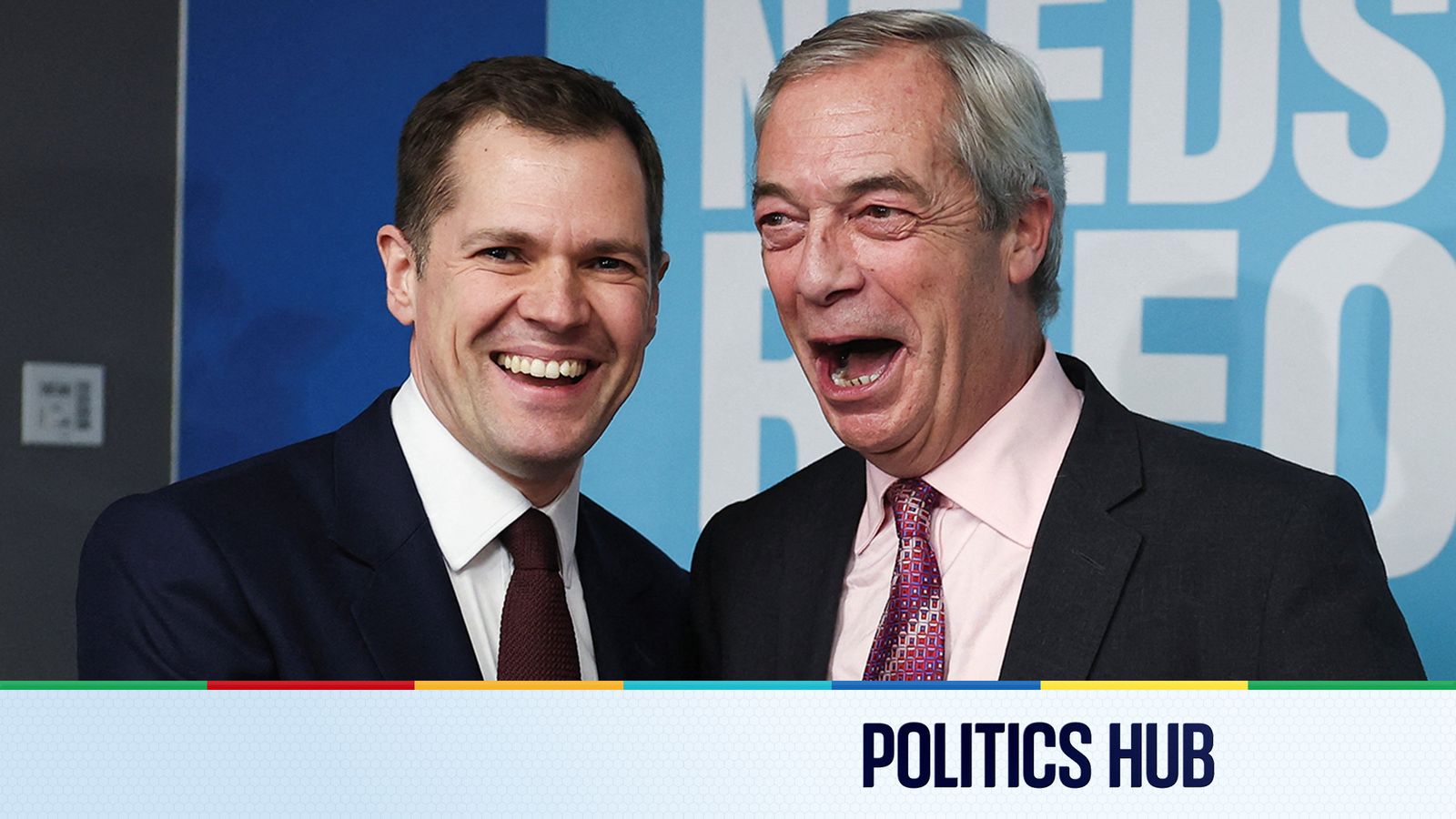
Turmoil in British Politics: Robert Jenrick’s Bold Exit
Welcome back to the Politics Hub, where we navigate the evolving landscape of British politics. Recently, the political arena has witnessed significant upheaval as Robert Jenrick, formerly of the Conservative Party, decisively made his exit to join forces with Nigel Farage and Reform UK. This bold move has sent ripples through the political fabric of the United Kingdom, raising questions about party loyalty, accountability, and the future of conservative politics in Britain.
A Sudden Departure
Jenrick’s exit from the Conservative Party was not just a minor footnote in political gossip; it was executed under the watchful eyes of Kemi Badenoch, a prominent figure within the party. The abrupt nature of his departure has fueled speculations and debates regarding internal dynamics in the Conservative Party. At its core, Jenrick’s decision seems to stem from a growing dissatisfaction with the party’s direction and leadership.
A Critical Outlook
In his statements to various newspapers, Jenrick has expressed a vehement critique of both the Conservative and Labour parties. Writing in The Telegraph, he referred to the current political landscape as a battleground characterized by incompetence. His assertion that both major parties “broke Britain” indicates a deep-seated frustration with their governance. Jenrick elaborated that these parties are “dominated by those without the competence or backbone needed to fix it,” highlighting a pervasive sense of disillusionment.
A Call to Accountability
As he laments the ideological failures of the Conservative Party, Jenrick underscored the inability of its leadership to acknowledge their shortcomings. “The Conservative Party can’t admit— to themselves or to the British people—what it’s done,” he remarked. This statement encapsulates his larger concern about a lack of accountability and a refusal to engage in meaningful introspection. According to him, the party is not just unrepentant; it remains fundamentally unchanged in its approach and ideology.
Friction Within Party Lines
Adding another layer to the unfolding drama, Jenrick revealed that he had faced reprimands from his Tory peers for criticizing decisions that could reflect poorly on the party. This friction highlights a troubling aspect of party politics: when members prioritize party loyalty over honest discourse, it can stifle necessary conversations about the direction and values of the party itself. Jenrick’s criticisms suggest that he values transparency and honesty, even at the cost of party unity.
A Cautious Observation of Future Leadership
Interestingly, while Jenrick has expressed respect for Kemi Badenoch, he did not hold back in questioning her viability as a future leader. He bluntly stated that her chances of winning the next election were comparable to those of the Green Party. This declaration further emphasizes his discontent, suggesting that he sees little hope for a credible conservative alternative under current leadership.
No Thoughts of Reconciliation
As he charts a new course with Reform UK, Jenrick has made it clear that he does not foresee any electoral partnership between his new organization and the Conservative Party. This positions his departure not merely as a personal decision but as a broader critique of the Conservative ethos, one that he believes has fundamentally betrayed its principles during periods of governance.
Addressing the Broader Issues
Jenrick’s criticisms don’t stop at party leadership; he pointed to systemic issues like rising immigration rates, increased governmental borrowing, and overcrowded prisons as evidence of Conservative failures. Each of these points serves as a touchstone for his argument, illustrating his belief that both major parties have lost their way in addressing the pressing concerns of the electorate.
As we continue to monitor this evolving situation, it remains to be seen how these developments will shape the future landscape of British politics. With voices like Jenrick’s emerging alongside Farage’s Reform UK, the political conversation in Britain is sure to take on new dimensions that could impact both the Conservative Party and the broader electoral framework.

Democrats Introduce Automatic Voter Registration Bill in Wisconsin
In a bold move to reform the electoral process, state Democratic lawmakers in Wisconsin have unveiled a comprehensive package of 25 bills aimed at protecting voters and strengthening election integrity. Among these proposals, one of the most significant is an initiative that would establish automatic voter registration for eligible citizens. This approach is designed to simplify the voting process and enhance participation.
The Push for Automatic Voter Registration
Automatic voter registration (AVR) has gained traction across the United States, with 25 states and Washington, D.C. already adopting similar legislation. This method ensures that individuals are automatically registered to vote unless they choose to opt out. According to the Voting Rights Lab, implementing AVR could significantly increase voter turnout and streamline the registration process.
State Representative Clinton Anderson (D-Beloit) emphasized the importance of reducing barriers to voting. “We think that, no matter who you vote for, there should be less guardrails and hurdles to voting than there currently are,” he stated. The aim of this legislation is to create a more inclusive electoral environment where all eligible residents can easily participate in democracy.
Shortening Residency Requirements
Another key aspect of the proposed legislative package is the plan to shorten the residency requirement for voters. Currently, Wisconsin mandates that individuals must reside at their registered address for 28 days before they are eligible to vote in that location. The new proposal seeks to reduce this timeframe to 10 days, reverting to the regulation that was in place prior to 2011. This change is intended to provide greater flexibility for those who may move frequently or are new to the area.
Firearms and Polling Places
In addition to these reforms, the Democratic lawmakers are also advocating for a bill that would prohibit individuals from carrying firearms within 100 feet of polling places or locations where election officials conduct canvass or recount activities. This measure aims to ensure a safe and secure environment for voters, allowing them to cast their ballots free from intimidation and fear.
Republican Response to the Legislation
On the same day that the Democratic bill package was introduced, Assembly Republicans held a news conference at the state capitol. While a reporter from 27 News was present and prepared to address the election bills, Republican lawmakers only entertained a few questions and refrained from commenting on the proposed legislation. This lack of engagement may suggest a waiting game as both parties examine the impacts and implications of the new proposals.
Looking Ahead: Voter Engagement in Wisconsin
As the discussion around these legislative changes continues, voter engagement remains a focal point for Wisconsin Democrats. Automatic voter registration, a shortened residency requirement, and heightened security measures at polling places represent steps toward a more accessible electoral process. Advocates believe that these changes could empower more residents to make their voices heard in upcoming elections.
The landscape of voting in Wisconsin is poised for transformation as these legislative efforts progress. With a commitment to protecting voters, the conversation is just beginning, and the results of these proposals could significantly shape the future of elections in the state.
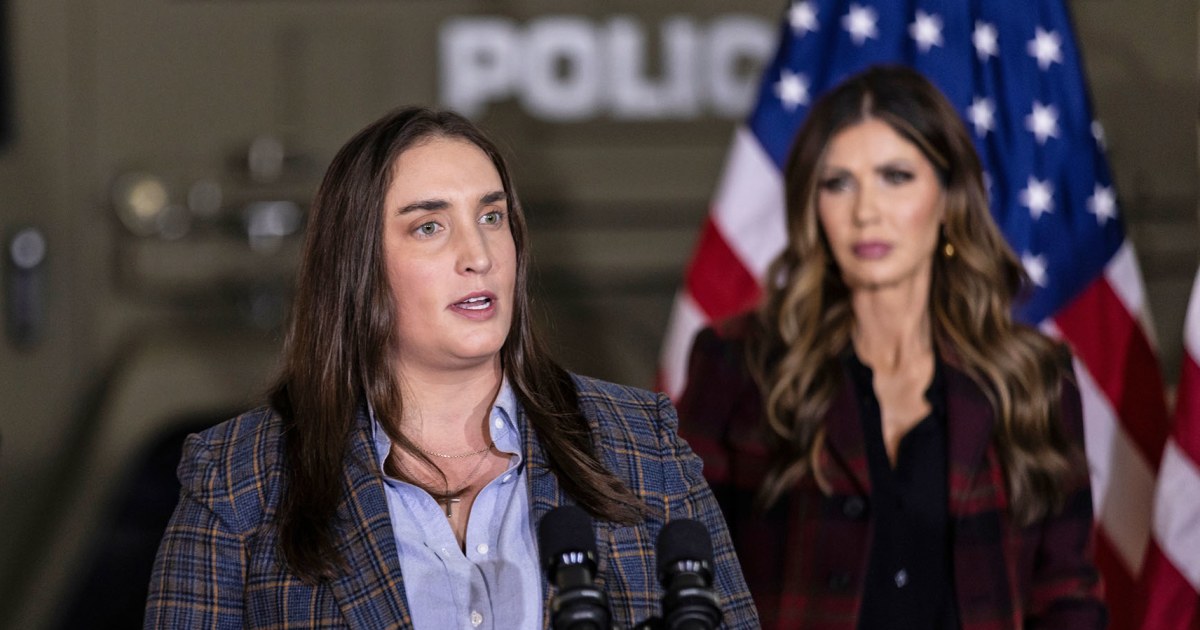
Madison Sheahan Resigns from ICE to Run for Congress in Ohio
On Thursday, Madison Sheahan, the Deputy Director of Immigrations and Customs Enforcement (ICE), made headlines with her announcement to resign from her post and launch a Congressional campaign in Ohio. This move places her squarely into a highly competitive Republican primary race for a seat in the state that has grown more favorable to GOP candidates due to recent redistricting efforts.
Campaign Launch and Positioning
In a video announcing her candidacy, Sheahan was quick to leverage her ICE experience while launching a pointed attack on her opponent, Democratic Representative Marcy Kaptur. She asserted, “In less than one year at ICE, I’ve stopped more illegal immigration than Marcy Kaptur has in her 43 years in Washington.” This statement underscores her strategy of framing herself as a proactive, reform-minded candidate ready to challenge the status quo in Congress.
Sheahan’s remarks not only highlight her accomplishments but also aim to resonate with constituents who prioritize immigration issues. “Ohio neighborhoods are safer, thanks to President Trump and ICE,” she stated, adding a personal touch by invoking her family background in farming, emphasizing a down-to-earth perspective on accountability and success.
The Competitive Landscape
Sheahan’s entry into the race adds to a growing field of Republican candidates vying for a chance to unseat Kaptur, who has represented the district since 1983. As of now, the GOP primary field boasts more than half a dozen candidates, including state Rep. Josh Williams and Derek Merrin, a former state lawmaker who previously ran against Kaptur. The primary is slated for May 5, making it a critical moment for all contenders.
While Republican candidates engage in what is anticipated to be a “messy primary,” Kaptur’s campaign is focused on addressing local issues. A spokesperson for her campaign noted, “Congresswoman Kaptur is focused on delivering real results for her constituents,” mentioning her efforts to lower living costs, safeguard access to healthcare, and attract significant investments into Northwest Ohio.
The Political Context
The timing of Sheahan’s campaign coincides with a crucial election year for House Republicans, who are bracing for races in districts that have shifted dramatically due to redistricting. Recently, the Ohio legislature redrew the boundaries of the 9th District to create a more GOP-friendly electorate. Historical voting patterns have shown that under the new district lines, Trump would have secured a win in Kaptur’s district by a margin of 11 percentage points, a substantial shift from the previous 7-point advantage.
However, even with these favorable changes, the race is still forecasted as a “Toss Up” by the nonpartisan Cook Political Report. Kaptur narrowly defeated Merrin in the 2024 general election, illustrating the district’s competitive nature and reflecting broader trends in which Democrats can still prevail in battleground areas.
Trump’s Influence on the Race
Former President Trump’s involvement in this election cycle is also noteworthy. Previous endorsements have played a vital role in swaying GOP primary outcomes, as evidenced by his support for Merrin in the last cycle. However, Trump has yet to express any formal backing for candidates in this particular primary, leaving the field open for contenders like Sheahan to foster their campaigns independently, while positioning themselves as aligned with Trump’s immigration policies and agenda.
Sheahan’s Credentials and Messaging
Sheahan’s campaign messaging heavily emphasizes her work under the Trump administration, particularly her involvement in efforts to bolster ICE operations. In her launch video and resignation letter, she detailed her commitment to addressing immigration challenges. “When the call came to help President Trump clean up the dangerous immigration mess, as Deputy Director of ICE, I answered the call,” she stated, signaling to voters her dedication to law and order.
By focusing on her operational experience and family values, Sheahan seeks to cultivate a relatable and authoritative image. Her journey from a federal agency to a potential seat in Congress encapsulates a broader narrative of candidates leveraging their professional backgrounds as qualifications for public office.
The Road Ahead
As the primary election draws nearer, Sheahan’s campaign will likely intensify, emphasizing her immigration record and contrast with Kaptur’s long tenure in Washington. In a district that remains closely watched, the unfolding dynamics will be crucial not only for the candidates involved but also for the Republican Party’s overarching strategy as it aims to retain and potentially expand its influence in the House of Representatives.

The Fragile Hope of Political Prisoner Releases in Venezuela
CARACAS, Venezuela — The announcement that Venezuela would release an “important number” of political prisoners stirred a fragile joy among families and advocates. However, this optimism quickly morphed into anguish as the realities of the situation unfolded. Despite the government’s promises, only a fraction of the estimated 800 political prisoners were freed, leaving many families, like that of María Constanza Cipriani, in a state of limbo and anxiety.
A Personal Toll
María Constanza Cipriani waits anxiously for news of her husband, Perkins Rocha, detained for nearly 19 months. A lawyer representing opposition leader and Nobel Peace Prize recipient María Corina Machado, Rocha was arrested following the controversial 2024 elections. He spent a harrowing year incommunicado at El Helicoide prison, infamous for its brutal conditions. Though recent phone calls from Rocha reveal him to be “serene” and “calm,” the lack of transparency regarding prisoner releases leaves Cipriani feeling victimized all over again.
“Where does this process even stand?” she questions, relying on dubious social media reports for information. This uncertainty encapsulates the emotional toll that families endure amid the opaque actions of the Venezuelan government.
Government’s Opaque Process
Acting Venezuelan President Delcy Rodríguez assured the public that the release process is ongoing, suggesting developments in a “new political moment.” Yet, the lack of detailed communication raises eyebrows. Reports fluctuated wildly with Rodríguez stating that “166 prisoners” had been freed, only for her brother, Jorge Rodríguez, to later declare that over 400 had been released. Human rights organizations, such as Foro Penal, contest these claims, citing only 79 verifiable releases.
Adding to the chaos, the State Department confirmed the release of several Americans and other foreigners detained in Venezuela. Diego Casanova of the Committee for the Freedom of Political Prisoners revealed that anxious families have been gathered outside prisons waiting for confirmations. The rumor mill continues to churn, but many are left without answers.
The Reality for Released Prisoners
For many former political prisoners, freedom is not as straightforward as it seems. Released individuals are often still seen through the lens of the government’s narrative, accused of “breaking the law” rather than being recognized as victims of political repression. Court mandates require them to check in periodically, perpetuating a cycle of control even after their physical release.
Casanova expresses concern: “If only partial releases occur, it means the repressive policy continues.” He emphasizes the need for the full and immediate release of all political detainees to ensure genuine reform.
Crackdown on Civilian Responses
The Venezuelan government remains vigilant against any perceived dissent. Recent instances highlight this: in Anzoátegui state, a group of minors was arrested for allegedly celebrating the U.S. operation to capture Nicolás Maduro. Following parental pressure and community support, the minors were released, but two 18-year-olds remain in custody, underscoring the government’s ongoing suppression of political expression.
International Diplomacy and Internal Tensions
While the interim government seeks to navigate its precarious position, contacts between U.S. leadership and Venezuela are ongoing. President Donald Trump recently referred to his discussions with Rodríguez as “positive,” marking a pivotal moment in U.S.-Venezuelan relations. However, there remain underlying tensions, particularly regarding the viability of Maduro’s opponents. Machado, recently in the U.S., urged for a clear stance against the continued detention of political prisoners, urging for genuine democratic transitions.
Their collective voice underscores a profound truth: “Venezuela cannot be truly free as long as anyone faces persecution for their political beliefs.” This sentiment resonates in a country where the threat of repression looms large.
Tragic Losses and Ongoing Struggles
Amid the turmoil, the death of Edilson Torres underscores the tragic consequences of the regime’s policies. Torres, held incommunicado for criticizing the government, died of a heart attack while awaiting what many had hoped would be his release. His death marks yet another casualty in a long line of tragedies linked to the Venezuelan government’s disregard for human rights.
As the political landscape shifts and the fates of countless prisoners hang in the balance, the resilience of families and the fight for justice remain at the forefront of Venezuela’s tumultuous journey.

Politics Update: Minister Stumbles on Farage’s Suggestion of Labour Defections | Politics News

Wisconsin Democrats Unveil Series of Election Bills Before Midterms | Politics

A Jet in the Woods: The Aircraft That Never Crashed and the Questions No One Has Answered

ICE No. 2 Exits Position to Enter Run for Ohio’s Battleground House District

Willamette MBA Rises to 97th Place in U.S. News Rankings

Performance of Major US Stock Indexes on Thursday, January 15, 2026

Dow, S&P 500, and Nasdaq Hold Steady as Wall Street Concludes a Turbulent Week

Live Updates: Death Toll from Iran Protests, Iranian Threats to the U.S., Execution of Erfan Soltani Postponed

Ensuring Safety in Every Neighborhood: CMPD Reports Decline in Violent Crime

Strengthening MIT’s Ties with Japan | MIT News

EXCLUSIVE: Will Smith’s Former Best Friend Bilaal Breaks Silence in Explosive Tasha K Interview — Lawsuit, Scientology Allegations, and Claims of an Attempt on His Life

Four Forecasts for 2026

Carbon Industries Group Signs Major Carbon Credit Agreements with Senegalese Government | Currency News | Financial and Business Insights

Top Picks from CES 2026: Editors Select the Best Products and Technologies

2026 NFL Coaching Update: John Harbaugh Nearing Deal with Giants; Mike Tomlin Not Expected to Coach Next Season

Elon Musk’s Return to Politics: Why Not Explore a New Hobby Instead? | Arwa Mahdawi

Blueprint for a “Tax-Free America” That Actually Works

Who Is Really Voting in These Polls? The Shocking Truth Behind America’s Approval Numbers

Wall Street Sees Modest Gains in Unsteady Start to 2026 | News, Sports, Jobs

Best Of The Funny Animal Videos 😹🐶 Funniest Cat & Dog Moments Ever Recorded 🤣

The Most dramatic cats moments ever! 😂🤣 Funny Cat Videos 2025

Jennette McCurdy shares the stories behind memoir “I’m Glad My Mom Died”

Splash Dogs Take Over The Pool…And We Love It! | Dodo Kids | 1 Hour Of Animal Videos

The Funniest Animal Videos Compilation 😹🐶 Crazy Funny Dogs That Will Make You Laugh Nonstop 🤣

#54 Funniest Cats And Dogs videos 🐶🐱 #funny #animals #cuteanimals

Hilarious Animal Videos to Make You Laugh | Funny Dog & Cat Videos

Super Crazy Pets | FUNNIEST Animals You Have Ever Seen

Funniest Farm Animals

Funny Animal Videos 2023 – Comedy Voiceover! #12😹🐶🤣
Best Of The Funny Animal Videos 😹🐶 Funniest Cat & Dog Moments Ever Recorded 🤣
-
 Entertaiment2 weeks ago
EXCLUSIVE: Will Smith’s Former Best Friend Bilaal Breaks Silence in Explosive Tasha K Interview — Lawsuit, Scientology Allegations, and Claims of an Attempt on His Life
-
 Finance2 weeks ago
Four Forecasts for 2026
-
 Finance1 week ago
Carbon Industries Group Signs Major Carbon Credit Agreements with Senegalese Government | Currency News | Financial and Business Insights
-
 Technology3 days ago
Top Picks from CES 2026: Editors Select the Best Products and Technologies
-
 Sports12 hours ago
2026 NFL Coaching Update: John Harbaugh Nearing Deal with Giants; Mike Tomlin Not Expected to Coach Next Season
-
 Politics1 week ago
Elon Musk’s Return to Politics: Why Not Explore a New Hobby Instead? | Arwa Mahdawi
-
 Opinion18 hours ago
Blueprint for a “Tax-Free America” That Actually Works
-
 Business2 weeks ago
Wall Street Sees Modest Gains in Unsteady Start to 2026 | News, Sports, Jobs