
Politics
West Midlands Police Chief Retires Amid Maccabi Fan Ban Controversy, Citing ‘Political and Media Frenzy’ – Live Updates


The Retirement of Chief Constable Craig Guildford: A Turning Point for West Midlands Police
Introduction
In a significant development for the West Midlands Police, Chief Constable Craig Guildford has announced his immediate retirement. This pivotal moment, discussed during a public statement at the West Midlands Police Headquarters in Birmingham, embodies both a personal choice and a wider context involving public safety and organizational integrity.
Acknowledgment of Service
Police and Crime Commissioner (PCC) for the West Midlands expressed gratitude for the service and contributions made by Chief Constable Guildford over his three-year tenure. The commissioner emphasized that Guildford acted with “honour” and in the best interests of both the police force and the wider community by choosing to retire. During his time in office, Guildford was recognized for various positive achievements that contributed to the policing landscape in the West Midlands.
Contextual Background
The circumstances surrounding Guildford’s retirement stem from a recent recommendation made by West Midlands Police to the Birmingham City Council Safety Advisory Group. This recommendation was prompted by events leading to the decision to ban away fans from attending an imminent Europa League football match between Aston Villa and Maccabi Tel Aviv, scheduled for November 6, 2025. Such actions heighten the scrutiny under which the police force operates, especially given the intense oversight following these events.
Scrutiny and Accountability
The commissioner highlighted the considerable oversight faced by West Midlands Police, particularly after a letter from His Majesty’s Inspectorate of Constabulary (HMIC) was published on January 14, detailing early concerns regarding the police’s preparation and planning. This scrutiny aims to ensure that future actions are not only effective but also maintain public trust and accountability.
Transition of Leadership
Following Guildford’s departure, Deputy Chief Constable Scott Green has been appointed as the Acting Chief Constable. The transition in leadership comes at a critical time when rebuilding trust among the communities served by West Midlands Police is essential. The commissioner and Acting Chief Constable Green have already engaged in discussions about the necessary steps to address the significant concerns raised by HMIC, a clear indication of their commitment to reform and better community relations.
Focus on Community Safety
Both the commissioner and Acting Chief Constable Green have pledged to prioritize initiatives aimed at preventing and tackling crime. Their joint mission is rooted in restoring confidence among the citizens of the West Midlands. Addressing the rights and welfare of victims and ensuring the overall safety and security of communities remains at the forefront of their agenda.
Final Thoughts
While no conclusion can encapsulate this moment, the evolving dynamics within the West Midlands Police signal a commitment to transformation. The retirement of Chief Constable Craig Guildford serves as both an end and a new beginning, marked by a dedication to community engagement, oversight, and improved law enforcement practices. This chapter in West Midlands policing will undoubtedly influence the future trajectory of the force and its relationship with the community it serves.
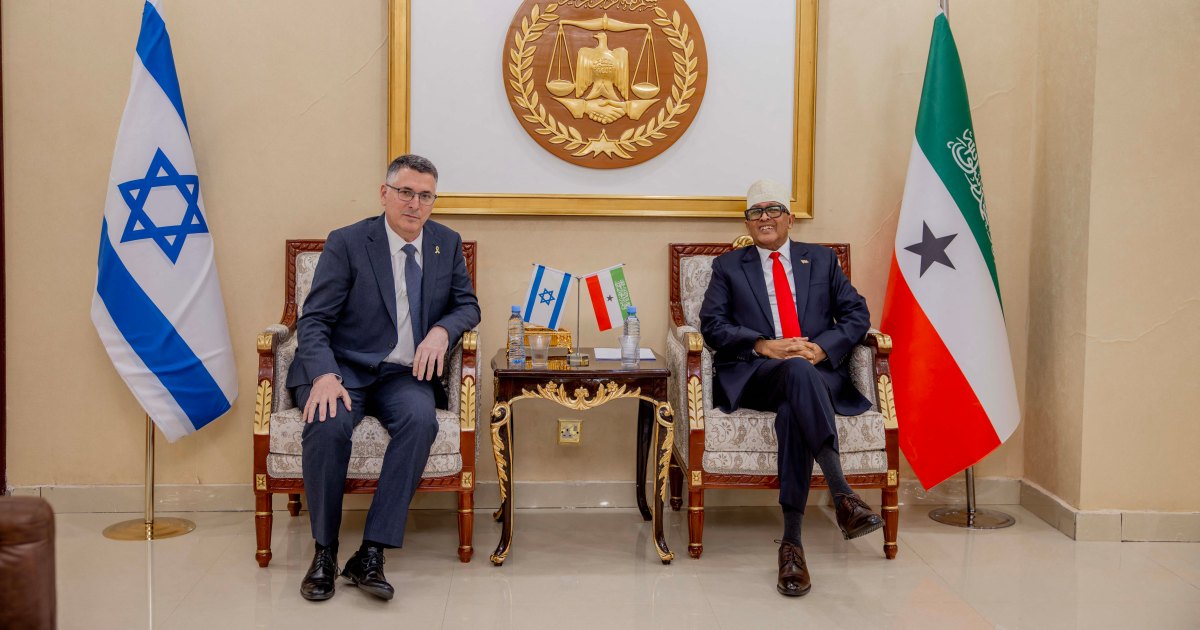
Israel’s Recognition of Somaliland: A Strategic Shift in the Horn of Africa
In a surprising diplomatic move announced late last year, Israel declared its recognition of Somaliland as an independent state. This decision sent shockwaves through the broader region, immediately prompting a wave of condemnation from Somalia as well as other countries across Africa and the Middle East. The backlash underscored the sensitive geopolitical dynamics at play in the Horn of Africa, particularly regarding issues of sovereignty and regional stability.
Immediate Responses from Somalia and Beyond
Somalia reacted forcefully to Israel’s decision. Officials characterized it as a violation of Somali sovereignty, expressing outrage at what they deemed an endorsement of Somaliland’s long-sought independence. The response was so intense that it even drew condemnation from various factions within Somalia and regional powers. Yemen’s Houthi leader, Abdel-Malik al-Houthi, labeled Israel’s stance as “hostile,” warning that any Israeli presence in Somaliland would be treated as a military target. This escalation of rhetoric illustrated the potential for conflict in an already volatile region.
Israel’s Diplomatic Strategy and Security Concerns
Israel’s Foreign Minister Gideon Saar visited Somaliland shortly after the recognition, which included a stop in the strategically significant port city of Berbera. The visit emphasized not only the burgeoning diplomatic ties but also the potential for security cooperation. Discussions reportedly included logistics and intelligence-sharing to counteract the Houthi threat, which has been increasingly felt in the southern Red Sea region.
Experts suggest that Israel’s recognition of Somaliland marks a pivotal shift in its foreign policy, moving away from covert operations to openly cultivating relationships with new state and non-state actors amid its ongoing conflicts with Iran and its allies. This shift also reflects a significant concern regarding the Houthis’ actions, which have included missile attacks on Israeli-linked shipping in the Red Sea, under the auspices of supporting Palestinians during the conflicts with Gaza.
The Significance of the Berbera Port
The Berbera port is not just any port; it is a critical juncture for maritime trade, sitting at the entrance of the Red Sea and becoming vital for various international interests. Historically, it has hosted various powers, including the Ottomans and Soviets, and is currently used by the United Arab Emirates. Its geographical significance makes it an attractive base for intelligence and logistical operations against the Houthis, potentially serving to bolster Israel’s strategic position in the region.
The Houthis: A Growing Threat
The Khutbah threat escalated as the Houthis solidify their status as one of Iran’s most formidable proxies in the region. They have increasingly positioned themselves as a significant military presence, raising concerns for Israel. Acknowledgments from various experts highlight that Israel’s recent actions seem to be a strategic maneuver to counter this growing militia, which poses a direct threat to Israeli interests, expanding its capabilities and reach across the Red Sea.
With previous exchanges of fire between Israel and the Houthis, including attacks targeting vital economic infrastructure and leadership, the Israeli military has found itself re-evaluating its security doctrines to address new threats effectively. This reevaluation indicates a broader awareness within Israeli security circles that traditional military strategies may not suffice against the evolving landscape of regional conflicts.
Somaliland’s Diplomatic Dilemma
For Somaliland, the recognition from Israel comes during a period of vulnerability. Following significant territorial losses to anti-secessionist forces, there is an urgent need for international legitimacy—a need that Israel’s recognition seemingly fulfills. Somaliland’s government has actively sought acknowledgment from foreign powers, viewing it as essential for its survival and aspirations for independence.
Political leaders in Somaliland have expressed that they are in a “state of necessity” for international recognition. Their strategic outreach efforts, which included contacting numerous heads of state, have had limited success until Israel extended a hand. This relationship is pivotal as Somaliland has also been nurturing alliances with other unconventional partners like Taiwan—further illustrating its intent to diversify its relationships and garner international support.
Assistance or Risk? Reactions in the Region
While Somaliland appears to revel in this newfound alliance, the broader regional implications cannot be ignored. Critics warn of the potential for escalated tensions, particularly from Somalia’s federal government, which may interpret Israeli presence in Somaliland as a direct challenge. Somalia’s President Hassan Sheikh Mohamud has attempted to recalibrate the narrative, urging talks with Somaliland while warning that greater recognition of independence requires cooperation with Mogadishu.
The dynamic is further complicated by the potential for Israeli military presence, which has already been cautioned against by Houthi leadership as a declaration of war, revealing the extent to which regional actors view the unfolding scenario with trepidation.
An Evolving Landscape
As the situation continues to develop, the recognition of Somaliland by Israel signifies not just a bilateral advancement but highlights the intricate web of alliances, interests, and conflicts dictating the region’s future. The optimistic tone from Somaliland’s leadership reflects a willingness to embrace this relationship, yet it remains to be seen how it will influence the delicate balance of power between competing factions and interests in the Horn of Africa.
With each new development, the world watches as Somaliland navigates its path forward amid a complex mix of diplomatic overtures and possible military confrontations that could reshape the geopolitical landscape in unexpected ways.
Politics
Politics Update: Minister Stumbles on Farage’s Suggestion of Labour Defections | Politics News


Turmoil in British Politics: Robert Jenrick’s Bold Exit
Welcome back to the Politics Hub, where we navigate the evolving landscape of British politics. Recently, the political arena has witnessed significant upheaval as Robert Jenrick, formerly of the Conservative Party, decisively made his exit to join forces with Nigel Farage and Reform UK. This bold move has sent ripples through the political fabric of the United Kingdom, raising questions about party loyalty, accountability, and the future of conservative politics in Britain.
A Sudden Departure
Jenrick’s exit from the Conservative Party was not just a minor footnote in political gossip; it was executed under the watchful eyes of Kemi Badenoch, a prominent figure within the party. The abrupt nature of his departure has fueled speculations and debates regarding internal dynamics in the Conservative Party. At its core, Jenrick’s decision seems to stem from a growing dissatisfaction with the party’s direction and leadership.
A Critical Outlook
In his statements to various newspapers, Jenrick has expressed a vehement critique of both the Conservative and Labour parties. Writing in The Telegraph, he referred to the current political landscape as a battleground characterized by incompetence. His assertion that both major parties “broke Britain” indicates a deep-seated frustration with their governance. Jenrick elaborated that these parties are “dominated by those without the competence or backbone needed to fix it,” highlighting a pervasive sense of disillusionment.
A Call to Accountability
As he laments the ideological failures of the Conservative Party, Jenrick underscored the inability of its leadership to acknowledge their shortcomings. “The Conservative Party can’t admit— to themselves or to the British people—what it’s done,” he remarked. This statement encapsulates his larger concern about a lack of accountability and a refusal to engage in meaningful introspection. According to him, the party is not just unrepentant; it remains fundamentally unchanged in its approach and ideology.
Friction Within Party Lines
Adding another layer to the unfolding drama, Jenrick revealed that he had faced reprimands from his Tory peers for criticizing decisions that could reflect poorly on the party. This friction highlights a troubling aspect of party politics: when members prioritize party loyalty over honest discourse, it can stifle necessary conversations about the direction and values of the party itself. Jenrick’s criticisms suggest that he values transparency and honesty, even at the cost of party unity.
A Cautious Observation of Future Leadership
Interestingly, while Jenrick has expressed respect for Kemi Badenoch, he did not hold back in questioning her viability as a future leader. He bluntly stated that her chances of winning the next election were comparable to those of the Green Party. This declaration further emphasizes his discontent, suggesting that he sees little hope for a credible conservative alternative under current leadership.
No Thoughts of Reconciliation
As he charts a new course with Reform UK, Jenrick has made it clear that he does not foresee any electoral partnership between his new organization and the Conservative Party. This positions his departure not merely as a personal decision but as a broader critique of the Conservative ethos, one that he believes has fundamentally betrayed its principles during periods of governance.
Addressing the Broader Issues
Jenrick’s criticisms don’t stop at party leadership; he pointed to systemic issues like rising immigration rates, increased governmental borrowing, and overcrowded prisons as evidence of Conservative failures. Each of these points serves as a touchstone for his argument, illustrating his belief that both major parties have lost their way in addressing the pressing concerns of the electorate.
As we continue to monitor this evolving situation, it remains to be seen how these developments will shape the future landscape of British politics. With voices like Jenrick’s emerging alongside Farage’s Reform UK, the political conversation in Britain is sure to take on new dimensions that could impact both the Conservative Party and the broader electoral framework.

Democrats Introduce Automatic Voter Registration Bill in Wisconsin
In a bold move to reform the electoral process, state Democratic lawmakers in Wisconsin have unveiled a comprehensive package of 25 bills aimed at protecting voters and strengthening election integrity. Among these proposals, one of the most significant is an initiative that would establish automatic voter registration for eligible citizens. This approach is designed to simplify the voting process and enhance participation.
The Push for Automatic Voter Registration
Automatic voter registration (AVR) has gained traction across the United States, with 25 states and Washington, D.C. already adopting similar legislation. This method ensures that individuals are automatically registered to vote unless they choose to opt out. According to the Voting Rights Lab, implementing AVR could significantly increase voter turnout and streamline the registration process.
State Representative Clinton Anderson (D-Beloit) emphasized the importance of reducing barriers to voting. “We think that, no matter who you vote for, there should be less guardrails and hurdles to voting than there currently are,” he stated. The aim of this legislation is to create a more inclusive electoral environment where all eligible residents can easily participate in democracy.
Shortening Residency Requirements
Another key aspect of the proposed legislative package is the plan to shorten the residency requirement for voters. Currently, Wisconsin mandates that individuals must reside at their registered address for 28 days before they are eligible to vote in that location. The new proposal seeks to reduce this timeframe to 10 days, reverting to the regulation that was in place prior to 2011. This change is intended to provide greater flexibility for those who may move frequently or are new to the area.
Firearms and Polling Places
In addition to these reforms, the Democratic lawmakers are also advocating for a bill that would prohibit individuals from carrying firearms within 100 feet of polling places or locations where election officials conduct canvass or recount activities. This measure aims to ensure a safe and secure environment for voters, allowing them to cast their ballots free from intimidation and fear.
Republican Response to the Legislation
On the same day that the Democratic bill package was introduced, Assembly Republicans held a news conference at the state capitol. While a reporter from 27 News was present and prepared to address the election bills, Republican lawmakers only entertained a few questions and refrained from commenting on the proposed legislation. This lack of engagement may suggest a waiting game as both parties examine the impacts and implications of the new proposals.
Looking Ahead: Voter Engagement in Wisconsin
As the discussion around these legislative changes continues, voter engagement remains a focal point for Wisconsin Democrats. Automatic voter registration, a shortened residency requirement, and heightened security measures at polling places represent steps toward a more accessible electoral process. Advocates believe that these changes could empower more residents to make their voices heard in upcoming elections.
The landscape of voting in Wisconsin is poised for transformation as these legislative efforts progress. With a commitment to protecting voters, the conversation is just beginning, and the results of these proposals could significantly shape the future of elections in the state.

West Midlands Police Chief Retires Amid Maccabi Fan Ban Controversy, Citing ‘Political and Media Frenzy’ – Live Updates

Israel’s Interests in Somaliland: An Analysis | Politics News

Trump Update: Venezuelan Nobel Peace Prize Winner Presents Medal to U.S. President | World News

Stakeholders Consider the Future of the Wyoming Business Council | Local News

Wall Street Divided on Leading Sector in Stock Market Performance

Trump Warns of Invoking Insurrection Act During Protests Over Minneapolis ICE Shooting

Chicago Crime: Man Stabbed in Attempted Robbery in Englewood

Evaluating the Valuation of Gorilla Technology Group (GRRR) Following the US$1.4 Billion AI Data Center Partnership Announcement

Scientists Discover a Sweet, Low-Calorie Sugar That Won’t Raise Insulin Levels: ScienceAlert

2026 Calendar for XXXX – Jamestown Sun

EXCLUSIVE: Will Smith’s Former Best Friend Bilaal Breaks Silence in Explosive Tasha K Interview — Lawsuit, Scientology Allegations, and Claims of an Attempt on His Life

Four Forecasts for 2026

Carbon Industries Group Signs Major Carbon Credit Agreements with Senegalese Government | Currency News | Financial and Business Insights

Who Is Really Voting in These Polls? The Shocking Truth Behind America’s Approval Numbers

2026 NFL Coaching Update: John Harbaugh Nearing Deal with Giants; Mike Tomlin Not Expected to Coach Next Season

Top Picks from CES 2026: Editors Select the Best Products and Technologies

Elon Musk’s Return to Politics: Why Not Explore a New Hobby Instead? | Arwa Mahdawi

Wall Street Sees Modest Gains in Unsteady Start to 2026 | News, Sports, Jobs

Blueprint for a “Tax-Free America” That Actually Works

Nvidia’s Groq Acquisition Highlights How the AI Chip Leader Leverages Its Robust Balance Sheet to Maintain Dominance

The Most dramatic cats moments ever! 😂🤣 Funny Cat Videos 2025

Jennette McCurdy shares the stories behind memoir “I’m Glad My Mom Died”

Splash Dogs Take Over The Pool…And We Love It! | Dodo Kids | 1 Hour Of Animal Videos

The Funniest Animal Videos Compilation 😹🐶 Crazy Funny Dogs That Will Make You Laugh Nonstop 🤣

#54 Funniest Cats And Dogs videos 🐶🐱 #funny #animals #cuteanimals

Hilarious Animal Videos to Make You Laugh | Funny Dog & Cat Videos

Super Crazy Pets | FUNNIEST Animals You Have Ever Seen

Funniest Farm Animals

Funny Animal Videos 2023 – Comedy Voiceover! #12😹🐶🤣

Best Of The Funny Animal Videos 😹🐶 Funniest Cat & Dog Moments Ever Recorded 🤣
-
 Entertaiment2 weeks ago
EXCLUSIVE: Will Smith’s Former Best Friend Bilaal Breaks Silence in Explosive Tasha K Interview — Lawsuit, Scientology Allegations, and Claims of an Attempt on His Life
-
 Finance2 weeks ago
Four Forecasts for 2026
-
 Finance1 week ago
Carbon Industries Group Signs Major Carbon Credit Agreements with Senegalese Government | Currency News | Financial and Business Insights
-
 Opinion1 day ago
Who Is Really Voting in These Polls? The Shocking Truth Behind America’s Approval Numbers
-
 Sports20 hours ago
2026 NFL Coaching Update: John Harbaugh Nearing Deal with Giants; Mike Tomlin Not Expected to Coach Next Season
-
 Technology4 days ago
Top Picks from CES 2026: Editors Select the Best Products and Technologies
-
 Politics1 week ago
Elon Musk’s Return to Politics: Why Not Explore a New Hobby Instead? | Arwa Mahdawi
-
 Business2 weeks ago
Wall Street Sees Modest Gains in Unsteady Start to 2026 | News, Sports, Jobs