
Opinion
Why Truffles Cost So Much: The Luxury Fungus With a Ruthless Price Tag of $1,259.79


Walk into a specialty Carmines Gourmet Market grocery store located at 2401 PGA Blvd in West Palm Beach, Florida and you might do a double take. Sitting behind glass, packaged like fine jewelry, are small containers of truffles priced at $1,259.79, $599.90 and $359.94 No gold. No diamonds. Just a knobby, earthy fungus.
So why do truffles cost so much? And what actually determines their price?
The answer is a mix of biology, scarcity, labor, timing, and a global luxury market that runs on obsession.
Truffles Are Not Farmed Like Normal Food
Unlike mushrooms you see in the produce aisle, truffles cannot be reliably mass-produced. Truffles grow underground, forming a symbiotic relationship with the roots of specific trees like oak, hazelnut, and beech. This relationship takes years to establish. Even then, there is no guarantee truffles will grow at all. Farmers can plant trees and wait a decade, only to discover the soil chemistry or climate wasn’t right. That risk alone drives prices upward.
No factory. No assembly line. No certainty.
They Must Be Hunted, Not Harvested
Truffles don’t announce themselves. They stay hidden underground, sometimes several inches deep. Finding them requires trained animals traditionally pigs, now more commonly dogs that can smell the truffle’s powerful aroma. Training these animals takes time, expertise, and money. The hunts are slow, methodical, and physically demanding. A successful truffle hunter might search for hours to find just a handful.
Every truffle you see in a store has already passed through an expensive, labor-intensive discovery process before it ever reached a scale.
Supply Is Extremely Limited and Seasonal
Truffles grow only in specific regions of the world and only during narrow seasons. White truffles, the most expensive variety, are typically available for just a few months each year. Black truffles have a slightly longer season, but still face strict time constraints.
Once harvested, truffles also have a short shelf life. They begin losing aroma and quality almost immediately. This means suppliers must move them fast often via overnight shipping adding logistical costs that further inflate prices. Limited supply + ticking clock = premium pricing.
Aroma Is Everything. And It’s Fragile
What makes truffles legendary isn’t taste alone it’s aroma. Fresh truffles release complex scent compounds that chefs describe as earthy, garlicky, musky, and intoxicating. That aroma cannot be replicated perfectly, despite countless truffle oils and flavorings on the market.
But here’s the catch: aroma fades quickly.
A truffle that is days old is significantly less valuable than one harvested yesterday. Buyers are paying for freshness, intensity, and immediacy, not just weight. That’s why two truffles that look similar can carry very different price tags.
Size, Shape, and Appearance Matter
Not all truffles are priced equally.
Larger truffles command higher prices because they’re rarer and easier for chefs to showcase. Clean, unbroken truffles with smooth shapes are preferred over cracked or irregular ones. Even minor imperfections can drop the price dramatically. In luxury food markets, aesthetics matter almost as much as flavor.
Geography and Origin Influence Cost
Where a truffle comes from matters.
Truffles from regions with legendary reputations particularly parts of Italy and France often command higher prices due to perceived quality, tradition, and demand from elite restaurants. Import costs, customs handling, and refrigeration during transport all add layers of expense before the truffle reaches a U.S. grocery store shelf.
By the time you see a container priced at $1,258.79 in West Palm Beach, FL multiple hands have already taken a cut.
Demand From High-End Restaurants Drives the Market
Truffles are status ingredients. Michelin-starred restaurants, luxury resorts, and private chefs compete for limited supply during peak season. When demand spikes, prices surge sometimes week by week. Retail consumers are often seeing prices that reflect restaurant-level competition, not everyday grocery economics.
You’re not just buying food. You’re buying access to a global luxury market.
Climate Change Is Making Truffles Even Rarer
One factor quietly pushing prices higher every year is climate instability.
Truffles are extremely sensitive to soil moisture, temperature, and seasonal patterns. Heat waves, droughts, and unpredictable weather have reduced yields in traditional truffle regions. Lower harvests mean higher prices and experts expect this trend to continue.
So Are Truffles “Worth It”?
That depends on perspective.
From a purely nutritional standpoint, no truffle is worth $599.90 per container. But truffles were never about nutrition. They are about rarity, craftsmanship, experience, and time.
When you buy a truffle, you’re paying for:
- Years of tree growth
- Skilled animal training
- Risk-heavy harvesting
- Rapid global transport
- A product that cannot be faked
The price reflects a fragile ecosystem, not just a fungus. And that’s why, in a West Palm Beach grocery store, something that looks unassuming can cost more than a luxury steak and still sell.
If you believe American taxpayers deserve transparency, and real answers help this message reach more people.
- Share this article with your friends, family, and community
- Follow Capitalistic Approach on social media for continued investigations, opinions, and reporting
- Engage with our content comments, discussions, and shares help independent media survive
- Support independent journalism that isn’t funded by political insiders or special interests
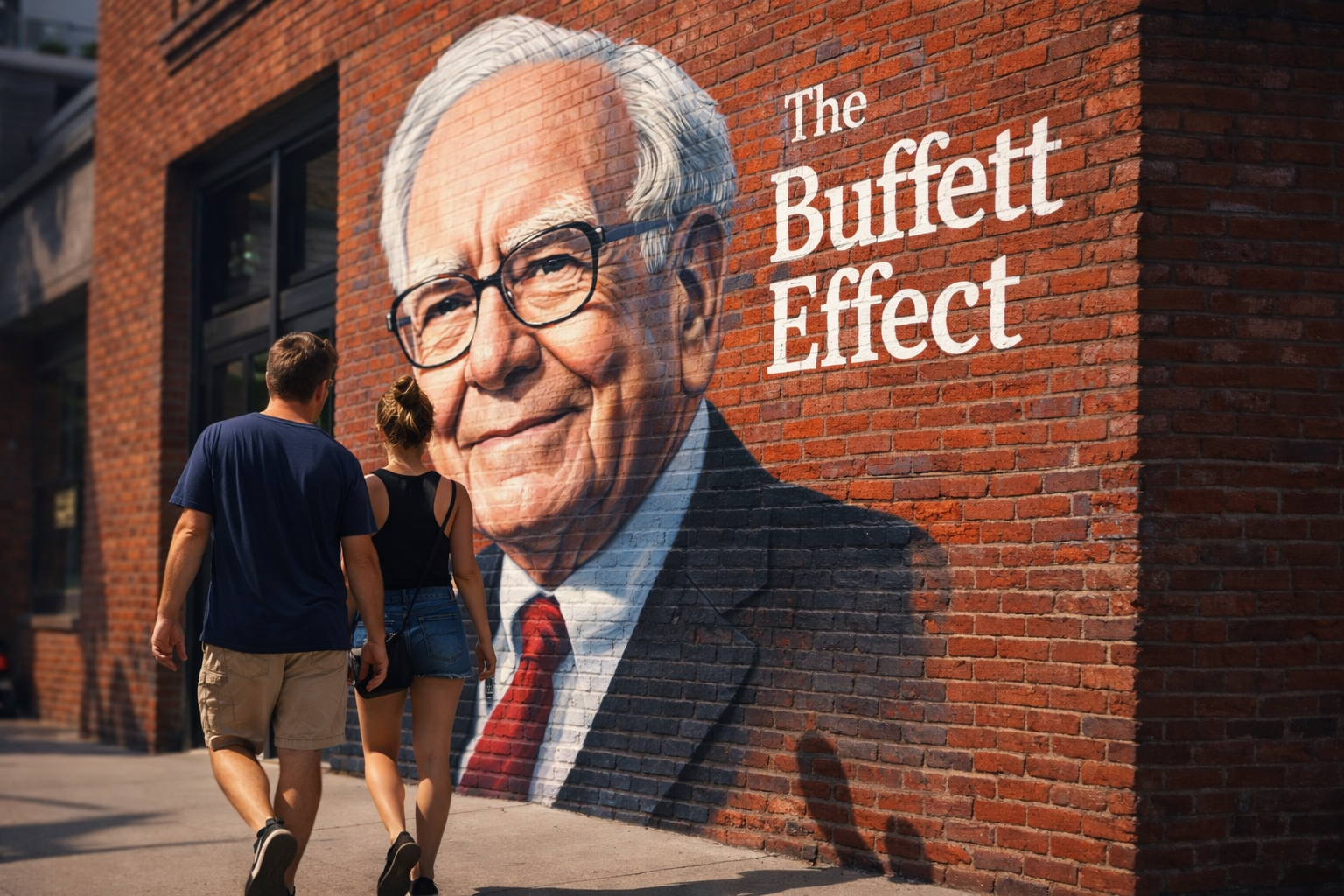
When Warren Buffett, one of the most disciplined capitalists in modern history, says he plans to give away 99 percent of his wealth, it makes headlines for obvious reasons. The “Oracle of Omaha” isn’t just another billionaire he’s a symbol of long-term thinking, restraint, and compound growth.
Major news outlets including CNBC, The New York Times, The Wall Street Journal, and Reuters have all reported on Buffett’s long-stated intention to donate nearly all of his fortune, much of it through philanthropic structures tied to the Giving Pledge and foundations associated with his family and long-time partners. But beyond the applause and inspirational quotes, there are deeper questions that deserve attention.
Why is Warren Buffett really doing this? When will this wealth actually be distributed? How will it be allocated and who truly benefits? And perhaps most importantly: what does this say about the future of wealth, power, and responsibility in America?
Why Would Warren Buffett Give Away 99% of His Wealth?
Buffett has repeatedly stated that vast sums of inherited wealth can be harmful if passed down unchecked. He’s argued that extreme concentration of capital within families often discourages ambition and distorts incentives. That philosophy aligns with his broader worldview: capital should be productive, not idle. Money, in Buffett’s mind, is a tool not a trophy.
Giving it away isn’t an act of guilt. It’s an act of allocation.
From a purely strategic standpoint, Buffett understands something most people don’t: unused capital is wasted capital. And capital deployed into social systems, education, health, and infrastructure can yield returns that markets alone cannot produce. This isn’t charity as emotion. It’s charity as logic.
The Question Everyone Avoids: When Does This Actually Happen?
Here’s where things get interesting. Despite the headlines, Buffett has been clear that the bulk of his wealth will not be distributed until after his death. While he has donated tens of billions over time, the overwhelming majority of the 99 percent commitment remains future-dated. This matters.
It means the announcement functions more as a long-term moral signal than an immediate economic event. Markets won’t feel it tomorrow. Communities won’t feel it next quarter. The impact is deferred. That raises an uncomfortable but fair question: how much good could be done now if even a fraction of that capital were deployed earlier?
How Will the Wealth Be Distributed?
According to reporting from outlets like Reuters and CNBC, Buffett’s wealth is expected to flow primarily through foundations, many managed by his children, and organizations aligned with the Giving Pledge. This structure ensures continuity, oversight, and adherence to Buffett’s values but it also centralizes decision-making.
Philanthropy at this scale is not democratic. It is curated.
That doesn’t make it wrong, but it does mean that enormous social influence remains concentrated in a small number of hands, even after the money changes form. The public conversation often frames this as “giving away wealth,” but in reality, it’s more accurate to call it reallocating power.
Who Really Benefits?
In theory, society does. In practice, the benefits depend entirely on execution. Large foundations have done incredible work and also faced criticism for bureaucracy, inefficiency, and top-down solutions that miss local realities. The impact of Buffett’s giving will hinge not just on the size of the checks, but on whether the recipients are close enough to the problems they’re trying to solve.
Grassroots organizations, independent media, small community builders, and early-stage initiatives often struggle to access traditional philanthropic pipelines despite being closest to real-world impact. That gap matters.
A Capitalistic Approach Perspective
At Capitalistic Approach, we believe capitalism and accountability are not opposites they’re partners. Independent journalism, investigative reporting, and community-driven media don’t run on ideology. They run on resources. On people. On time. On families trying to build something sustainable in a rapidly changing economy.
So yes, we’ll say this with a straight face and a slight smile:
Mr. Buffett if you’re really planning to give 99 percent of your wealth away, we could seriously use some backing.
If you or your people happen to read this, feel free to hit the donate button… or reach out directly. Half joking. Fully serious.
The Bigger Picture
Warren Buffett’s pledge isn’t just about money. It’s about legacy. The real test won’t be the headline or the percentage. It will be whether this historic transfer of wealth strengthens independent institutions, empowers local voices, and leaves society more resilient not just better funded.
Because in the end, the question isn’t whether billionaires should give away their money. It’s whether we’re brave enough to ask how, when, and who gets to decide. And that conversation is long overdue.
Support Independent Journalism
If you believe American taxpayers deserve transparency, and real answers help this message reach more people.
- Share this article with your friends, family, and community
- Follow Capitalistic Approach on social media for continued investigations, opinions, and reporting
- Engage with our content comments, discussions, and shares help independent media survive
- Support independent journalism that isn’t funded by political insiders or special interests

A Poll That Should Stop America in Its Tracks
A recent headline reported by Reuters, citing data from Ipsos, claimed that one-third of Americans support U.S. strikes on Venezuela. Read that again. One-third of Americans. At first glance, it sounds authoritative. It sounds definitive. It sounds like “the people have spoken.” But here’s the uncomfortable truth: most Americans never spoke at all.
Let’s Do the Math They Don’t Want You to Do
The estimated population of the United States today is approximately 335 million people. If one-third of Americans support military strikes, that would mean roughly: 111–112 million Americans
Now Pause. Ask yourself a simple, honest question:
- Do you personally know anyone who was asked this question?
- Were you asked?
- Did anyone you know vote in this poll?
For most Americans, the answer is a clear no. So where does this number come from?
The Short, Convenient History of Polling
Polling didn’t begin as a tool for headlines or political leverage. It began in the early 20th century as a way to estimate public sentiment before mass elections and to help newspapers understand reader attitudes. Early pollsters like George Gallup introduced statistical sampling, arguing that a small but “representative” sample could approximate the views of millions.
In theory, that sounds reasonable.
In practice, it has become one of the most abused tools in modern politics. Polling has slowly shifted from measuring opinion to manufacturing perception.
Presidential Approval Ratings: The Same Flawed Formula
We see this most clearly in presidential approval polls. One widely cited example: a national poll surveying 1,248 U.S. adults reported Donald Trump with a 42% approval rating.
- 1,248 people
- In a country of 335,000,000
- Used to define how “America” feels
That means 0.00037% of the population is effectively speaking for everyone. Yet these numbers are treated as gospel.
How Can 1,248 People Speak for 335 Million?
- The sample is “weighted”
- Demographics are “balanced”
- Margins of error are “acceptable”
But here’s the truth no pollster advertises: A sample can be statistically valid and still socially disconnected from reality. Because the real issue isn’t math. It’s access.
Who Actually Gets Polled?
- Polling today relies heavily on:
- Landlines (yes, still)
- Online panels
- Opt-in survey participants
- People who want to answer polls
That alone eliminates:
- Millions of working-class Americans
- People working multiple jobs
- People without stable internet
- People who distrust media or institutions
- People who simply don’t have time to “participate”
In other words, everyday Americans.
So when we hear that 1,248 people answered a poll, it doesn’t sound like America.
It sounds like:
- Political insiders
- Retirees
- Media-adjacent demographics
- Policy-engaged elites
- Or as many Americans would put it plainly:
Those numbers sound more like government approval ratings not public opinion.
Economic and World Events: Polls as Narrative Tools
Polling spikes during moments of crisis:
- Wars
- Economic downturns
- Elections
- Pandemics
- International conflicts
Why?
Because polls don’t just reflect sentiment — they shape it. When Americans see headlines like:
- “Majority supports intervention”
- “Public backs economic policy”
- “Voters approve leadership”
- Maybe I’m in the minority
- Maybe I’m out of touch
- Maybe this is inevitable
The Venezuela Question That Changes Everything
Here’s the most important question that rarely gets asked:
If one-third of Americans truly support bombing Venezuela, why aren’t Americans voting on it?
No ballot. No referendum. No national vote. No public town halls. Just a headline. If the support were real — 112 million strong shouldn’t that opinion be loud, visible, unavoidable? Instead, it appears quietly in a poll.
The Polling Paradox Nobody Wants to Address
- Polls claim to represent you
- But you are never asked
- Polls influence policy
- But policy affects your life
- Polls justify action
- But you never voted for it
Approval Ratings vs. Consent
- Foreign policy
- Military action
- Economic restructuring
- National direction

Why This Matters More Than Ever
- Rising global tensions
- Economic instability
- Declining trust in institutions
- To bypass public debate
- To avoid accountability
- To frame decisions as “already supported”
A Question Every American Should Be Asking
So we ask plainly:
If Americans are supposedly voting in these polls, where is our ballot?
Final Thought: Opinion Without Participation Is Not Representation
Polling can be useful. Polling can be informative. But polling without transparency, access, and broad participation becomes something else entirely. If leaders want to claim the will of the people, then the people must actually be asked. Until then, headlines claiming “Americans support” anything should be treated with skepticism not submission.
Because a nation of 335 million deserves more than 1,248 voices deciding its future. And if that makes institutions uncomfortable? Good. Some questions are supposed to be.
Support Independent Accountability Journalism
If you believe American taxpayers deserve transparency, and real answers help this message reach more people. Share this article with your friends, family, and community
Follow Capitalistic Approach on social media for continued investigations, opinions, and reporting

Why People Love the Idea of Eliminating Income Taxes
The idea of eliminating income taxes resonates deeply with Americans for a simple reason: it feels fair.
People work, earn, and sacrifice yet a portion of every paycheck is taken before it ever reaches their hands. For many households, income taxes are not an abstract policy concept; they are a constant, visible reminder that effort does not equal reward. When political leaders suggest eliminating income taxes, the message is immediately understood: keep more of what you earn.
There is also a psychological appeal. Income taxes are perceived as a penalty on productivity. Work more hours, earn a bonus, take a risk and the government takes a larger share. To many Americans, this feels backward in a system that claims to reward hard work and ambition. Removing income taxes symbolically signals that labor should not be punished.
From an economic standpoint, supporters believe eliminating income taxes could:
- Increase take-home pay overnight
- Boost consumer confidence and spending
- Encourage entrepreneurship and investment
- Reduce compliance and administrative burdens
It also cuts across political lines. Libertarians see income taxes as government overreach. Conservatives see them as barriers to growth. Even some progressives argue that wage earners shoulder a disproportionate burden compared to asset holders and corporations that can minimize taxable income. When figures like Donald Trump publicly float the idea of eliminating income taxes, it taps directly into this frustration.
The proposal sounds bold, disruptive, and pro-worker especially in an era where trust in government spending is low.
Why Eliminating Income Taxes Is Usually Unrealistic
Despite its popularity, eliminating income taxes is almost always where political rhetoric stops and reality begins. Federal income taxes are not a minor revenue source. They fund core government functions, including Social Security, Medicare, national defense, infrastructure, courts, and federal agencies. Removing them without a replacement would create an immediate and massive funding gap.
This is where most proposals fall apart.
In practice, politicians rarely explain:
- What replaces the revenue
- How existing programs remain funded
- Why prices wouldn’t rise elsewhere to compensate
- How the transition would be managed without economic shock
Without a replacement system, eliminating income taxes simply shifts the burden. Governments may raise sales taxes, increase fees, expand borrowing, or allow inflation to act as a hidden tax. In many cases, consumers end up paying more indirectly even if income tax disappears on paper.
There is also a structural problem. The U.S. tax system is deeply embedded into everything from payroll systems to bond markets to long-term federal obligations. Removing income tax without redesigning the entire funding architecture would destabilize financial markets and public programs.
That’s why, despite repeated claims and campaign talking points, there are no existing federal bills that eliminate income taxes while preserving current government operations. The idea is politically attractive, but implementing it requires a complete rethinking of how government is funded something few elected officials are willing to confront publicly.
In short, eliminating income taxes is not impossible but without a comprehensive replacement framework, it remains more slogan than solution.
This plan shows how America could eliminate income taxes while still funding essential government functions without raising prices and orient the economy for everyone to thrive.
Note: Some Republican leaders, including Donald Trump, have promoted the idea of eliminating income taxes. However, to date, there are no existing federal bills that fully eliminate income tax while maintaining current government programs only proposals and talking points. This blueprint fills that gap by showing how something like it could be built in reality.
Some political leaders (including Donald Trump at times) have claimed they will eliminate income tax. The appeals are clear:
“Keep more of what you earn.”“Work harder, keep more.”“Work harder, keep more.”However, to date:There are no federal laws on the books that abolish income tax and simultaneously maintain funding for government programs. We want to make sure by repeating this statement that our readers are fully aware this subject has mainly been talking points and know actions have been taking to move forward.
This blueprint shows: How a tax-free premise could work in practice
What revenue sources would replace income tax.” Why it’s not just rhetoric but a potential actual system.” Why This Is More Than Reagan or Bush Plans Previous tax cuts have generally: Reduced tax rates
Increased deductions
Shifted burden, not removed it
This proposal goes further: Income tax goes away for individuals, replaced with sustainable revenue streams that don’t burden wages or consumer costs.
Projected Benefits
- People keep more of their earnings
- Lower administrative compliance cost
- Jobs grow because hiring costs fall
- Retirement and social programs stay funded
- Investment uses government returns, not worker taxes
Key Risks & Mitigations
- Shortfall during transition
- Temporary bridging bonds or phased tax reduction
- Asset value volatility
- Conservative investment mandate & diversified portfolio
- Political resistance
- Broad bipartisan advisory board and constitutional protections
- Fear of “privatization”
- Public transparency and dividend sharing
Citizen Prosperity Built In. This system can also support:
- Universal dividends from national revenues
- Rebates when revenue exceeds expectations
- Incentives for investment in infrastructure and technology
Philosophical Bottom Line Instead of:
We tax your work to pay for government, we shift to we earn revenue from collective ownership and smart public assets, not from your labor.” That’s the real path to keeping income, protecting liberties, funding programs, and letting people thrive.
The Big Idea
Instead of funding government primarily through income and payroll taxes, the U.S. would shift to a mixed revenue system where the government earns money from: Strategic ownership stakes,public returns and dividends,economic rent on public assets,and modern revenue utilities. This goal gets rid of income tax, keeps prices stable (no inflationary pressure), Preserves programs (Social Security, defense, infrastructure, Medicare, etc.) Lets ordinary people keep more of what they earn, Helps society thrive through dividends and investment returns.

Advertisement
How It Works Three Revenue Pillars
1. National Wealth Endowment
America becomes a stakeholder in high-margin sectors and financial assets: The U.S. government holds minority equity stakes in key industries (e.g., infrastructure, utilities, financial rails, data utilities). It invests in diversified global portfolios like a huge sovereign wealth fund. Returns are spent on government services instead of income taxes.
Think of Norway’s sovereign wealth model but one owned collectively by all Americans. Some of the benefits for the average American would be the system no longer tied to wages, doesn’t push prices higher, Future focused income stream
2. Rents from Public Assets (Not Production)
Instead of taxing labor or goods, America collects rents on things that are inherently public or scarce such as land value rents
Oil, gas, and mineral rights, spectrum fees (telecom bandwidth) Congestion and environmental rents, public infrastructure concessions. Because these are location or scarcity rents, they don’t get passed directly into consumer prices the way income taxes and sales taxes do. Benefits to the average american. Captures unearned economic value efficient and predictable revenue base, Encourages productive use of resources.
3. Public Utility Revenue Systems
Why This Doesn’t Raise Consumer Prices
Traditional taxes (income, payroll, VAT) show up in: Higher consumer prices, Lower take-home pay, Lower hiring and investment. This model replaces taxes with revenue from:rents,returns,asset utilization. None of these are directly added to the price of goods and services the way income or sales taxes are.
Our Conclusion
At its core, this blueprint for a tax-free America is about restoring balance, dignity, and economic freedom to everyday Americans. It’s about taking our collective foot off the necks of workers, families, small businesses, and retirees who are being crushed by a system that punishes productivity and rewards complexity. When people are allowed to keep more of what they earn, they spend, invest, build, and innovate creating real prosperity instead of artificial dependence.
Americans don’t want tighter controls, digital rationing, or a future dictated by a central bank digital currency; they want opportunity, transparency, and the freedom to thrive on their own terms. A tax-free model that actually works doesn’t weaken America it strengthens it by unleashing the full potential of its people and trusting them to do what they’ve always done best: build, grow, and prosper.
Support Independent Accountability Journalism help this message reach more people.
Share this article with your friends, family, and community, Follow Capitalistic Approach on social media for continued investigations, opinions, and reporting Engage with our content comments, discussions, and shares help independent media survive. Support independent journalism that isn’t funded by political insiders or special interests

Three-Year Corporate Tax Extension in New York to Support $260 Billion Budget

Celebrity Solstice Alaskan Cruise Video. All the best bits

Try Not To Laugh | Funny Cat Video Compilation 2017

Trump Reveals Messages from World Leaders; Indiana Claims First National Championship

Winter Storm Provides Much-Needed Surge for Tug Hill Snowmobile Industry

Dow, S&P 500, Nasdaq Futures Plunge Amid Trump Tariff Threats and Bond Sell-Off Concerns

Trump Declares ‘No Turning Back’ on Greenland Proposal as EU Leader Promises ‘Steadfast’ Response – Live Updates

Pardoned January 6 Rioter Andrew Johnson Set to Face Child Molestation Trial

AI Revolutionizes Business Processes, but Talent Remains Essential | Technology Gas News

Who Might Be the Face of Science Videos in 2026—and Why That Could Be You

Who Is Really Voting in These Polls? The Shocking Truth Behind America’s Approval Numbers

Blueprint for a “Tax-Free America” That Actually Works

Four Forecasts for 2026

Major Indices Experience Weekly Declines as Treasury Yields Reach Four-Month High

It Took 35 Years for T. rex to Reach Full Maturity

EXCLUSIVE: Will Smith’s Former Best Friend Bilaal Breaks Silence in Explosive Tasha K Interview — Lawsuit, Scientology Allegations, and Claims of an Attempt on His Life

2026 NFL Coaching Update: John Harbaugh Nearing Deal with Giants; Mike Tomlin Not Expected to Coach Next Season

Top Picks from CES 2026: Editors Select the Best Products and Technologies

Carbon Industries Group Signs Major Carbon Credit Agreements with Senegalese Government | Currency News | Financial and Business Insights

Elon Musk’s Return to Politics: Why Not Explore a New Hobby Instead? | Arwa Mahdawi
Celebrity Solstice Alaskan Cruise Video. All the best bits
Try Not To Laugh | Funny Cat Video Compilation 2017

The HORRIFYING Final Moments Of Timothy Treadwell Were CAUGHT On Tape

Laugh a Lot With The Funny Moments Of Monkeys 🐵

This is What a $250,000 Elite Protection Dog Looks like!

Laugh a Lot With The Funny Moments Of Monkeys 🐵 Funniest Animals Video

Weirdest Celebrity Pets

New Funniest Cats and Dogs Clips 2025😼🐶Try Not To Laugh😜 Part 1

Hilarious CATS 🐱 and DOGS 🐶 Funny Animal Videos 2025 🤣 You Can’t Stop Laughing! #16

Ep 57: The WIENERLYMPICS! — (Cute & Funny Wiener Dog Video)
-
 Opinion5 days ago
Who Is Really Voting in These Polls? The Shocking Truth Behind America’s Approval Numbers
-
 Opinion5 days ago
Blueprint for a “Tax-Free America” That Actually Works
-
 Finance4 days ago
Major Indices Experience Weekly Declines as Treasury Yields Reach Four-Month High
-
 Science5 days ago
It Took 35 Years for T. rex to Reach Full Maturity
-
 Sports5 days ago
2026 NFL Coaching Update: John Harbaugh Nearing Deal with Giants; Mike Tomlin Not Expected to Coach Next Season
-
 Technology1 week ago
Top Picks from CES 2026: Editors Select the Best Products and Technologies
-
 Politics2 weeks ago
Elon Musk’s Return to Politics: Why Not Explore a New Hobby Instead? | Arwa Mahdawi
-

 Sports3 days ago
Cleveland Browns Update (1/17): A Wealth of Head Coach Candidates