
US News
Trump Promises to ‘100%’ Follow Through on Greenland Tariffs, While EU Commits to Safeguarding Its Interests

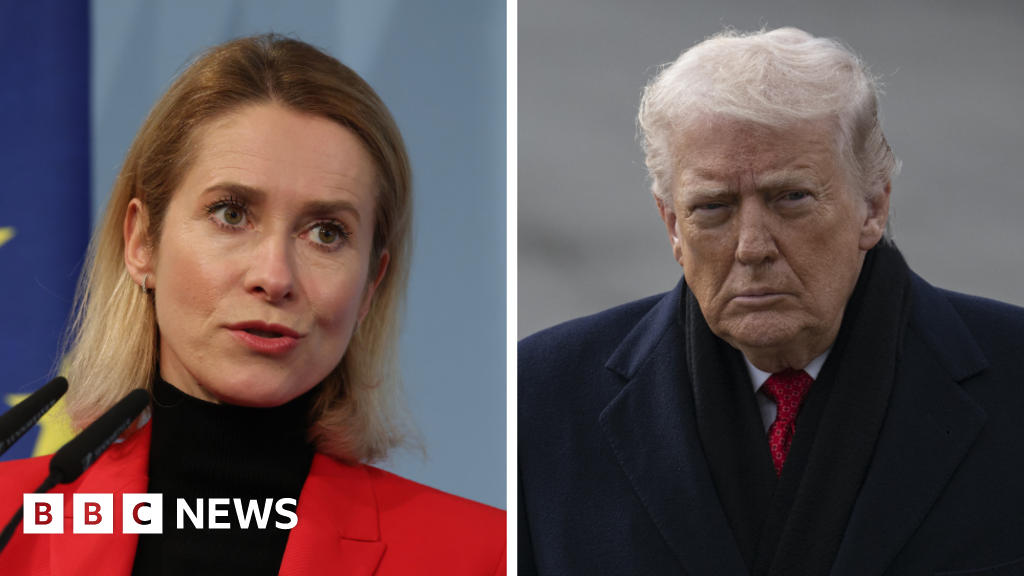
The Greenland Controversy: Trump, Tariffs, and European Sovereignty
The recent international uproar surrounding Greenland has ignited a storm of diplomatic negotiations and exchanges, highlighting the complex interactions between the United States and its European allies. At the center of this controversy is Donald Trump’s aggressive stance on acquiring Greenland and imposing tariffs on European countries resistant to his demands.
Trump’s Bold Claim
Donald Trump has declared a firm resolve to impose hefty tariffs on European nations that oppose his aspiration to control Greenland. While discussing this subject with NBC News, Trump made headlines with his assurance that he would “100%” follow through on these tariff threats. His proposal includes a 10% tariff on goods imported from the UK and seven NATO allies, which is set to escalate to 25% later this year if a deal is not reached regarding Greenland’s ownership.
Europe’s Unified Front
In response to Trump’s assertions, European officials have united in their commitment to protecting Greenland’s sovereignty. The Danish foreign minister openly rejected any notion that threats could facilitate U.S. acquisition of the semi-autonomous territory, stating vehemently that ownership cannot be coerced. UK Foreign Secretary Yvette Cooper echoed this sentiment, asserting that the future of Greenland belongs exclusively to Greenlanders and Danes.
Military Posturing and Diplomatic Tensions
In a further escalation, Trump hinted he would not rule out military action regarding Greenland, a statement that alarmed many within European circles. Denmark’s government cautioned that any such move could jeopardize the stability of NATO, which the alliance has upheld since 1949. In a symbolic gesture of solidarity, several NATO countries recently sent troops to Greenland, likely as a show of support against Trump’s external pressures.
Kaja Kallas and EU’s Response
Kaja Kallas, the EU’s foreign policy chief, stated that while the bloc does not wish to exacerbate tensions, it firmly stands its ground against Trump’s trade threats. Kallas criticized the use of trade as a weapon, insisting that sovereignty “is not for trade.” This clarion call reflects the EU’s broader stance on global diplomacy, emphasizing mutual respect and dialogue over coercive policies.
A Turning Focus: The War in Ukraine
During the ongoing crisis, Trump suggested that European leaders should redirect their attention to the ongoing conflict between Russia and Ukraine, which he argues should be their primary concern instead of Greenland. This remark illustrates the complexity of international relations wherein countries must balance regional security with overarching geopolitical ambitions.
Denmark’s Strategic Stance
The Danish government’s position remains unequivocal. Lars Løkke Rasmussen, the Danish foreign minister, has declared that European countries must demonstrate to Trump that his tariff threats are a misguided approach. Rasmussen emphasized there are “red lines that cannot be crossed,” underscoring Denmark’s commitment to Greenland’s sovereignty.
NATO’s Role in Arctic Security
Despite the ongoing frictions, NATO Secretary-General Mark Rutte reassured that the alliance will continue to collaborate with Denmark and Greenland on matters of Arctic security. The importance of this collaboration can’t be overstated, as the Arctic region’s geopolitical significance is on the rise, attracting global attention.
Emergency Meetings and Future Concerns
In light of recent events, the EU plans to hold an emergency summit to address Trump’s aggressive tariff threats. The collective response is aimed at fostering diplomatic dialogue rather than escalating tensions. Amidst this backdrop, the alliance appears steadfast in its support for Greenland’s territorial integrity while seeking amicable solutions.
International Diplomacy in a Digital Age
Recent communications between Trump and various European leaders shed light on the intricacies of international diplomacy in the digital age. Text exchanges between Trump and the Norwegian prime minister revealed misunderstandings regarding the Nobel Peace Prize, demonstrating how personal interactions can shape broader political narratives.
Military Operations in Greenland
Amidst this geopolitical tumult, the North American Aerospace Defense Command (NORAD) announced that military aircraft were en route to Pituffik Space Base in Greenland as part of routine operations. This nuance adds another layer of complexity to the situation, as these movements have been coordinated with both Denmark and the Greenlandic government, emphasizing preparedness rather than confrontation.
This multifaceted scenario showcases the trials and tribulations of international relations, where assertions of power intersect with deep-rooted national sovereignties and the intricacies of diplomacy. As the world watches, the unfolding events will undoubtedly shape the future of Greenland, NATO, and transatlantic relations.
US News
Trump Declares ‘No Turning Back’ on Greenland Proposal as EU Leader Promises ‘Steadfast’ Response – Live Updates
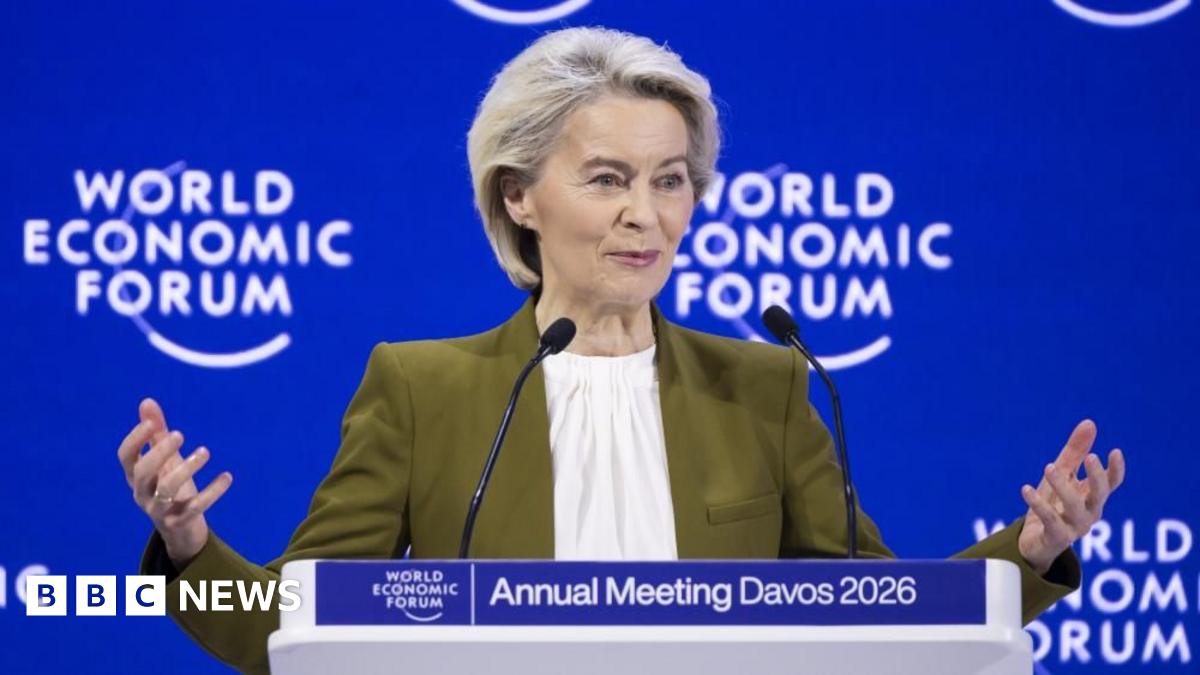
Europe Needs to Sharpen Up to Trump’s ‘Attention Seeking’ – Insights from Anthony Scaramucci
As momentum builds in Davos for President Donald Trump’s upcoming appearance, discussions among journalists and former advisers shed light on the implications of his provocative rhetoric, particularly regarding Greenland. Conversations with individuals close to Trump’s administration reveal a complex web of strategies and perceptions that could chart the course of U.S.-European relations.
Trump’s Negotiating Tactics?
One of the notable figures providing insight is Gary Cohn, Trump’s former chief economic adviser. Cohn suggests that Trump’s aggressive statements can be understood as part of a broader negotiation strategy. In his view, such tactics may aim to shift the dynamics of international agreements and influence outcomes in favor of the U.S. It’s a perspective that frames Trump’s approach as calculated, with a focus on leveraging power for negotiation advantages.
Scaramucci’s Perspective: Attention Seeking
Contrasting Cohn’s assessment is Anthony Scaramucci, who served as Trump’s communications director for a brief period. When asked whether he agrees with Cohn’s viewpoint, Scaramucci offered a more critical take. “I don’t think this is a negotiating tactic. I think it’s attention seeking,” he remarked, emphasizing a different psychological angle to Trump’s behavior.
Scaramucci’s assertion highlights a belief that Trump’s comments often serve more to draw publicity and provoke reactions than to navigate toward tangible policy outcomes. This interpretation points to a fundamental understanding of Trump’s personality, suggesting that his communication style is less about serious negotiation and more about maintaining relevance in the headlines.
The European Response: Time for Toughness
Delving deeper into the dynamics of European leadership under Trump’s scrutiny, Scaramucci argues that the European leaders need to step up their responses. He stated, “The Europeans are going to have to put some teeth into their rebuttals to President Trump.” This declaration underscores the necessity for European allies to craft responses that are not only firm but also united.
Scaramucci points out that public humiliation appears to be a tactic employed by Trump against leaders such as NATO Secretary-General Jens Stoltenberg and French President Emmanuel Macron, particularly through derisive text messages. This behavior, he contends, requires a more robust and communal European approach in handling interactions with the U.S. president.
Coalescing Against Provocation
Scaramucci is clear in his belief that cohesion among European leaders is crucial. He articulates that “these leaders have got to coalesce and get tougher with him, because that’s really the only thing he responds to.” The implication here is significant; for European leaders to effectively navigate Trump’s provocations, they must unite and present a formidable front.
Understanding the Seriousness of Trump’s Threats
When discussing whether Trump’s threats—such as potential tariffs or military actions related to Greenland—are serious, Scaramucci provides an interesting insight. “No, he’s not serious about a lot of things. That’s his nature,” he claims, emphasizing that many of Trump’s statements may lack genuine intent. This perspective invites curiosity about how world leaders interpret such threats and the strategic considerations that follow.
A Shift in Diplomatic Engagement
The dialogue surrounding Trump’s approach and its ripple effects on Europe underscores a pivotal moment in international relations. With varying interpretations of Trump’s behavior—from negotiation tactics to attention-seeking antics—the need for clear, effective communication from European leaders becomes palpable.
By examining these insights, it becomes evident that Trump’s presence on the global stage not only challenges norms but also calls for a recalibrated response strategy from long-time allies. As leaders gather in settings like Davos, the implications of their dialogues and decisions will resonate far beyond immediate interactions, shaping the future of global diplomacy.
US News
January 18, 2026 — Trump Administration Updates: EU Ambassadors Convene for Emergency Meeting on Greenland

Tensions Rising in Minneapolis Amid Federal Law Enforcement Escalation
On January 9, Minneapolis Mayor Jacob Frey expressed his strong opposition to the Trump administration’s recent decision to escalate federal law enforcement presence in the city. The administration informed over 1,500 active-duty soldiers to prepare for possible deployment to Minnesota, a move that sparked significant concern among local officials and residents.
A Response to Intimidation
During an appearance on CNN’s State of the Union, Frey articulated his feelings regarding the situation: “This act was clearly designed to intimidate the people of Minneapolis.” He described the federal actions as “ridiculous” and “completely unconstitutional,” emphasizing the implications of such military deployment in urban areas. Frey’s use of strong language highlights the gravity of the issue and resonates with many who feel their local communities are being threatened by federal overreach.
The Unprecedented Nature of Federal Involvement
“I never thought in a million years that we would be invaded by our own federal government,” Frey continued, reflecting a sense of disbelief and alarm among civic leaders. This unprecedented move raises questions about the role of federal authorities in local governance and the fine line between law enforcement and military presence in civilian spaces.
National Guard Mobilization
In response to the surge in federal actions and ongoing protests surrounding immigration enforcement in Minneapolis, state officials have also activated the National Guard. This dual presence of both state and federal forces sets the stage for potential confrontations that many local leaders deem unacceptable. Frey expressed his concerns explicitly, stating, “We can’t have that in America,” underlining the fear of divisiveness and conflict in the community.
Longing for Calm
Frey’s vision for Minneapolis aims for peace and normalcy. He firmly believes that calm can be restored only once federal ICE agents withdraw from the area, allowing citizens to return to their daily lives without the stress of heightened enforcement actions. This sentiment is echoed by many residents who yearn for stability amid a tense atmosphere.
Political Backlash from the White House
In a stark rebuttal to Frey’s statements, the White House Rapid Response account tweeted that the Trump administration “is not going to surrender to the Radical Left,” framing the situation as part of a larger battle against crime and what they describe as “rampant fraud” in the city. Such strong rhetoric from the administration illustrates the deepening political divide—one where local governance and federal authority collide dramatically.
Investigations Looming
Adding another layer to this already tense situation, the Department of Justice is reportedly investigating Frey and Minnesota Governor Tim Walz for possible obstruction of federal law enforcement. Sources familiar with the investigation suggest a growing scrutiny of local leaders’ actions in the wake of escalating federal efforts. Frey publicly stated that he has not received a subpoena or any formal notice regarding the investigation, expressing uncertainty about specific allegations.
Compliance with Federal Demands
When queried about the possibility of receiving a subpoena, Frey reassured the public, stating, “We have done nothing wrong, so of course we will comply.” Yet, he also emphasized the bizarre and alarming nature of the circumstances in which they’re operating. His statements reflect a profound unease about the integrity of local governance in the face of aggressive federal posture.
Through all of this, the atmosphere in Minneapolis remains charged, with residents, officials, and the federal government continuing to grapple with the unfolding events and their implications for the community’s future.

A Diplomatic Tug-of-War: U.S. Tariffs and Greenland’s Territorial Integrity
The recent diplomatic saga surrounding President Donald Trump’s proposed acquisition of Greenland has sparked significant upheaval in U.S.-Europe relations, especially as Treasury Secretary Scott Bessent defended tariff measures against selected European nations. The intention is to counteract what many perceive as a push for territorial expansion grounded in a sense of American entitlement, raising eyebrows and ire alike internationally.
The Tariff Standoff
In a recent interview on NBC News’ “Meet the Press,” Bessent articulated that the proposed tariffs are a preventive strategy aimed at avoiding future “national emergencies.” The tariffs target Denmark and seven other European nations—Norway, Sweden, France, Germany, the United Kingdom, the Netherlands, and Finland—who have voiced opposition to the Greenland acquisition. Initially set at 10%, these tariffs are poised to escalate to 25% if a deal remains unattained by a looming deadline of June 1.
European Reactions
The announcement has precipitated a flurry of political activity across Europe. António Costa, President of the European Council, stated intentions to convene an extraordinary council meeting, signaling that European leaders are uniting in their response to this perceived escalation. Historically, Europe has maintained a delicate relationship with the U.S., viewing NATO as a bastion of security and stability. However, Trump’s tariff move threatens to unravel these long-standing alliances and fuel animosity amongst allies.
Many European leaders are exhibiting signs of fatigue and impatience with the U.S. administration, hesitant to confront Trump directly, yet displaying a newfound unity in defending Denmark against what they deem an unacceptable diplomatic escalation. The reference to “national emergency” by Bessent adds a layer of discomfort and ambiguity, as it literalizes a confrontational approach to negotiations.
Coastal Defiance in Denmark
In Denmark itself, public sentiment resonates with frustration over the U.S. stance. Thousands of Danes took to the streets in a demonstration, chanting “Make America Go Away,” showcasing their discontent with Trump’s territorial ambitions. The grassroots response indicates a palpable defensive posture among the Danish people toward their national sovereignty, which they consider threatened by foreign intervention.
A Broader Geopolitical Context
Trump’s statement about acquiring Greenland is not merely a quirk of international relations but reflects deeper geopolitical concerns. Alongside Greenland, there are indications that Trump is directing attention toward Canada, complaining privately about potential vulnerabilities to U.S. adversaries in the Arctic. This points to a trend in U.S. policy where territorial acquisitions are becoming the focus as global powers scramble for control over valuable resources.
Rare Earth Minerals and Global Competition
Greenland’s strategic importance extends beyond its size or territorial allure; the island is home to significant reserves of rare earth minerals, which are crucial in modern technology and defense systems. As the global race for artificial intelligence and other advanced technologies escalates, these resources are becoming increasingly coveted. However, experts caution that the environmental and logistical challenges posed by mining operations in such a remote region could complicate or even negate the perceived value of these minerals.
Tensions with NATO
The backdrop to these developments cannot be overlooked—it signals a growing confrontation not just between the U.S. and selected European countries but also within NATO itself. Any miscalculation, especially as tariffs disrupt economic ties, risks undoing decades of security architecture in the Atlantic. The ramifications could extend well beyond trade, impacting areas like defense cooperation and collective responses to global crises.
The Fine Line of Diplomacy
Navigating this territorial tug-of-war demands skillful diplomacy. Mixed signals and rapid escalations could alienate allies and destabilize established networks. Thus far, the U.S. administration has tread a fine line between projecting strength and risking overreaching—a precarious balance that could tip at any moment.
The economic ramifications of Trump’s proposed tariffs will not only affect trade relations but will also ripple through diplomatic channels, leading to a reevaluation of partnerships built over several decades. Each country now faces the pressing challenge of balancing national interests while preserving the fragile unity among long-term allies, thereby ensuring that the Atlantic community remains steadfast amid turbulent political currents.

Three-Year Corporate Tax Extension in New York to Support $260 Billion Budget

Celebrity Solstice Alaskan Cruise Video. All the best bits

Try Not To Laugh | Funny Cat Video Compilation 2017

Trump Reveals Messages from World Leaders; Indiana Claims First National Championship

Winter Storm Provides Much-Needed Surge for Tug Hill Snowmobile Industry

Dow, S&P 500, Nasdaq Futures Plunge Amid Trump Tariff Threats and Bond Sell-Off Concerns

Trump Declares ‘No Turning Back’ on Greenland Proposal as EU Leader Promises ‘Steadfast’ Response – Live Updates

Pardoned January 6 Rioter Andrew Johnson Set to Face Child Molestation Trial

AI Revolutionizes Business Processes, but Talent Remains Essential | Technology Gas News

Who Might Be the Face of Science Videos in 2026—and Why That Could Be You

Who Is Really Voting in These Polls? The Shocking Truth Behind America’s Approval Numbers

Blueprint for a “Tax-Free America” That Actually Works

Four Forecasts for 2026

Major Indices Experience Weekly Declines as Treasury Yields Reach Four-Month High

It Took 35 Years for T. rex to Reach Full Maturity

EXCLUSIVE: Will Smith’s Former Best Friend Bilaal Breaks Silence in Explosive Tasha K Interview — Lawsuit, Scientology Allegations, and Claims of an Attempt on His Life

2026 NFL Coaching Update: John Harbaugh Nearing Deal with Giants; Mike Tomlin Not Expected to Coach Next Season

Top Picks from CES 2026: Editors Select the Best Products and Technologies

Carbon Industries Group Signs Major Carbon Credit Agreements with Senegalese Government | Currency News | Financial and Business Insights

Elon Musk’s Return to Politics: Why Not Explore a New Hobby Instead? | Arwa Mahdawi
Celebrity Solstice Alaskan Cruise Video. All the best bits
Try Not To Laugh | Funny Cat Video Compilation 2017

The HORRIFYING Final Moments Of Timothy Treadwell Were CAUGHT On Tape

Laugh a Lot With The Funny Moments Of Monkeys 🐵

This is What a $250,000 Elite Protection Dog Looks like!

Laugh a Lot With The Funny Moments Of Monkeys 🐵 Funniest Animals Video

Weirdest Celebrity Pets

New Funniest Cats and Dogs Clips 2025😼🐶Try Not To Laugh😜 Part 1

Hilarious CATS 🐱 and DOGS 🐶 Funny Animal Videos 2025 🤣 You Can’t Stop Laughing! #16

Ep 57: The WIENERLYMPICS! — (Cute & Funny Wiener Dog Video)
-
 Opinion5 days ago
Who Is Really Voting in These Polls? The Shocking Truth Behind America’s Approval Numbers
-
 Opinion5 days ago
Blueprint for a “Tax-Free America” That Actually Works
-
 Finance4 days ago
Major Indices Experience Weekly Declines as Treasury Yields Reach Four-Month High
-
 Science5 days ago
It Took 35 Years for T. rex to Reach Full Maturity
-
 Sports5 days ago
2026 NFL Coaching Update: John Harbaugh Nearing Deal with Giants; Mike Tomlin Not Expected to Coach Next Season
-
 Technology1 week ago
Top Picks from CES 2026: Editors Select the Best Products and Technologies
-
 Politics2 weeks ago
Elon Musk’s Return to Politics: Why Not Explore a New Hobby Instead? | Arwa Mahdawi
-

 Sports3 days ago
Cleveland Browns Update (1/17): A Wealth of Head Coach Candidates