
Technology
China’s New Five-Year Plan Aims for AI Integration Across Economy and Technological Advancements

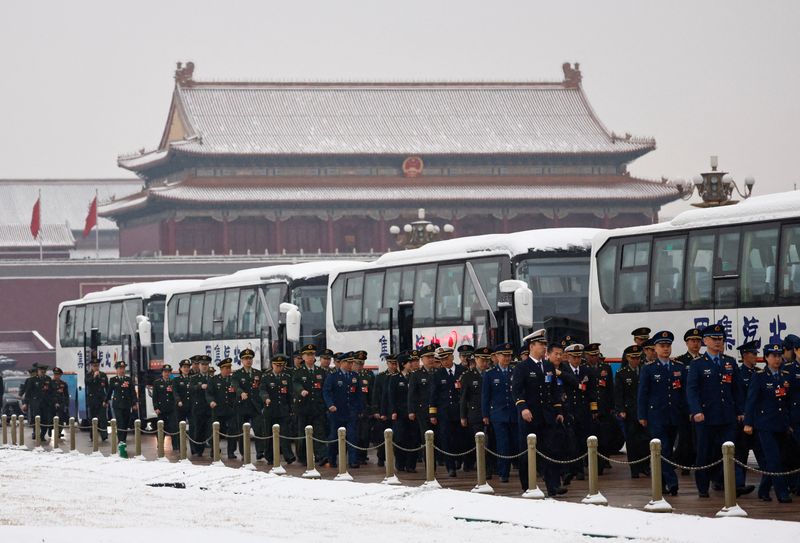
China’s Ambitious Tech Blueprint: A Deep Dive into the Five-Year Plan
Introduction to the Vision
In a world where technology rapidly evolves, China is setting the stage for a transformative leap in its economic landscape. As articulated in a new five-year policy framework, the nation’s ambition to embrace artificial intelligence (AI) and forefront emerging technologies is clear. The plan not only outlines key goals but also reflects a strategic response to a series of pressing challenges and global dynamics.
The Role of Artificial Intelligence
Central to this blueprint is the recognition that AI is not merely a tool but a catalyst for national growth. According to the policy, AI will play a pivotal role in propelling China to the forefront of global technological advancement. The document references AI over 50 times, highlighting an “AI+ action plan” designed to harness this technology across various industries, from manufacturing to healthcare.
Addressing Demographic Challenges
China’s demographic landscape is shifting, with an aging workforce leading to potential labor shortages. By integrating AI and robotics, the government aims to mitigate these challenges. Initiatives will include deploying robots in sectors like logistics and education, thereby enhancing productivity and efficiency through automation.
A Commitment to Core Technologies
Beijing’s assertion to “seize the commanding heights of science and technological development” underscores its intention to achieve significant breakthroughs in critical areas. The focus on technologies such as quantum computing and humanoid robotics reflects an eagerness to not only match but surpass global competitors, particularly the United States.
State-planning reports indicate that China is making strides in research and development across several fields, including biomedicine and robotics, highlighting its progress in independent chip development—a crucial aspect of technological sovereignty.
The Landscape of Competition
The ongoing tech rivalry with the United States shapes much of China’s strategic planning. Recent tensions, stemming from export controls on advanced technology, have pushed China to pivot towards self-reliance. The new policy is not just a roadmap for innovation but a response to external pressures that threaten its technological aspirations.
Investment in Futuristic Technologies
The five-year plan aims to propel investment into revolutionary areas such as quantum computing and embodied AI. Initiatives outlined include the development of scalable quantum computers and an integrated space-earth quantum communication network. These ambitions signal a desire not just to keep pace with global advancements but to lead them.
Open Source Strategy
A notable aspect of this plan is the emphasis on building open-source AI communities. This reflects a strategic shift in China’s approach to technology, as open-source frameworks were less emphasized in previous reports. Analysts suggest that this could provide China with a competitive edge, enabling collaboration and fostering innovation in ways that more closed systems, like those seen in the U.S., might not.
Building Infrastructure for the Future
To support these lofty ambitions, China plans to develop “hyper-scale” computing clusters backed by affordable electricity—an essential element for advancing research and large-scale AI applications. By cultivating a robust technological infrastructure, the nation aims to enhance its capabilities in both applied and fundamental research.
Conclusion of Insightful Developments
China’s detailed five-year blueprint serves as an ambitious agenda for the future. By positioning itself as a leader in AI and other emerging technologies, the nation is not only planning for economic growth but also preparing to address critical challenges and global competition.

The Evolution of Tucson’s Tech Scene: Embracing AI and Innovation
Tucson has long stood as a formidable player in the technology landscape, primarily driven by defense, aerospace, and optical sciences. As the artificial intelligence (AI) revolution unfolds, this vibrant city finds its definition of “tech” transforming at a rapid pace. The integration of AI is reshaping the very fabric of the sector, ushering in both new opportunities and challenges.
The Engine of Economic Impact: Raytheon and Beyond
At the heart of Tucson’s technology ecosystem lies a core of large, mission-driven employers. Raytheon’s operation in Tucson is not just a workplace—it’s an economic powerhouse for Southern Arizona. The company’s operational activities result in a multibillion-dollar annual economic impact, significantly contributing to the local supply chain. What’s particularly noteworthy is the evolution of defense programs increasingly reliant on software, modeling, autonomy, and advanced manufacturing. Here, AI emerges as a transformative force, enhancing everything from design cycles to quality assurance on production lines. This synergy positions Tucson as a critical hub in the defense sector while setting the stage for innovation.
The Rising Star: Startup Culture and Knowledge Workers
As established players like Raytheon lay a strong foundation, Tucson’s tech environment is being further enriched by dynamic startups and innovative research commercialization. Tech Parks Arizona, which includes the UA Tech Park and UA Tech Park at The Bridges, serves as a pivotal center for growth and collaboration. With over 100 companies and approximately 6,000 “knowledge workers” operating within its facilities, the economic impact is significant—estimated at $2 billion annually alongside $52.8 million in state and local tax revenues. Furthermore, the startup ecosystem connected to the University of Arizona Center for Innovation is thriving, with around 70 to 80 ventures in the pipeline, showcasing the region’s potential for entrepreneurial success.
AI: A Universal Catalyst for Change
The intersection of established enterprises and burgeoning startups creates a unique environment where AI is catalyzing transformation across multiple tech sectors simultaneously. Companies that previously competed on hardware or expertise now face a new imperative: the integration of intelligent software layers into their offerings. This includes applications such as predictive maintenance in aerospace, machine vision in manufacturing, decision-support tools in healthcare, and automation in logistics. This shift is not just altering product offerings; it’s redefining workforce needs, emphasizing the demand for data and software roles while also transforming vendor relationships towards cloud solutions and cybersecurity.
Navigating Infrastructure Challenges
As Tucson embraces its future, the influence of AI is equally evident in local civic discussions, particularly regarding infrastructure. The demand for data centers and high-compute facilities—a direct result of AI’s insatiable need for processing power—has sparked significant debate. Water and sustainability concerns have taken center stage amid the unfolding crisis, prompting the Tucson City Council to pass an ordinance in 2025 that mandates large water users to submit conservation plans. This regulatory shift underscores the importance of balancing technological growth with resource management and community expectations, highlighting a new chapter in business operations shaped by both opportunity and responsibility.
A Vision for the Future
Looking ahead, Tucson’s tech scene is unlikely to mimic the high-octane success of Silicon Valley. Instead, the city’s strategy revolves around amplifying its existing strengths while layering AI throughout its operations. The defense and aerospace sectors are well-positioned to thrive amid ongoing federal demand and a notable shift towards autonomous and software-defined systems. Innovations emerging from the university ecosystem, coupled with spaces designed for commercialization, signify that Tucson has the right ingredients to forge its path forward.
The future will likely be led by enterprises that can nimbly navigate this dual mandate: excelling in Tucson’s specialized strengths in defense, optics, and applied sciences while deploying AI in thoughtful, measurable, and economically viable ways. As this story unfolds, Tucson stands poised not just to adapt, but to lead in the dawn of an AI-enhanced tech landscape.

The Story of Barackia: Roots of Urban Gardening in Berlin
In Berlin during the early 1870s, a lesser-known neighborhood called Barackia captivated a wave of tourists, albeit for reasons that diverged significantly from the typical attractions of museums and palaces. Barackia was a working-class enclave where residents cultivated their own food, accommodating small dwellings and communal arrangements that lived outside governmental oversight. However, the charm of this micro-community was short-lived. In 1872, authorities descended upon Barackia, forcibly clearing it away.
Despite this abrupt ending, the seeds of urban farming had already rooted themselves in the consciousness of residents. By 1900, around 50,000 households in Berlin had embraced the practice, often through what were referred to as arbor colonies. The spirit of self-sufficiency persisted, as Germany today enshrines the right to garden within its laws—a practice that continues to thrive in its urban landscapes.
The Potential of Urban Gardening
“With a little space, you can produce an impressive amount of food,” observes MIT Professor Kate Brown, author of a compelling exploration into urban gardening. Her new book, “Tiny Gardens Everywhere: The Past Present, and Future of the Self-Provisioning City,” posits that urban gardening not only promises health and environmental perks but also fosters community. “When people come together for food and gardening, they often collaborate to solve other issues in their lives,” she adds, highlighting the broader implications of collective gardening endeavors.
The Politics of Gardening
The story of Barackia unveils the intricate politics tied to self-sustenance. When numerous individuals start cultivating food in shared spaces, questions about land ownership and societal organization surface. As Brown suggests, external interests may seek to claim control over these communal lands or capitalize on the labor invested in gardening. Urban gardening, therefore, becomes a mirror reflecting the complexities of social relations and governance.
Historical Perspectives on Land Ownership
Brown’s book, a culmination of years of archival research intertwined with firsthand accounts, kicks off its narrative in England. There, a rich tradition of communal farming existed until the late 18th century’s enclosure movement privatized much land, fundamentally altering social interactions. Brown points out that this transition from communal to private property wasn’t merely about land; it reflected an effort to manipulate labor forces and control populations, thrusting peasants into factory roles.
Resilience in Urban Farming
The narrative of urban gardening extends beyond Europe. In the mid-20th century, as the United States experienced the Great Migration, many African Americans resettled in cities, bringing with them a wealth of agricultural knowledge. In Washington, D.C.’s historically Black neighborhoods, residents established worker and food cooperatives, cleverly finding ways to adapt despite systemic challenges. Even in the face of obstacles—like inadequate waste management—their ingenuity fostered a community spirit rooted in self-sufficiency.
The Limits and Potential of Urban Agriculture
Questions inevitably arise about the viability of urban gardening in providing food. Historically, victory gardens contributed about 40% to U.S. produce during World War II, and in 1996, an astonishing 91% of the potatoes consumed in Russia emerged from urban allotment gardens. Brown emphasizes that the narrative around large-scale farming often overlooks the contribution of small-scale urban gardens, which can indeed fulfill essential food needs.
Legal Frameworks Supporting Gardening Rights
Despite the challenges, a promising trend has emerged. States like Florida, Illinois, and Maine legally recognize the right to garden, with Oklahoma currently debating similar legislation. Brown interprets this movement as a manifestation of collective desires to access self-sustaining food sources, especially in a politically polarized climate.
The Path Forward
Acclaimed by academics, Brown’s book reinforces the idea that the history of small-scale urban gardening can inform our paths to resilience. The hope is that readers will feel invigorated to advocate for their rights to garden, whether through personal endeavors or through engaging in local policy discussions. “One of the core messages of this book is that people should win the right to garden,” Brown emphasizes, envisioning a future where urban communities flourish through shared efforts.

Top Summary
Texas Instruments (TI) has announced a collaboration with NVIDIA to enhance the safety and efficiency of humanoid robots through integrated sensor and control technologies. This partnership aims to accelerate the transition from simulation to real-world deployment of robotics.
What Was Announced or Reported
- March 5, 2026: TI and NVIDIA announced a collaboration focused on developing safer humanoid robots.
- TI integrated its mmWave radar technology with NVIDIA’s Jetson Thor and Holoscan platforms to provide low-latency 3D perception and safety.
- TI’s semiconductor technology for humanoid robots will be showcased at NVIDIA GTC 2026.
How the Technology Works
TI’s mmWave radar sensor, IWR6243, connects to NVIDIA Jetson Thor via Ethernet to facilitate low-latency 3D perception. This approach fuses data from cameras and radar, improving detection and tracking capabilities while reducing false positives. The integrated system enhances the robots’ real-time decision-making by allowing them to navigate complex environments effectively.
Why This Matters
The integration of TI and NVIDIA technologies supports the development of humanoid robots that can operate safely alongside humans. This capability addresses safety gaps related to environmental challenges, such as detecting transparent obstacles like glass doors, which can pose risks during robotic navigation.
Risks or Limitations
No specific risks or limitations were mentioned in the announcement.
Official or Expert Response
Giovanni Campanella, General Manager of Industrial Automation and Robotics at TI, emphasized the importance of seamless integration between sensing, control, and safety systems. Deepu Talla, VP of Robotics and Edge AI at NVIDIA, highlighted the need for advanced processing power to synchronize AI systems with real-time data.
What Happens Next
TI plans to demonstrate its integrated solutions at NVIDIA GTC from March 16–19, 2026, in San Jose, California. The presentation will focus on the live demonstration of real-time sensor fusion technology and its significance for reliable robotic perception.
Key Facts
- Companies Involved: Texas Instruments, NVIDIA
- Date of Announcement: March 5, 2026
- Event: NVIDIA GTC 2026
- Location of Event: San Jose, California
- Technology: mmWave radar sensor (IWR6243), Jetson Thor, Holoscan

#1 Music Celebrity: Helping Animals Makes you Happy. Not Money & Fame

😍 Cutest Shih Tzu 😂 Funny and Cute Shih Tzu Puppies and Dogs Videos

Advocates Urge Preservation of State Climate Law Without Amendments

U.S. Pledges $20B in Maritime Reinsurance as Iran Tightens Grip on Strait of Hormuz – National

Netflix Withdraws from Meghan Markle’s $64 Candle Venture

Title: “Despite a Strong Week of Wall Street News, Bitcoin Faces a $110 Billion Loss”

White House Unveils Video Featuring Hollywood Stars Advocating for ‘Justice the American Way’ | Trump Administration

Marsy’s Law Could Expand to Protect Identities of Crime Victims and Officers

Tucson’s Tech Revolution: The Impact of Technology on the City’s Future | News

Celebrating Women at S&C: Professor Charlotte Bevan | Imperial News

Who Is Really Voting in These Polls? The Shocking Truth Behind America’s Approval Numbers

Blueprint for a “Tax-Free America” That Actually Works

Police Issue Warrant for Bar Patron Alleged to Have Assaulted Multiple Individuals

Winter Storm Provides Much-Needed Surge for Tug Hill Snowmobile Industry

Four Forecasts for 2026

It Took 35 Years for T. rex to Reach Full Maturity

Major Indices Experience Weekly Declines as Treasury Yields Reach Four-Month High

EXCLUSIVE: Will Smith’s Former Best Friend Bilaal Breaks Silence in Explosive Tasha K Interview — Lawsuit, Scientology Allegations, and Claims of an Attempt on His Life

2026 NFL Coaching Update: John Harbaugh Nearing Deal with Giants; Mike Tomlin Not Expected to Coach Next Season

Top Picks from CES 2026: Editors Select the Best Products and Technologies
#1 Music Celebrity: Helping Animals Makes you Happy. Not Money & Fame
😍 Cutest Shih Tzu 😂 Funny and Cute Shih Tzu Puppies and Dogs Videos

Sing 2 Trailer Released, Celebrity Cast Celebrate: Reese Witherspoon, Bono, Hasley, Pharrell, +More
![Animals Getting Scared Over Nothing 😂 [Funny Pets]](https://i0.wp.com/i.ytimg.com/vi/O0W9ToOrmr4/maxresdefault.jpg?resize=80%2C80&ssl=1 "Animals Getting Scared Over Nothing 😂 [Funny Pets]")
Animals Getting Scared Over Nothing 😂 [Funny Pets]

PAWS RPO Campaign featuring PAWS celebrity volunteer, Karylle

The Best Corgi Compilation On The Internet 2023 | Funny and Sassy Moments @FurryTails

Save Celebrity souls form hell..

These Cats Can Speak English Better Than Hooman 🙀

Anne Wheaton’s 2015 Celebrity Pet Adoption Calendar

CATS vs DOGS: Totally Bonkers and Wildly Unpredictable
-

 Entertaiment5 hours ago
Tyler Jaggers: Coast Guard Rescue Swimmer Passes Away Days After Mission Incident; Fiancée Honors His Memory
-

 Crime & Justice16 hours ago
Police Report: March 6, 2026 | Latest Updates
-

 Comedy1 day ago
feeding carrot beans and radish to the hungry monkey
-

 Science16 hours ago
Engineers Introduce High-Efficiency Liquid CO₂ Energy Storage Solution for Renewable Power Grid Stability
-

 US News16 hours ago
The Potential Effects of the Iran War on States and Local Communities
-
 Comedy18 hours ago
CATS vs DOGS: Totally Bonkers and Wildly Unpredictable
-

 Comedy1 day ago
Cane Corso — Majestic And Funny Videos And Tik Toks Compilation
-
 Business3 hours ago
Netflix Withdraws from Meghan Markle’s $64 Candle Venture