
Science
Celebrating Women at S&C: Professor Charlotte Bevan | Imperial News


Celebrating Women in Science: An Interview with Professor Charlotte Bevan
To celebrate Women at Imperial Week and in honor of International Women’s Day 2026, we shine a spotlight on some remarkable women shaping the landscape of science and medicine. This week, we feature Professor Charlotte Bevan, a passionate researcher in the Department of Surgery and Cancer at Imperial College London. Her journey through the fields of cancer biology and mentorship highlights the significance of collaboration and generosity in research.
Professor Charlotte Bevan: A Multifaceted Role
Describing her role is not as straightforward as it seems. “I usually describe myself as a research scientist, but in reality, it encompasses a mix of science, teaching, counseling, negotiating, politics, and administration,” Professor Bevan explains. Recently, her position as a Consul for the Faculty of Medicine has further diversified her responsibilities, allowing her to explore many aspects of academic life at Imperial. This evolving role embodies the dynamic nature of academic work today.
Journey into Prostate Cancer Research
Professor Bevan’s fascination with research began with hormones, specifically androgens, often labeled “male” steroids. “My early work explored these hormones within the context of intersex conditions,” she recounts. As she delved deeper into her research, she recognized a pressing need to translate her findings into more impactful work. “I wanted to focus on a condition that affects a broader population, which led me to prostate cancer, now the most commonly diagnosed cancer among men in the UK.”
Daily Motivations in Research
Each day presents a unique set of challenges and opportunities for Professor Bevan. She notes, “Every day is different. My schedule often alters, and unexpected developments arise. Sometimes these are challenges, but often they are exciting breakthroughs, such as new lab results, visits from interesting speakers, or progress on papers and grants.” This constant evolution keeps her engaged and passionate about her work.
Overcoming Early Career Challenges
Every professional journey comes with its trials, and for Professor Bevan, a significant challenge arose early in her career. “My PhD supervisor left academia to pursue a career in publishing when I was in the second year of my PhD,” she shares. This left her in a small lab, feeling isolated and daunted. However, the academic community stepped in. “Colleagues supported each other during that time, and that built my resilience, helping me throughout my career.”
The Power of Giving and Support
Reflecting on this year’s International Women’s Day theme, “Give to Gain,” Professor Bevan emphasizes the profound impact of both giving and receiving support in her journey. “A tangible example of giving comes from so many stakeholders who support research. This includes patients and fundraisers who organize events,” she explains. Currently, men consent to donate tissue samples for research during prostate surgery, a gesture that significantly aids scientific understanding and progress.
Inspiration from Community
Professor Bevan credits much of her inspiration to her colleagues, students, and the supportive academic environment around her. “There have been many people at every level who inspired me. The drive and curiosity of students in particular are a constant source of motivation. In the lab, we support each other, which is essential in overcoming research challenges,” she notes. Moreover, her network of fellow Consuls has recently offered a layer of support that has enriched her experiences within the faculty.
“Pursue the work that excites and interests you. The fact that you can follow your curiosity is one of the great privileges of this job.”
— Professor Charlotte Bevan
Advice for Early Career Researchers
Professor Bevan’s insights extend to those just beginning their research careers. She encourages them to “pursue the work that excites and interests you.” Following one’s curiosity, she asserts, is a significant privilege in academia. Additionally, she emphasizes the importance of being a supportive colleague. “Remember, you often get back what you put in. Being helpful and collegiate benefits everyone involved,” she advises.
As we celebrate and honor women in science during Women at Imperial Week, Professor Bevan’s journey serves as an inspiring reminder of the strength found in community, mentorship, and the relentless pursuit of knowledge.
Science
Engineers Introduce High-Efficiency Liquid CO₂ Energy Storage Solution for Renewable Power Grid Stability
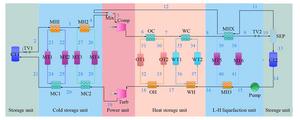
A novel two-stage cold and heat storage design achieves a round-trip efficiency of 56.12%, offering a scalable and high-density solution for long-duration energy storage.
As the global transition to renewable energy accelerates, the intermittency of wind and solar power remains a significant challenge for grid stability. To address this, a research team from the Technical Institute of Physics and Chemistry, Chinese Academy of Sciences has developed a novel Liquid CO₂ Energy Storage (LCES) system. This system, featuring a breakthrough two-stage cold and heat storage design, significantly enhances heat transfer efficiency and storage density.
The findings, published in the journal ENGINEERING Energy (formerly Frontiers in Energy), provide a roadmap for more efficient, large-scale energy storage infrastructure.
Optimizing the CO₂ Cycle
Liquid Carbon Dioxide Energy Storage (LCES) has garnered attention due to its high energy density, safety, and long operational lifespan. Despite these advantages, previous designs faced challenges related to energy losses during the phase change of carbon dioxide, which limited overall efficiency.
In response, the research team proposed a system that is based on the Linde-Hampson (L-H) liquefaction cycle while integrating a graded (two-stage) thermal management strategy. The ingenuity of this approach lies in its use of methanol as a cold storage medium combined with thermal oil and pressurized water for heat storage. These elements work together to achieve a more precise thermal match during the compression and expansion processes, addressing one of the key inefficiencies of traditional methods.
Record-Breaking Performance
The research involved rigorous thermodynamic modeling and exergy analysis to thoroughly evaluate the heat transfer characteristics of the system. Under optimal design conditions, the novel system achieved impressive results:
- Round-Trip Efficiency (RTE): 56.12%
- Energy Storage Density (ESD): 29.46 kWh/m³
- Exergy Efficiency: 93.73%
“Energy storage technology is becoming increasingly crucial to balance power demand and supply,” states Yunkai Yue, the corresponding author of the study. “Our two-stage storage design minimizes energy destruction near the CO₂ critical point, making the system both more compact and more efficient than traditional compressed air storage.” This innovation positions the system as a strong contender for future energy storage solutions.
Future Outlook
An analysis of the system revealed that while the liquefaction pressure has a minor impact on the liquefaction ratio, the efficiency is highly sensitive to both temperature and pressure within the storage cycle. By identifying the optimal liquefaction pressure, researchers have laid the groundwork for the commercial industrialization of LCES, opening the door to broader applications.
This high-density and high-efficiency technology represents a promising alternative for future carbon-neutral power systems. Importantly, it has the potential to minimize the land footprint and reduce the costs associated with energy storage facilities on a global scale.
JOURNAL: ENGINEERING Energy (formerly Frontiers in Energy))
DOI: https://doi.org/10.1007/s11708-024-0963-3
Article Link: https://link.springer.com/article/10.1007/s11708-024-0963-3
Cite this article: Zheng, P., Hao, J., Zhang, Z. et al. Analysis of heat transfer characteristics of a novel liquid CO₂ energy storage system based on two-stage cold and heat storage. Front. Energy, 2025, 19(2): 193-204. https://doi.org/10.1007/s11708-024-0963-3
Disclaimer: AAAS and EurekAlert! are not responsible for the accuracy of news releases posted to EurekAlert! by contributing institutions or for the use of any information through the EurekAlert system.
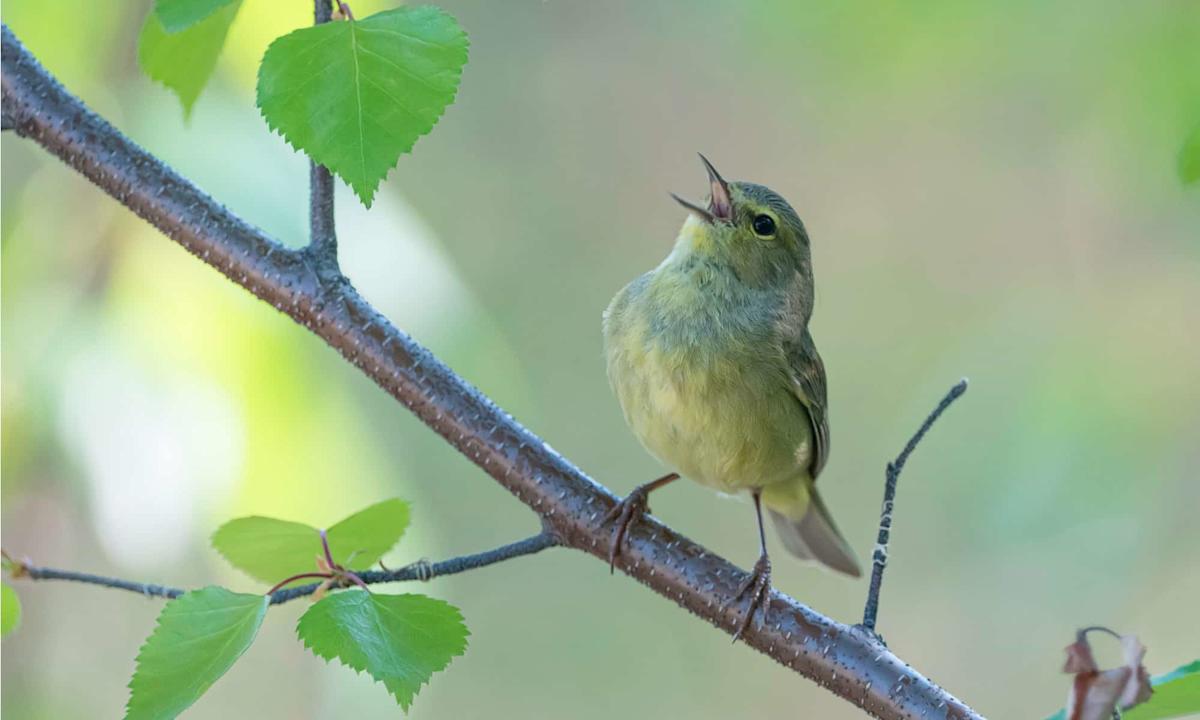

Orange-crowned Warbler sitting on a branch, singing. Some of these songbirds will collect in “song neighborhoods” made of two to six males who mimic the songs of each other.© Dee Carpenter Originals/Shutterstock.com
Quick Take
-
Only three bird groups — songbirds, parrots, and hummingbirds — are capable of true vocal learning.
-
Birds use specialized brain regions, similar to the human basal ganglia, to learn and refine songs.
-
Some young bird species must hear and practice songs during a critical developmental window or may never sing normally.
-
Social cues and positive reinforcement play a major role in helping birds learn and improve their vocalizations.
Countless YouTube videos feature pet birds singing and talking to their owners. Although it may seem like simple mimicry, birds learn to vocalize through a complex neurological process that is not unlike how humans learn language. Whether it’s a pet bird mimicking human sounds or a wild songbird singing its mating song, specialized brain regions regulate song learning in birds. Furthermore, if a young bird misses its early learning opportunity, it may never learn to sing its species-specific song. However, pet bird owners can still encourage vocal behavior later in life, especially in birds that are open-ended learners.

Unlike some songbird species, northern mockingbirds continue to learn new songs as adults.
© Steve Byland/Shutterstock.com
Songbirds, Parrots, and Hummingbirds Are Capable of Complex Vocal Learning
Few animals have the ability for vocal learning. Among mammals, it’s humans, elephants, whales, seals, and bats that can hear, learn, and remember a large number of sounds. In birds, only three groups (songbirds, parrots, and hummingbirds) are capable of complex vocal learning. Recent research on songbirds has revealed that birds with advanced vocal learning abilities are also better problem solvers and have larger brains relative to the size of their bodies.
DNA Research Revealed a Connection Between Songbird and Human Vocal Learning
In 2014, DNA research found 50 genes that are critical for vocal learning. These 50 genes are common to both songbirds and humans. What’s more, birds that don’t learn songs and primates that aren’t capable of speech don’t have these active genes. Interestingly, this research revealed the similarity between how young songbirds learn their songs and how human babies learn to speak, despite humans and birds being vastly different from each other.
Zebra Finch Males Learn to Sing by Watching Their Moms
Later research on zebra finches showed that the males learn to sing their species-specific mating song with the help of their mothers. Zebra finches are small Australian songbirds that are highly social and tend to travel in large flocks in the wild. Zebra finches are incredibly intelligent and have shown the ability to recognize individual birds in a flock by the sound of their song.

Male zebra finches sing and dance for their mates during courtship.
©Wang LiQiang/Shutterstock.com
The study answered the question of why juvenile male zebra finches learn to sing better when female zebra finches are nearby. What scientists found is that the young male birds take social cues from the adult females, similar to the way human babies learn to talk by interacting with adults.
Although this behavior could only be observed with slowed-down video, the females fluff up their feathers when the males hit the right note. By following social cues, the males learn to sing the mating song of their fathers.
Specialized Brain Regions Regulate Learning in Both Birds and Mammals
In mammals, a brain structure called the basal ganglia regulates learning and memory. Similarly, in birds, the song control nuclei are interconnected brain nuclei that form a specialized circuit for producing sound and for learning.
When young songbirds begin to learn how to sing, the song control nuclei help them experiment with different sounds. It’s reinforcement from adults and social learning that help them learn their species-specific songs. While in humans the basal ganglia help us learn skills and adjust when we make mistakes, birds also learn to practice and perfect their songs.
Do Some Birds Never Fully Learn to Sing if They Miss Critical Developmental Windows?
In the same way that human babies learn to talk by first hearing others talking around them, and then practicing speech through babbling, baby birds also learn their songs from the adult birds around them. When juvenile birds miss the opportunity to hear, practice, and memorize songs during a sensitive development window, they may never learn to sing their species-typical song.
Song plasticity—the ability to learn a new song—occurs in many songbirds around three to four months of age. However, the amount of song plasticity in adulthood varies by species. For example, mockingbirds continue to learn new songs throughout their life, not just as juveniles. Additionally, wild parakeets can learn new songs as adults when they join a new flock.
Training Tips: How to Encourage Vocal Behavior in Your Bird Later in Life
If your pet bird missed its early window for vocalization, you may still be able to encourage vocal behavior. This is especially true for birds that are open-ended learners, such as parrots, which can learn to make new sounds more easily. Here are a few training tips to get you started.

Before you can teach your bird to talk, you need to build a trusting relationship.
©Veera/Shutterstock.com
Bond with your bird.
The first and most important step is to establish trust and develop a bond with your bird. Birds are social animals that live in flocks. They need to trust you to consider you a member of their flock before they will be motivated to communicate with you. Be sure to show your bird love through head scritches, verbal praise, and treats.
Find the bird’s favorite reward.
Some birds will be food-motivated, while others would rather get a head pet. Find out what your bird enjoys the most, and use it as a reward for doing the behavior you want.
Start simple.
If you want your bird to talk, start with one easy word. If you want it to sing a tune, start with a very simple, short one. Repeat it over and over. Be patient. When the bird repeats what you said, be sure to offer rewards.
Build from there.
Once your bird can say one word, you can gradually add more words using the same reward methods. If your bird learns an unwanted sound, such as a car alarm, experts recommend ignoring the bird when it makes that sound. Only reward the calls and songs you want the bird to say. Your bird’s language will be shaped by how you reinforce it.
Advancements in Bacterial Pneumonia Treatment: The Role of Inhalable Self-Assembled Celastrol
Introduction to the Research
A groundbreaking study led by Professor Jing Liu at the National Center for Nanoscience and Technology has unveiled an innovative treatment method for acute bacterial pneumonia. Utilizing inhalable chitosan-coated self-assembled celastrol nanoparticles (CSC NPs), this research primarily targets the aggressive strains of Staphylococcus aureus (SA) and the clinically significant methicillin-resistant Staphylococcus aureus (MRSA).
The Challenge of MRSA
MRSA has emerged as a notorious pathogen responsible for severe bacterial pneumonia, leading to a significant increase in morbidity and mortality rates globally. The quest for effective treatments is complicated by the slow rediscovery of antibacterial compounds from existing antibiotic classes and the persistent threat of superbugs. Antibiotics create a selection pressure that often leads to resistance, causing a vicious cycle of ineffective treatment options.
The Choice of Celastrol
In this research, the team looked beyond conventional antibiotics to harness the potential of celastrol (CST), a natural compound derived from traditional Chinese medicine. Celastrol is classified as a triterpene methylene quinone, and its unique properties present an opportunity to circumvent some of the limitations posed by single antibiotic treatments. The CSC NPs synthesized from celastrol are designed to mitigate life-or-death selection pressures, thereby reducing the likelihood of bacterial resistance development.
Design and Mechanism of CSC NPs
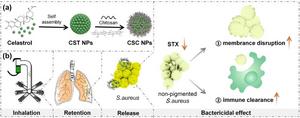
The CSC NPs are crafted for optimal nebulization, featuring an aerodynamic size of 3 micrometers. This design facilitates deep lung deposition, crucial for treating respiratory infections effectively. These nanoparticles have been engineered to showcase high drug loading efficiency through hydrophobic interactions while benefiting from enhanced mucoadhesive properties. Their electrostatic interactions with the mucus layer ensure prolonged retention within the lungs, while they degrade responsively to the acidic environment typical of bacterial infection sites, promoting effective mucus penetration.
In addition to their physical attributes, CSC NPs exhibit a compelling mechanistic action. They serve as non-competitive inhibitors of dehydrosqualene synthase (CrtM), targeting the virulence factor staphyloxanthin (STX) in S. aureus. By disrupting the bacterial membrane, these nanoparticles significantly boost immune clearance of the pathogens through host macrophages and neutrophils.
Experimental Validation
The efficacy of CSC NPs was rigorously tested in vitro, demonstrating a remarkable minimum inhibitory concentration (MIC) of 8 μg/mL. The nanoparticles achieved an impressive antibacterial rate of nearly 100% against SA and 99% against MRSA. Furthermore, they displayed strong antibiofilm activity and a reduced likelihood of resistance development, making them a promising alternative to traditional antibiotic therapies.
In vivo experiments conducted using mouse models further reinforced these findings. The nebulized CSC NPs led to significant reductions in lung bacterial burden, achieving antibacterial rates of 97% for SA and 94% for MRSA.
Future Implications
Professor Jing Liu expresses optimism about the implications of this study, stating, “This study provides a new alternative strategy by using conventional natural products to overcome SA and MRSA infections with great prospects for clinical translation.” The versatility of adhesive polymer-coated self-assembled small molecules opens avenues for aerosolized application in other models, such as COVID-19 and fungal infections.
The research highlights a potential shift towards utilizing non-antibiotic molecules that block bacterial virulence factors as a promising trend in the development of antimicrobial drugs.
Support and Acknowledgments
This significant research initiative received funding from esteemed organizations, including the National Key Research and Development Program of China, the National Natural Science Foundation of China, the Beijing Nova Program, the Taishan Scholars Program of Shandong Province, and the Hundred-Talent Program of the Chinese Academy of Sciences.
About Nano Research
Nano Research stands as a leading peer-reviewed journal in the field of nanoscience and nanotechnology, fostering interdisciplinary dialogue surrounding the applications of nanoscale materials. Sponsored by Tsinghua University and the Chinese Chemical Society, Nano Research continues to publish high-quality original research, solidifying its reputation as a prominent academic journal within the nano domain.
Over its 18 years of existence, the journal has published over 7,000 articles and is recognized for its influence, with a reported impact factor of 9.0 in 2024.

The Best Celebrity Dog Fathers#(president of usa, actor star)

Seagull Video Moment Funny Animals Compilation #3

House Votes Against Iran War Powers Resolution by a Narrow Margin

#1 Music Celebrity: Helping Animals Makes you Happy. Not Money & Fame

😍 Cutest Shih Tzu 😂 Funny and Cute Shih Tzu Puppies and Dogs Videos

Advocates Urge Preservation of State Climate Law Without Amendments

U.S. Pledges $20B in Maritime Reinsurance as Iran Tightens Grip on Strait of Hormuz – National

Netflix Withdraws from Meghan Markle’s $64 Candle Venture

Title: “Despite a Strong Week of Wall Street News, Bitcoin Faces a $110 Billion Loss”

White House Unveils Video Featuring Hollywood Stars Advocating for ‘Justice the American Way’ | Trump Administration

Who Is Really Voting in These Polls? The Shocking Truth Behind America’s Approval Numbers

Blueprint for a “Tax-Free America” That Actually Works

Police Issue Warrant for Bar Patron Alleged to Have Assaulted Multiple Individuals

Winter Storm Provides Much-Needed Surge for Tug Hill Snowmobile Industry

Four Forecasts for 2026

It Took 35 Years for T. rex to Reach Full Maturity

Major Indices Experience Weekly Declines as Treasury Yields Reach Four-Month High

EXCLUSIVE: Will Smith’s Former Best Friend Bilaal Breaks Silence in Explosive Tasha K Interview — Lawsuit, Scientology Allegations, and Claims of an Attempt on His Life

2026 NFL Coaching Update: John Harbaugh Nearing Deal with Giants; Mike Tomlin Not Expected to Coach Next Season

Top Picks from CES 2026: Editors Select the Best Products and Technologies
The Best Celebrity Dog Fathers#(president of usa, actor star)
Seagull Video Moment Funny Animals Compilation #3
#1 Music Celebrity: Helping Animals Makes you Happy. Not Money & Fame
😍 Cutest Shih Tzu 😂 Funny and Cute Shih Tzu Puppies and Dogs Videos

Sing 2 Trailer Released, Celebrity Cast Celebrate: Reese Witherspoon, Bono, Hasley, Pharrell, +More
![Animals Getting Scared Over Nothing 😂 [Funny Pets]](https://i0.wp.com/i.ytimg.com/vi/O0W9ToOrmr4/maxresdefault.jpg?resize=80%2C80&ssl=1 "Animals Getting Scared Over Nothing 😂 [Funny Pets]")
Animals Getting Scared Over Nothing 😂 [Funny Pets]

PAWS RPO Campaign featuring PAWS celebrity volunteer, Karylle

The Best Corgi Compilation On The Internet 2023 | Funny and Sassy Moments @FurryTails

Save Celebrity souls form hell..

These Cats Can Speak English Better Than Hooman 🙀
-

 Entertaiment8 hours ago
Tyler Jaggers: Coast Guard Rescue Swimmer Passes Away Days After Mission Incident; Fiancée Honors His Memory
-

 Crime & Justice18 hours ago
Police Report: March 6, 2026 | Latest Updates
-

 Comedy1 day ago
feeding carrot beans and radish to the hungry monkey
-

 Science18 hours ago
Engineers Introduce High-Efficiency Liquid CO₂ Energy Storage Solution for Renewable Power Grid Stability
-

 US News18 hours ago
The Potential Effects of the Iran War on States and Local Communities
-

 Comedy21 hours ago
CATS vs DOGS: Totally Bonkers and Wildly Unpredictable
-

 Comedy1 day ago
Cane Corso — Majestic And Funny Videos And Tik Toks Compilation
-

 Business18 hours ago
Chamber Welcomes Edward Jones Financial Advisor Thiry | News, Sports, and Jobs