
Politics
Rapper-turned-politician Balen Shah’s RSP Poised for Major Victory in Nepal Elections


The Rise of Reform in Nepal: Balendra Shah and the Rastriya Swatantra Party
Context of Change in Nepalese Politics
In recent months, Nepal has seen a political metamorphosis characterized by the emergence of new leaders and the public’s rejection of traditional political parties. At the forefront of this transformation is the Rastriya Swatantra Party (RSP), led by rapper-turned-politician Balendra Shah. This shift has been fueled by a remarkable youth-led uprising last year, which not only demanded governmental reform but also sought accountability, transparency, and a platform for voices often ignored in the nation’s political discourse.
Balendra Shah’s Impressive Rise
Balendra Shah, known popularly as “Balen,” has captivated the nation with his journey from a civil engineer and popular rapper to a significant political figure. His compelling narrative resonated deeply during the youth-led protests against the previous government. Shah’s campaign successfully highlighted pressing issues like health and education for marginalized populations, reflecting the public’s longing for change and reform.
Election Results: A Historic Victory
In the recent elections, Shah’s RSP secured a substantial victory, emerging as a dominant force in the direct parliamentary elections. With near-total control of the 275-member House of Representatives—winning nearly 100 out of 165 directly elected seats—Shah defeated veteran leader Khadga Prasad Sharma Oli, further showcasing the significant shift in public sentiment towards younger, reformist leaders.
With Shah’s own constituency highlighting his formidable electoral power—he garnered almost four times as many votes as Oli—it’s evident that the electorate is ready for a change in leadership, favoring a break from the status quo.
The Impact of the Youth-led Uprising
Last year’s protests were a pivotal moment in Nepalese history, acting as a catalyst for political reform. Initially sparked by a government mandate banning certain social media platforms, the protests quickly escalated into a broader movement against corruption, lack of economic opportunities, and political stagnation. Tragically, the protests resulted in loss of life, with over 77 individuals killed, amplifying the urgency for change.
Shah emerged as a key figure in these demonstrations, using his artistry to amplify the voice of the youth. His song “Nepal Haseko,” which became an anthem of the movement, resonated widely, showcasing the power of culture in political expression.
The RSP’s Strategic Campaign
The Rastriya Swatantra Party was founded amidst this backdrop, built on an anti-establishment platform that seeks to address the grievances of young voters disillusioned with established political avenues. The RSP’s campaign was not just about traditional canvassing; it involved a sophisticated social media operation that engaged a generation accustomed to digital connectivity, alongside substantial funding from the global Nepali diaspora.
The party’s structure reflects a modern approach to politics—one that integrates technology and grassroots outreach to maximize engagement with the electorate. This strategic blend has significantly contributed to their electoral success.
Responses from the Political Arena
Shah’s victory has garnered attention and respect across the political spectrum. Even former Prime Minister Oli congratulated him, signaling a recognition of the profound changes taking place within Nepali politics. Furthermore, international reactions, such as Indian Prime Minister Narendra Modi’s acknowledgment of the peaceful conduct of the elections, indicate a recognition of Nepal’s democratic progress, which fosters regional stability and cooperation.
Generational Shift in Leadership
A notable theme emerging from this election is the generational divide in Nepalese politics. Over 40% of the population is under 35, yet the leadership in established political parties has largely remained in their 70s. This demographic mismatch underscores a longing for representative leadership that resonates with the aspirations and challenges facing the younger populace.
Shah’s ascent represents more than just his personal victory; it embodies the collective hopes of a generation seeking to reshape the future of Nepal. As he galvanizes the youth, his leadership is viewed as a potential disruptor of entrenched political norms.
A Culture of Reform and Renewal
As Shah and the RSP take the helm, the focus will likely remain on continuing the momentum generated by the protests and the electoral success. Issues surrounding corruption, social justice, and economic opportunity will be front and center as Shah promises to address the long-standing grievances of his constituents. The reformist wave that began with the youth uprising last year now has significant representation within the government, setting the stage for potential systemic changes in Nepal’s political landscape.
This historical turning point for Nepal illustrates a vibrant, evolving democracy where the voices of the youth are being heard and integrated into the national narrative. As Balendra Shah steps into a leadership role, the next chapter in Nepalese politics promises to be as dynamic and challenging as the journey that has brought him to this moment.
Politics
How Trump’s Turmoil Is Increasing Therapy Visits: “Everything Feels Upside Down” | Mental Health

Understanding Political Depression: A Modern Challenge
The Dilemma of Political Anxiety
On a cold January morning in Logan, Utah, Rebecca McFaul, a music professor at Utah State University, wakes up overwhelmed by a sensation that has haunted her for months—“a certain kind of terror and horror at it all.” This feeling, born from observing the turmoil surrounding her family in Minnesota, encapsulates a troubling response to ongoing socio-political crises. As news outlets report on distressing events, including the violent detainment of families and the shooting of activists, many are left grappling with their emotions, leading to a phenomenon known as political depression.
Political Depression Defined
The term “political depression” is notably articulated by queer scholar and writer Ann Cvetkovitch. Unlike traditional forms of depression, which stem from personal experiences and internal struggles, political depression is a reaction to the tumultuous state of the world. Cvetkovitch’s book, Depression: A Public Feeling, emphasizes that these feelings arise not from individual issues, but from widespread societal violence and injustice. The weight of this knowledge can lead one to a profound sense of hopelessness and despair.
The Uptick in Professional Awareness
Political depression isn’t merely an individual affliction; it’s becoming increasingly recognized within mental health circles. A 2024 LifeStance Health survey reported that two-thirds of respondents discuss political anxiety in therapy sessions, highlighting a growing awareness among therapists of the impact of political stress on mental well-being. As significant elections and social movements unfold, therapy practices are adapting—many now offer support spaces for clients grappling with these external pressures.
The Health Implications
Research indicates that political stress can have tangible effects on both mental and physical health. A study from 2017 to 2020 revealed connections between political stress and symptoms like fatigue, sleep loss, and even suicidal ideation, particularly among politically engaged, young individuals. This chronic stress is characterized by its large-scale nature and lack of clear endpoints, causing persistent feelings of anxiety and hopelessness.
Balancing Awareness and Activism
Experts like Brett Ford, an associate professor of psychology, emphasize the importance of managing political fatigue while maintaining civic engagement. Strategies such as tuning out the news may provide temporary relief but can also diminish motivation to act. The challenge lies in cultivating mental wellness while fostering a sense of agency and community involvement, ensuring that negative emotions can lead to constructive action rather than withdrawal.
Therapists Responding to Political Contexts
Therapists are increasingly acknowledging the interconnection between their clients’ feelings and the broader political climate. Shahem Mclaurin, a licensed clinical social worker, emphasizes understanding the external factors contributing to a client’s anxiety. For him, ignoring the political landscape in therapy would be counterproductive. This perspective allows for a fuller exploration of clients’ emotional states, helping them navigate their feelings more effectively.
Community as a Source of Strength
Mclaurin advocates for what he calls “the choice of hope,” encouraging clients to engage with their communities as a means to counteract feelings of isolation and despair. This approach cultivates a sense of belonging and shared purpose, vital in combating the sense of helplessness that political depression can instill.
Creative Expression and Activism
For many, the route to addressing political malaise is through creative expression and collective action. Cvetkovitch, during her early activist days, organized support groups and whimsical events like the International Day of the Politically Depressed, which combined humor with activism—showing that genuine connections can yield a powerful form of resistance.
Similarly, McFaul and her husband utilize art and education to inspire change. Their initiative, the Crossroads Project, combines science and music to raise awareness about pressing global issues, demonstrating how creativity can be harnessed to foster engagement and community spirit.
Translating Feelings into Action
The transformative power of validating emotions cannot be understated. Both Mclaurin and McFaul believe in acknowledging feelings of frustration and sadness as legitimate responses to global suffering. This validation not only normalizes their clients’ experiences but also allows for a shared human connection that strengthens the resolve to act for change.
By fostering meaningful dialogues within communities and supporting one another through shared experiences, individuals can transform political despair into collective action, proving that even in the face of adversity, engagement is possible.
Politics
Trump Faces Challenges with Immigration, Inflation, and Iran as Democrats Gain Ground in Midterms

Discontent Among Voters Regarding Trump’s Administration
As the midterm election year unfolds with notable tensions, recent polling results indicate a general disapproval among registered voters regarding President Donald Trump’s handling of major issues. According to an NBC News survey conducted from February 27 to March 3, 2026, the situation paints a picture of discontent as voters express their concerns about immigration, economic stability, and foreign policy, particularly in relation to Iran.
Immigration and Domestic Policy Challenges
Voters’ dissatisfaction is particularly pronounced regarding immigration policies. The administration’s controversial strategies, such as deploying federal agents to urban centers and the tragedies involving U.S. citizens, have led to significant pushback. After federal immigration officers in Minnesota were involved in the deaths of two U.S. citizens, public sentiment towards Trump’s immigration policies shifted, resulting in a 54% disapproval rate. This discontent persists despite Trump’s attempts to promote a narrative centered on border security as a core issue of his administration, where he still enjoys marginal approval.
Economic Concerns Come to the Forefront
Inflation remains a key concern among voters. The NBC News poll indicates that Trump’s approval rating on economic issues is trailing, with a disapproval rate of 62% regarding his management of inflation and cost of living. This sentiment reflects a stark turnaround from previous polls, suggesting that nearly half of voters (48%) believe his policies are detrimental to the economy—a worrying statistic for Republicans as they approach the midterms.
More than half of those surveyed expressed frustration with Trump’s tariffs, with 55% stating they have adversely affected the economy. As financial pressures mount on average Americans, only 27% report improvements in their financial situations, heightening the concern that economic performance could be a determining factor in the upcoming elections.
Tumultuous Foreign Policy Decisions
The conflict with Iran has also significantly impacted voters’ opinions, especially following Trump’s escalation of military actions. Many voters, reflecting on recent airstrikes ordered by Trump, now disapprove, with a majority saying such military interventions were unjustified. This has added another layer of complexity to the administration’s reputation, as international affairs intersect with domestic sentiment.
The Political Landscape
In the current political climate, Democrats hold a 6-point lead over Republicans in the battle for Congress, a stark indication of shifting electoral tides. With Republicans currently controlling both the House and Senate, this lead signifies potential challenges for the GOP going into the midterms. The enthusiasm among voters is evident as a significant majority (64%) rated their interest in the upcoming elections highly, which surpasses typical polling levels seen during an election cycle.
The Image of the Democratic Party
Despite these challenges, the Democratic Party is not without its complications. While they enjoy a lead in preference for congressional control, they continue to grapple with their own negative image among voters. Polling reveals that even a notable portion of self-identified Democrats harbor unfavorable views of the party. Voter discontent seems palpable on both sides of the aisle, with longstanding feelings against the establishment of both parties.
Key Issues Affecting Voter Sentiment
The issues dominating voter concerns heading towards the midterms include inflation, threats to democracy, and immigration. Each of these elements plays a crucial role in shaping public opinion as elections approach. With 26% of voters identifying inflation and the cost of living as the paramount issue, Trump faces mounting pressure to demonstrate effective management of economic conditions.
Prospects of Partisan Dynamics
As the contest heats up, polling indicates that Republicans have lost ground on economic issues, a trend that historically precedes electoral losses. Both parties show deep division on key issues, particularly immigration and voting laws, where slight majorities reveal shifting priorities among voters.
Navigating Voter Confidence
Strikingly, a considerable number of respondents expressed concern over maintaining electoral integrity while ensuring accessibility to voting rights. This nuanced view has evolved since previous polls and reflects a growing fear surrounding election security amidst partisan debates.
Conclusion: A Landscape of Division and Uncertainty
As the midterm elections approach, both major parties must navigate a complex landscape of voter discontent, fluctuating priorities, and deeply ingrained sentiments about their platforms. As the electoral narrative continues to unfold, requiring both parties to recalibrate strategies, the coming months will likely bring further developments in response to voter sentiments and actions in Congress.
Politics
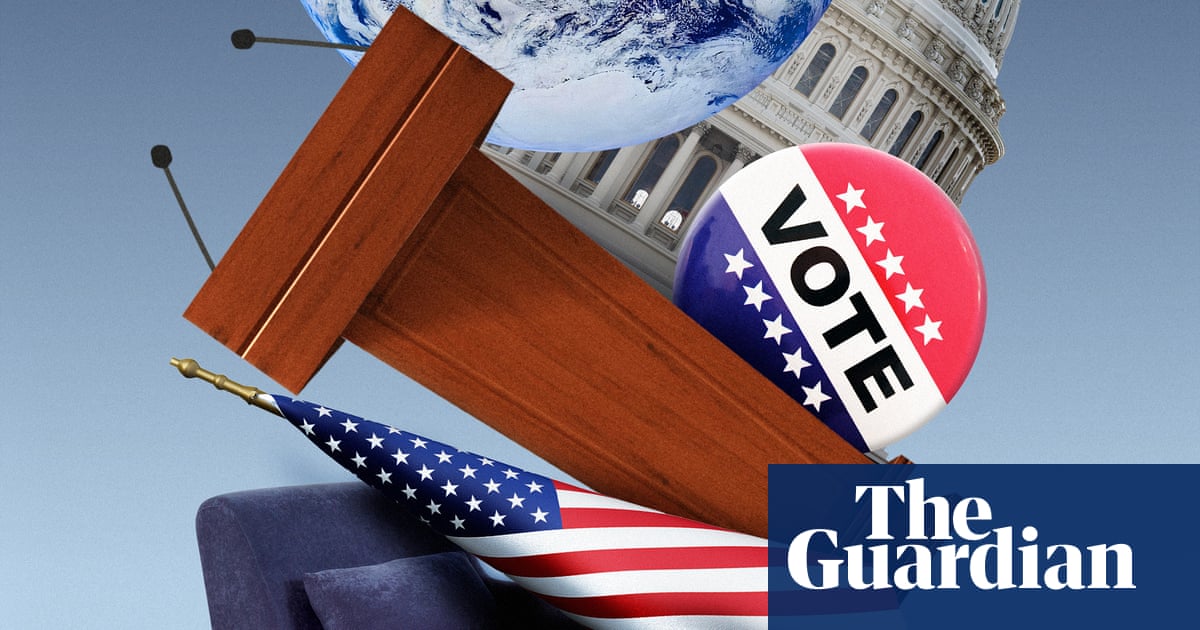
Americans Aren’t Experiencing a Democratic Collapse; We’re Navigating Its Aftermath | US News

The Illusion of Democratic Resilience in Contemporary America
Since Donald Trump’s return to political prominence in the U.S., American political life has seemed stuck in a dramatic loop. Each week unfolds another court ruling that’s portrayed as a breaking point, yet the reality remains a repetitive cycle of anxiety and looming crises. Fundraising emails flood inboxes, promising to “save the Republic,” while commentators warn of the imminent collapse of democratic norms. Citizens nervously refresh their feeds, bracing for yet another story detailing the erosion of their democratic rights or the incursions of government overreach.
Understanding a Deeper Breakdown
At the heart of this frantic atmosphere lies a profound psychological context. Sigmund Freud termed this phenomenon an “illusion”—a belief that fulfills a psychological need rather than reflecting actual circumstances. The unsettling truth is that many Americans are not merely at risk of losing their democracy; they are already living post-democratic realities.
For a significant portion of the population, democratic engagement has faded into the background, overshadowed by precarious housing situations, inaccessible healthcare, and rampant policing. In contrast, the wealthy and the politically connected flourish under a political system that insulates them from these very issues. This disparity in experiences showcases not a democracy on the brink of collapse but one that has already eroded, potentially before many current political actors even took office.
The Psychological Roots of Political Narratives
The ongoing panic surrounding democracy often resembles what psychoanalyst D.W. Winnicott described in terms of individual psychology—the dread of a looming disaster reflecting not a future threat but an unresolved past trauma. This concept can be expanded to societal dynamics, where collective fears distract from painful truths. In the political realm, the fixation on a democracy allegedly in peril allows political elites to evade deeper accountability for longstanding inequities.
Many of today’s leaders and commentators paint Trump as a unique threat, framing him as a deviation from an ideal past. This narrative not only serves them but also acts as a mechanism to avoid confronting how the decline of democratic norms has been a prolonged process, one that predates Trump’s presidency and spans decades.
Nostalgia and Political Strategy
To grasp the current political landscape, one must question the nostalgia underpinning mainstream discourse. The call to preserve democratic norms often glosses over the complexities of what democracy has historically entailed—a system built on exclusion, oppression, and inequality. Nostalgia may invoke images of a functional past, but it fails to consider the realities that marginalized populations still endure. Many argue this yearning for a bygone era overlooks the systemic roots of today’s crises.
Efforts to restore an idealized version of democracy often neglect the injustices embedded in its foundations—colonialism, slavery, and the systematic disenfranchisement of vast groups. Political leaders nostalgic for past norms fail to recognize the historical and contemporary realities that alienate millions from the political process.
A Moment for True Democratic Engagement
The preoccupation with a looming apocalypse reveals itself as both a defense mechanism and a hindrance to meaningful change. The insistence on preserving a mythologized past stalls progress as it constrains political imagination, suggesting that reversion is the only path forward. This confines discussions to superficial reforms rather than a complete re-examination of democratic practices.
True democracy is not merely a matter of institutional preservation; it must be understood and experienced as a lived reality. For many, this reality has been absent for decades, prompting a need for new narratives and solutions that address the systemic inequities embedded in American society.
Engaging with Hope and Action
Despite troubling political trends, glimmers of hope persist in grassroots movements across the country. In communities from Chicago to beyond, individuals are stepping up to protect vulnerable populations, especially immigrants, from state violence without waiting for institutional direction. These local efforts demonstrate the potential for community-led initiatives to flourish when political representatives falter.
As these community actions gain traction, they reveal a crucial truth: democracy flourishes not solely through elected officials or institutional reforms but through mutual aid, solidarity, and a refusal to abandon one another. Collective action rooted in care and protection can lay the foundation for a more equitable political landscape.
The hope lies not in the hands of those at the top but in the willingness of ordinary Americans to foster a new social contract—a bedrock for a genuinely inclusive democracy. Breaking away from the confines of an ineffective two-party narrative may be essential for creating a renewed sense of accountability and commitment toward collective well-being. In this way, a true democratic ethos can emerge, nurturing a more equitable future.

Problem Of Celebrity Star Channel.. Publish Video Problem

Funny and Cute corgi puppies videos compilation 2021❤ Cutest corgis Ever! Part 2

How Trump’s Turmoil Is Increasing Therapy Visits: “Everything Feels Upside Down” | Mental Health

🆕 Celebrity Dog Training | Celebrity Dog Trainer | Nick White 🆕
![Best Giraffe Videos Compilation 🦒😂 [Funny Pets]](https://i0.wp.com/i.ytimg.com/vi/KwB-4yMEuC0/maxresdefault.jpg?resize=80%2C80&ssl=1 "Best Giraffe Videos Compilation 🦒😂 [Funny Pets]")
Best Giraffe Videos Compilation 🦒😂 [Funny Pets]

Trump Faces Challenges with Immigration, Inflation, and Iran as Democrats Gain Ground in Midterms

We Must Persevere in Our Fight for Our People

Leap into STEM Careers at Code Ninjas® Alexandria

Iran’s Ongoing Conflict with Us: Trump’s Efforts to Resolve It

Hate Crime Debate Resurfaces as Alan Wilson Discusses Governor’s Race

Who Is Really Voting in These Polls? The Shocking Truth Behind America’s Approval Numbers

Tyler Jaggers: Coast Guard Rescue Swimmer Passes Away Days After Mission Incident; Fiancée Honors His Memory

Blueprint for a “Tax-Free America” That Actually Works

Police Issue Warrant for Bar Patron Alleged to Have Assaulted Multiple Individuals

Winter Storm Provides Much-Needed Surge for Tug Hill Snowmobile Industry

Four Forecasts for 2026

It Took 35 Years for T. rex to Reach Full Maturity

Major Indices Experience Weekly Declines as Treasury Yields Reach Four-Month High

EXCLUSIVE: Will Smith’s Former Best Friend Bilaal Breaks Silence in Explosive Tasha K Interview — Lawsuit, Scientology Allegations, and Claims of an Attempt on His Life

2026 NFL Coaching Update: John Harbaugh Nearing Deal with Giants; Mike Tomlin Not Expected to Coach Next Season
Problem Of Celebrity Star Channel.. Publish Video Problem
Funny and Cute corgi puppies videos compilation 2021❤ Cutest corgis Ever! Part 2
🆕 Celebrity Dog Training | Celebrity Dog Trainer | Nick White 🆕
Best Giraffe Videos Compilation 🦒😂 [Funny Pets]

Cherry Ridge Ponies – Celebrity

Fox — Hilarious And Cute Videos And Tik Toks Compilation

Celebrity Karaoke KATV Mickey

Adorable Pups Take on Agility 🐶

Big League Exotics Boosie Celebrity Dog Show RECAP

Little Rogue! Cute & Funny Dachshund Dog Video!
-
 Entertaiment2 days ago
Tyler Jaggers: Coast Guard Rescue Swimmer Passes Away Days After Mission Incident; Fiancée Honors His Memory
-

 Comedy3 days ago
feeding carrot beans and radish to the hungry monkey
-

 Crime & Justice3 days ago
Police Report: March 6, 2026 | Latest Updates
-

 Business2 days ago
Netflix Withdraws from Meghan Markle’s $64 Candle Venture
-

 Crime & Justice1 day ago
Over 30 Injured in Nightclub Bombing in Northern Peru | Crime News
-

 World News1 day ago
Oil and Gas Prices Surge Amid Escalating Conflict in Iran
-

 Science1 day ago
Domino Unveils the Quickest and Safest Way to Scale Enterprise-Agent AI Systems
-

 Comedy1 day ago
61 Funny Dachshund Dogs Videos Instagram, Funny And Cute Dachshund Dog Try Not laugh Videos