
US News
Trump Administration Refutes Claims of Iran Capturing US Soldiers | Israel-Iran Conflict Update


Growing Tensions in the Middle East: Claims and Counterclaims Amid War
In a dramatic twist of events following the outbreak of war last week, Ali Larijani, head of Iran’s National Security Council, has come forward with alarming claims that U.S. soldiers have been captured. His remarks, made in a post on social media platform X, suggest a significant escalation in the conflict, overshadowed by mutual accusations between the United States and Iran.
Larijani’s Assertions
Larijani took to social media on Saturday to assert that several American soldiers have been taken prisoner by Iranian forces. He further claimed that the U.S. government is attempting to conceal these captures, stating, “But the Americans claim that they have been killed in action. Despite their futile efforts, the truth is not something they can hide for too long.” This message serves to not only heighten tensions but also to question the credibility of the U.S. narrative regarding the conflict.
U.S. Response
The U.S. military was quick to refute Larijani’s statements. U.S. Navy Captain Tim Hawkins, responding to the claims, characterized them as fabrications, stating, “The Iranian regime is doing everything it can to peddle lies and deceive. This is yet another clear example.” A spokesperson from U.S. Central Command (CENTCOM) echoed this sentiment, calling Iran’s assertions “lies and deceptions.” These quick rebuttals highlight the contentious atmosphere, where information battles are as fierce as direct military confrontations.
The Human Cost of Conflict
The war’s human toll continues to rise alarmingly. As of now, at least six members of the U.S. armed forces have been reported killed in action since the onset of the conflict on February 28—a conflict that the Trump administration has named “Operation Epic Fury.” In the chaos, Iranian media reports estimate that over 1,332 people have lost their lives since last week, including around 180 children in a tragic strike on a school in Minab.
President Trump, in a press interview, placed the blame for the school strike on Iran, despite other reports suggesting U.S. involvement. He remarked, “Based on what I’ve seen, that was done by Iran,” while grappling with the weight of American casualties back home.
The Fallen Soldiers
The six American fatalities have been identified as Declan Cody, Jeffrey O’Brien, Cody Khork, Noah Tietjens, Nicole Amor, and Robert Marzan. Their deaths occurred shortly after the war began, during an Iranian drone strike on a Kuwaiti port. President Trump, while honoring these soldiers in a transfer ceremony, described it as a “very sad day” yet maintained an overall optimism regarding military success, stating, “We’ve decimated their whole evil empire.”
Military Options on the Table
The complexities of military strategy are evident as Trump has not ruled out the deployment of U.S. soldiers to Iran. He expressed a willingness to reconsider traditional declarations, stating, “Every president says, ‘There will be no boots on the ground.’ I don’t say it.” This statement raises numerous concerns about potential escalation and further casualties as the war progresses.
Divided Public Opinion
Public sentiment regarding the conflict is notably mixed. Trump’s military actions have sparked divisions within his own base, with some supporters expressing regret over a repeated commitment to war. Critics highlight Trump’s previous campaign promise of avoiding “endless wars,” pointing to conservative figures like Megyn Kelly and Marjorie Taylor Greene, who have openly criticized the administration’s decisions.
Polls conducted by NPR and PBS indicate a significant disapproval among the American populace, with 56 percent of respondents opposing the war. This growing discontent reflects a broader anxiety about the direction of U.S. military involvement, especially after the recent losses.
Broader Implications
Tensions between the U.S. and Iran continue to escalate, bringing forth serious challenges not just for the military but also for public opinion and diplomatic efforts globally. The claims made by Larijani, juxtaposed with the strong denials from U.S. officials, create a complex narrative that adds layers of uncertainty to an already volatile situation.
As this situation unfolds, the focus remains on the implications for U.S. policy, the safety of servicemen and women, and the lives of civilians caught in the line of fire. The ongoing conflict serves as a sobering reminder of the human cost of war and the delicate balance of power in the Middle East.
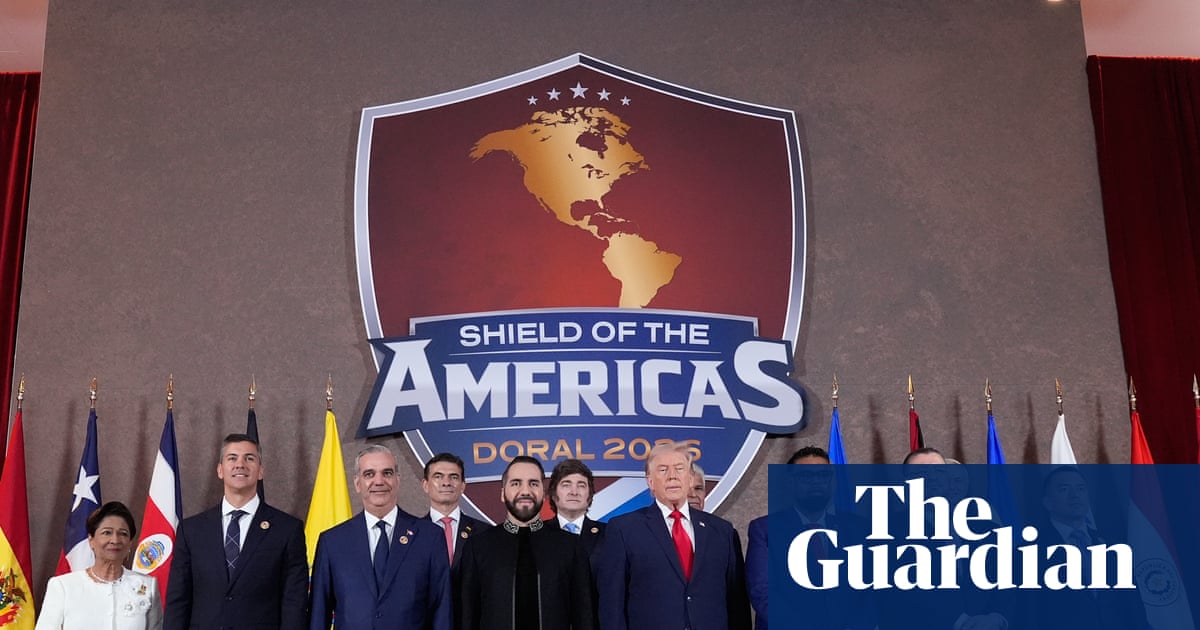
Trump Hosts Latin American Leaders to Form Counter-Cartel Coalition
In a strategic pivot from international to regional focus, former President Donald Trump convened a gathering of Latin American leaders at his Miami-area golf club. This summit, branded as the “Shield of the Americas,” was aimed at addressing the escalating issue of cartel violence in the western hemisphere and fostering cooperation among nations.
The Call for a Counter-Cartel Coalition
At the core of the summit was Trump’s call for a “counter-cartel coalition,” paralleling the formation of a global coalition against groups like ISIS. “We must recognize that the epicenter of cartel violence is Mexico,” he asserted, emphasizing the urgency of collaborative action against organized crime. Trump’s framing of this initiative underscored the threats posed by drug cartels to regional stability and security.
Attendance and Voices of Leadership
The summit saw the presence of leaders from countries including Argentina, Bolivia, Chile, and Panama, among others. Notably absent was Mexico’s President Claudia Sheinbaum, who Trump nonetheless commended for her leadership in a challenging environment. Meanwhile, Kristi Noem, recently transitioned from Secretary of Homeland Security to U.S. special envoy for the coalition, stated that the group would serve as a model for international cooperation aimed at safeguarding sovereignty and economic prosperity within the region.
Recent Developments in Law Enforcement
The urgency of Trump’s initiative was underscored by recent law enforcement actions against prominent drug traffickers. Just days prior to the summit, a U.S. intelligence-assisted raid in Mexico led to the capture of Nemesio Oseguera Cervantes, known as “El Mencho,” the notorious leader of the Jalisco New Generation cartel. This incident highlighted the ongoing struggle against powerful criminal organizations that pose significant threats to both Mexico and its neighboring countries.
Regional Implications and Collaborations
The summit’s discussions also touched on the political landscape in Venezuela. Trump expressed approval of interim President Delcy Rodríguez’s willingness to cooperate with the U.S., signaling a shift in U.S.-Venezuelan relations. This relationship could redefine strategies in combating regional drug trafficking and other illicit activities.
Economic Concerns in the Caribbean
Another focal point was Cuba, which Trump characterized as being on the brink of collapse due to its dependence on Venezuelan oil and poor economic policies. He anticipated a significant change in the island nation’s political landscape, identifying this as a prime opportunity for U.S. intervention and assistance.
The “Donroe Doctrine”
Trump articulated a vision reminiscent of the Monroe Doctrine, suggesting a renewed commitment to countering foreign influence—especially from nations like China—in the Americas. He emphasized the importance of maintaining a secure frontier that includes safeguarding critical infrastructure like the Panama Canal.
Expressions of Friendship and Alliance
Throughout the summit, the U.S. Secretary of State Marco Rubio expressed gratitude towards the attending leaders for their allied support, asserting that relationships with these nations are not just political but rooted in friendship. This was particularly poignant against the backdrop of perceived weaknesses in U.S. alliances with European nations, as seen in response to recent conflicts.
A Shift in Focus Toward the Western Hemisphere
In concluding remarks, U.S. Defense Secretary Pete Hegseth emphasized the need to prioritize America’s immediate borders and regional interests over distant conflicts. This shift aligns with the summit’s objectives, reinforcing the idea that addressing challenges in the western hemisphere is critical for U.S. security and foreign policy.
Trump’s gathering of Latin American leaders thus represents a significant moment in regional diplomacy, aiming to forge partnerships and tackle pressing threats while reaffirming U.S. influence in its immediate vicinity.
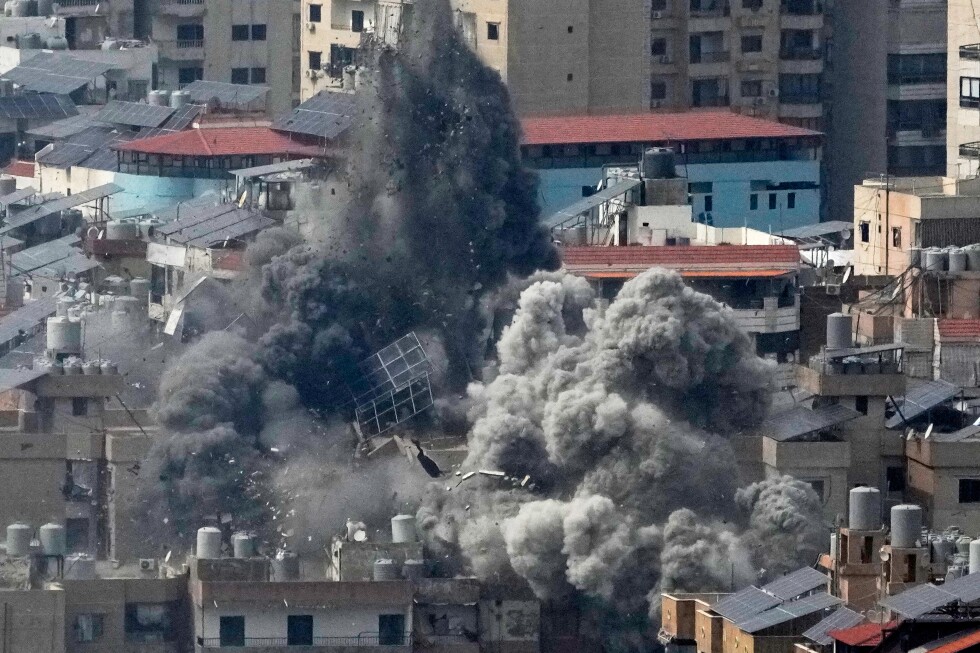
Escalating Conflict in the Middle East: A Closer Look
Explosive Developments in Tehran
In the early hours of Saturday, clouds of dark smoke billowed over Tehran, Iran, as a series of explosions marked a new chapter in the ongoing conflict between Iran and Israel. These blasts reflected the worsening situation, with Tehran responding to perceived threats by launching missiles towards Israel. According to U.S. officials, this retaliation comes amidst warnings of an impending and unprecedented bombing campaign in the region, escalating tensions that have been brewing for over a week.
U.S. Stance and Military Actions
The United States, under President Donald Trump’s administration, has reiterated its commitment to Israel, endorsing a significant arms sale valued at $151 million. The U.S. stance is clear: negotiations with Iran will only begin post their “unconditional surrender.” This hardline approach underscores the complexities of the ongoing conflict and the potential for further bloodshed. Iranian officials, for their part, have vowed to take all necessary measures to protect their sovereignty.
Explosions and Immediate Reactions
As explosions reverberated across Tehran, Israel reported that it had initiated extensive airstrikes targeting Iranian military capabilities. Residents in cities like Jerusalem were alerted to incoming missiles, prompting many to seek refuge in bomb shelters. Mirroring the intensity of the conflict, sirens wailed in nearby Bahrain as Iranian missile attacks threatened regional stability. The chaos didn’t stop there; Saudi Arabia announced successfully intercepting drones aimed at critical facilities, furthering the narrative of a conflict spilling over national borders.
Shifting Objectives in Warfare
The war’s objectives have evolved, with U.S. military efforts focused on crippling Iran’s military structure and its nuclear ambitions. The rationale for these actions has shifted, with some U.S. officials even hinting at aspirations to overthrow Iran’s government or catalyze a transition to a more favorable regime. Such declarations reflect a considerable strategic interest in the region, albeit with no clear timeline for achieving these ambitious goals.
Russia’s Role in Conflict Dynamics
In a surprising twist, Russia has reportedly been providing Iran with intelligence that could enhance its military capabilities against U.S. assets in the region. This revelation indicates Moscow’s nuanced involvement in the conflict, showcasing a complex international dynamic where alliances are tested. Russian President Vladimir Putin recently expressed his condolences over the death of Iran’s Supreme Leader Ayatollah Ali Khamenei, suggesting a strategic bond between the two nations amidst turmoil.
Civilian Casualties and Global Concerns
Reports surfaced suggesting that a tragic explosion at a school in Iran, which claimed numerous lives, may have been linked to U.S. airstrikes targeting nearby structures. This incident underscores the potential for increasing civilian morale and humanitarian crises as the conflict deepens. The escalating violence has also prompted alarm from global leaders, with Qatar’s energy minister predicting catastrophic economic repercussions if the war persists, potentially driving oil prices to unforeseen heights.
U.S. Military Strategy Intensifies
As the U.S. military prepares for what officials describe as the “biggest bombing campaign” of the war, the focus has been on dismantling a critical underground bunker linked to Iranian command structures. This marks a significant escalation in tactics aimed at severely limiting Iran’s military operations and capability to retaliate.
The Humanitarian Crisis Unfolds
With airstrikes reported in densely populated areas of Lebanon, civilian suffering continues to rise. Hospitals are overwhelmed with casualties, and the humanitarian conditions for displaced individuals are dire. Testimonies from residents highlight the fear and uncertainty gripping the region as civilians plead for refuge amid relentless attacks.
Hezbollah and Ground Clashes
In this fraught environment, Iranian-backed militant groups like Hezbollah have engaged in skirmishes with Israeli forces, particularly in eastern Lebanon. Reports of fatalities in the heat of battle compound the tragedy unfolding in the region, painting a grim picture of ongoing violence and its repercussions for civilians caught in the crossfire.
A Complicated Future
With conflicting narratives and escalating hostilities, the road ahead appears fraught with uncertainty. The combination of military actions, international alliances, and the plight of civilians creates a complex, multi-dimensional conflict that defies simple solutions. As the situation evolves, both regional and global stakeholders watch closely, aware that this conflict could redefine geopolitical relationships and influence both regional stability and global security for years to come.
US News
White House Unveils Video Featuring Hollywood Stars Advocating for ‘Justice the American Way’ | Trump Administration

A Hollywood-Themed Propaganda Video: Unpacking the White House’s Latest Release
Recently, the White House unveiled a Hollywood-themed propaganda video that has sparked significant discussion and controversy across social media platforms. Short and impactful, the 42-second clip features a blend of iconic movie scenes and notable actors, promising “justice the American way” for Iran. However, rather than inspiring admiration, the video has drawn mockery and skepticism, reminiscent of a teenager’s social media post more than a serious governmental statement.
A Cast of Characters
At the heart of the video are several well-known film and television characters, each representing themes of resistance and empowerment—albeit in a decidedly theatrical manner. It kicks off with a scene from Iron Man 2, where Robert Downey Jr.’s Tony Stark makes a grand entrance, boldly exclaiming, “Wake up, Daddy’s home.” This choice is particularly striking given Downey Jr.’s vocal criticisms of the Trump administration and his support for Democratic candidates.
Following Downey Jr., the video features Russell Crowe from Gladiator and Mel Gibson from Braveheart, both hailing from Australia and New Zealand respectively. Their characters embody defiance against overwhelming oppressive forces; Crowe’s Maximus seeks justice in ancient Rome, while Gibson’s William Wallace rallies against English invaders. The selection of these films hardly masks the underlying message: an appeal to viewers’ sentiments around fighting against imperialistic aggressors.
The Ethical Lawyer and the Macho Fighter Pilot
Next, the video introduces Jimmy McGill, played by Bob Odenkirk in the Breaking Bad franchise. McGill—a moral gray character known for his unethical legal practices—screams “You can’t conceive of what I’m capable of,” a line that seems to blur the lines between criminality and heroism. This irony is rich, given the current political landscape where ethics are often called into question.
The inclusion of Tom Cruise as Maverick from Top Gun serves to tap into American exceptionalism and the glorification of military power, punctuating the narrative with a call to action that feels both nostalgic and hyperbolic. His character embodies bravery and patriotism, underscoring the video’s overarching theme of American supremacy.
Quoting the Pop Culture Icons
As the video progresses, Canadian-born Keanu Reeves makes an appearance, declaring, “I’m thinking I’m back!” from the John Wick franchise, while Bryan Cranston—known for his role as Walter White in Breaking Bad—proclaims, “I AM the danger!” This choice of dialogue raises eyebrows, particularly given both actors’ histories of publicly criticizing the Trump administration. Cranston, like Downey Jr., has been candid about his disillusionment during Trump’s presidency, further complicating the video’s messaging.
The Mix of Genres
The latter parts of the video introduce a flurry of action heroes, seamlessly transitioning between live-action and animated sequences. This chaotic blend of genres speaks to a broader trend in the Trump administration’s visual communications strategy, reflecting a growing reliance on sensational and engaging content to communicate complicated political ideas. The closing voiceover, delivering a dramatic “flawless victory” reminiscent of the Mortal Kombat franchise, adds a tongue-in-cheek nod to the absurdity of the video’s narrative.
Social Media Backlash
After its release, the video faced an onslaught of criticism online, with many users highlighting the immaturity of its approach. Instead of galvanizing American sentiment, the White House’s attempts at engagement were perceived as contrived, inviting ridicule and comparisons to juvenile antics on social media. Critics argue that this reflects a deeper issue regarding the administration’s understanding of governance, blurring the lines between political rhetoric and entertainment.
The Use of Permissions and Controversies
Another layer of concern surrounding the video involves the use of copyrighted material. The apparent lack of secured permissions from the featured movies raises questions about the ethical implications of such a production. This is not the first time the Trump administration has brushed shoulders with controversy; high-profile artists have previously clashed with the White House over unauthorized use of their music, leading to a growing dialogue about intellectual property and political messaging.
Visual Propaganda in the Modern Age
Beyond its content, this video embodies a growing trend of using provocative visuals and AI-generated imagery, often referred to as “slopaganda.” The term captures the essence of messaging that prioritizes shock value over substance, leveraging technology to generate attention-grabbing content. This reliance on sensationalism reflects a broader strategy within the Trump administration, showcasing a propensity for confronting established norms through provocative methods of communication.
In epic fashion, this latest endeavor by the White House encapsulates a moment in political history characterized by the intertwining of entertainment and governance, raising essential questions about the future of political discourse in an age dominated by digital media.

Big League Exotics Boosie Celebrity Dog Show RECAP

Little Rogue! Cute & Funny Dachshund Dog Video!

Rapper-turned-politician Balen Shah’s RSP Poised for Major Victory in Nepal Elections

Iran and the U.S.: A Legacy of Hostility

Get in Touch – The Press Democrat

Is a Stock Market Crash Imminent? Historical Trends Offer Mixed Insights for Investors.

Trump Administration Refutes Claims of Iran Capturing US Soldiers | Israel-Iran Conflict Update

Suspect Charged in McCully Murder and Kapolei Stabbing Attempt | Crime & Courts

When Speed Becomes a Liability: Reevaluating Third-Party Risks in Federal Decision-Making

Fremd High School Junior Finn Chapin Returns to the Sport He Loves After Rare Cancer Diagnosis

Who Is Really Voting in These Polls? The Shocking Truth Behind America’s Approval Numbers

Blueprint for a “Tax-Free America” That Actually Works

Tyler Jaggers: Coast Guard Rescue Swimmer Passes Away Days After Mission Incident; Fiancée Honors His Memory

Police Issue Warrant for Bar Patron Alleged to Have Assaulted Multiple Individuals

Winter Storm Provides Much-Needed Surge for Tug Hill Snowmobile Industry

Four Forecasts for 2026

It Took 35 Years for T. rex to Reach Full Maturity

Major Indices Experience Weekly Declines as Treasury Yields Reach Four-Month High

2026 NFL Coaching Update: John Harbaugh Nearing Deal with Giants; Mike Tomlin Not Expected to Coach Next Season

EXCLUSIVE: Will Smith’s Former Best Friend Bilaal Breaks Silence in Explosive Tasha K Interview — Lawsuit, Scientology Allegations, and Claims of an Attempt on His Life
Big League Exotics Boosie Celebrity Dog Show RECAP
Little Rogue! Cute & Funny Dachshund Dog Video!

I Cuccioli Di Carlotta Top of Celebrity

New Vlogger of Turab and Sibtian | Shayan Funny Moment😂ft. @shehrmaindihat @wahabkamranofficial

Why Ryan Gosling’s Rescue Dogs Will Melt Your Heart!

61 Funny Dachshund Dogs Videos Instagram, Funny And Cute Dachshund Dog Try Not laugh Videos

Celebrity Infinity Holiday Cruise 2017 – VLOG

Super Funny Ferrets Videos – Don’t Try To Hold Back Laughter | Cool Pets

Celebrity Catwalk Paws in the City

Dogs vs Chucky : Funny Beagles Louie & Marie
-
 Entertaiment2 days ago
Tyler Jaggers: Coast Guard Rescue Swimmer Passes Away Days After Mission Incident; Fiancée Honors His Memory
-

 Comedy3 days ago
feeding carrot beans and radish to the hungry monkey
-

 Crime & Justice2 days ago
Police Report: March 6, 2026 | Latest Updates
-

 Crime & Justice15 hours ago
Over 30 Injured in Nightclub Bombing in Northern Peru | Crime News
-

 Business2 days ago
Netflix Withdraws from Meghan Markle’s $64 Candle Venture
-

 Science2 days ago
Engineers Introduce High-Efficiency Liquid CO₂ Energy Storage Solution for Renewable Power Grid Stability
-

 World News15 hours ago
Oil and Gas Prices Surge Amid Escalating Conflict in Iran
-

 World News1 day ago
Full Episode of PBS News Hour – March 6, 2026