
World News
Brilliant India Triumphs Over NZ by 96 Runs to Secure Record Third T20 World Cup Victory


Introduction
In a spectacular display of cricketing prowess, India clinched the T20 World Cup for a record third time, overcoming New Zealand with a commanding 96-run victory at Ahmedabad’s Narendra Modi Stadium. This triumph, celebrated by over 86,000 enthusiastic fans, not only highlighted India’s dominance in the sport but also solidified their status as a cricketing powerhouse. Defending champions India set a formidable total of 255-5, demonstrating their prowess right from the start of the match.
India’s Impressive Performance
Batting first after losing the toss, India showcased a strategic and aggressive approach. Opener Sanju Samson was a star performer, scoring a staggering 89 runs off just 46 balls, marking his third consecutive fifty in the tournament. His explosive innings included eight towering sixes, elevating India’s hopes and putting New Zealand under immediate pressure.
The Indian innings was heavily bolstered by Abhishek Sharma, who ignited proceedings with a quickfire 52 runs off 21 balls, hitting three sixes and six fours. Their partnership set an impressive foundation, as the duo raced to a combined score of 50 runs off merely 24 balls, equaling the record for the highest power play score in T20 World Cup history with 92-0.
Building a Towering Total
With momentum on their side, India continued to pile on the runs. After Sharma’s swift departure, Ishan Kishan joined Samson to forge another effective partnership, adding 105 runs for the second wicket at a blistering pace. Kishan’s 50 came off just 23 balls, reflecting the pressure New Zealand was under as India raced past the 200-run mark in the 15th over.
Despite a minor hiccup in the 16th over—where James Neesham took three vital wickets—India’s resolve remained steadfast. Shivam Dube chipped in with a rapid 26 not out off just eight balls, thereby securing a total exceeding 250 for India, once again highlighting their batting depth and resilience in high-pressure situations.
New Zealand’s Struggles with the Bat
In response to India’s gargantuan target, New Zealand faced an uphill battle from the onset. Their innings commenced poorly, losing Finn Allen for just nine runs as Axar Patel struck early. The dismissal of Rachin Ravindra, caught by Kishan off a delivery from Jasprit Bumrah, further exacerbated their woes. At 70-4, New Zealand was reeling, with none of their batsmen able to mount a serious challenge against the Indian bowlers.
Seifert’s brief innings provided a glimmer of hope. Scoring a quick 52 runs, including five sixes, he appeared to be the sole aggressor in a sputtering innings before becoming the only wicket of Varun Chakravarthy. Bumrah returned to take annihilation further; by the end of the innings, New Zealand was all out for 159 in just 19 overs, showcasing a stark contrast to India’s innings and underscoring their inability to build partnerships effectively.
Bowling Brilliance
The Indian bowling attack, spearheaded by Bumrah who finished with figures of 4-15, along with Patel’s 3-27, exhibited exceptional control and tactical acumen. Bumrah’s performance not only earned him the Player of the Match award but also elevated his tally to 40 wickets in T20 World Cups, the most for any pacer in tournament history.
Bumrah reflected on the significance of the match, highlighting the motivation that drove the team after their previous final loss. His words resonated with the jubilation of both players and fans alike, marking not just a victory, but a moment of redemption.
Historic Triumphs and Records
With this victory, India became the first team to successfully defend a T20 World Cup title and the first to claim the trophy on home soil. This triumph marked another milestone in the legacy of Indian cricket, following their previous wins in 2007 and 2024. The camaraderie and skill displayed by the players will be remembered as another iconic moment in the history of the sport.
Under the captaincy of Suryakumar Yadav, who joined legends like MS Dhoni and Rohit Sharma in lifting the T20 World Cup, India not only celebrated a victory but also rekindled a sense of national pride in cricket. As the celebrations unfolded at the Narendra Modi Stadium, the echoes of their success resonated far beyond the confines of the ground.

Iran’s Stance on Ceasefire and Ongoing Conflict in the Middle East
Iran’s Foreign Minister Abbas Araghchi has made headlines recently by firmly rejecting calls for a ceasefire in the Middle East. During a segment on NBC News’ “Meet the Press,” he emphasized that Iran’s fight is crucial for the safety and security of its people. Araghchi argued that the United States and Israel are responsible for the ongoing violence, asserting that they are “killing girl students” and attacking hospitals. This rhetoric highlights the deep-seated grievances that fuel Iran’s current military posture.
Defiance Against Ceasefire Calls
Araghchi’s dismissal of ceasefire proposals comes from a belief that previous agreements have already been violated. He claimed that the ceasefire brokered after last year’s 12-day conflict has been shattered, making calls for another ceasefire ineffective. His assertion points to a broader narrative that views negotiations with the U.S. and Israel as futile when past commitments have not been honored.
“Unless we get to a permanent end to the war, I think we need to continue fighting for the sake of our people and our security,” he stated, indicating a resolve to pursue military objectives until a lasting resolution is achieved.
Allegations of U.S.-Israeli Aggression
In his remarks, Araghchi made pointed allegations against the United States and Israel, reiterating perceptions of external aggression. His comments about the killing of civilians, including students, resonate with a narrative of victimhood that Iran has harnessed to justify its military responses. The focus on these tragic consequences aims to galvanize support domestically and draw international attention to the humanitarian crises attributed to U.S.-led actions in the region.
Potential Russian Support
Amidst the ongoing conflict, reports have surfaced that Russia is providing intelligence to Iran, specifically concerning the locations of U.S. forces in the Middle East. When pressed about this support, Araghchi acknowledged that cooperation between Iran and Russia is longstanding and “not a secret,” though he did not confirm the specifics of Russian intelligence aid. The mention of such cooperation reflects a growing partnership that could further complicate the geopolitical landscape in the region.
Iranian Military Strategy
Iranian leadership, including President Masoud Pezeshkian, has expressed a cautious approach towards neighboring Gulf nations. Recent statements declared that Iran would refrain from attacking these countries unless they facilitate U.S. or Israeli assaults. This policy position demonstrates an attempt to navigate regional tensions while still asserting military capabilities.
Araghchi clarified that Iranian strikes have historically targeted American assets, which are unfortunately located within neighboring territories. He emphasized that these actions are not aimed at the countries themselves but rather at what Iran perceives as hostile foreign military presence.
Response to U.S. Military Threats
In a tense exchange, Araghchi addressed the possibility of U.S. ground troops deploying in Iran. He boldly stated, “we have very brave soldiers who are waiting for any enemy who enters our soil, to fight with them and to kill them and destroy them.” This declaration underscores Iran’s readiness to defend its sovereignty against perceived encroachments, framing any U.S. involvement as an act of war.
Misconceptions About Iranian Missile Capabilities
Araghchi also countered claims by President Trump regarding Iran’s missile capabilities, which the U.S. administration cited as justification for military actions. Refuting the assertion that Iran could threaten the U.S. with missiles capable of reaching American soil, Araghchi clarified, “we have intentionally limited ourselves to below 2,000 kilometers of range because we don’t want to be felt as a threat by anybody else in the world.” This statement reflects Iran’s desire to navigate the delicate balance between deterrence and provocation.
Leadership Transition in Iran
In a notable development, reports indicate that Iran’s Assembly of Experts has chosen a new supreme leader following the death of Ayatollah Ali Khamenei. However, Araghchi remained tight-lipped about potential successors, stating, “nobody knows,” and emphasized that speculation should await official announcements from the Assembly.
When pressed about President Trump’s comments suggesting he wanted to play a role in selecting Iran’s next leader, Araghchi firmly rejected foreign interference. He reinforced the notion that leadership transitions are matters for the Iranian populace and their elected representatives.
Future U.S.-Iran Relations
With the U.S. administration asserting that any negotiation with Iran would require “unconditional surrender,” the already fraught relations between the two nations loom large over diplomatic conversations. In this context, U.S. Ambassador Mike Waltz indicated confidence that President Trump would address the intelligence-sharing situation between Russia and Iran adequately.
Araghchi’s insistence on Iranian sovereignty and the right of the Iranian people to choose their leadership embodies a broader narrative that seeks to assert national pride amid external pressures. These dynamics present a complex and evolving situation in the Middle East, where calls for peace clash with entrenched hostilities and competing interests.

The Long History of US-Iranian Animosity
Origins of the Conflict
The tensions between the United States and Iran date back to the mid-20th century, with roots in a pivotal event: the 1953 coup orchestrated by the CIA and Britain’s MI6 against Iran’s democratically elected Prime Minister, Mohammad Mossadegh. This event was significant for many Iranians, as Mossadegh had nationalized the Anglo-Iranian Oil Company, a move that angered Western powers dependent on Iranian oil. Fearing the spread of communism in the region, the US and the UK conspired to restore the Shah, Mohammad Reza Pahlavi, to power. This intervention, viewed by many Iranians as an affront to their sovereignty, sowed the seeds of a profound mistrust that still influences US-Iran relations today.
The Iranian Revolution
Fast forward to the late 1970s, the Shah’s regime was facing widespread discontent, characterized by allegations of corruption, human rights abuses, and economic mismanagement. This unrest culminated in the Iranian Revolution of 1979, which saw the Shah flee the country and Ayatollah Ruhollah Khomeini rise to power upon his return from exile in France. Khomeini’s return signaled a dramatic shift in Iran’s political landscape, as he established a theocratic government that prioritized Islamic ideology over Western influences. The Shah’s exile, along with his acceptance into the US for medical treatment, triggered the infamous hostage crisis where Iranian students stormed the US embassy in Tehran, taking 52 diplomats hostage for 444 days. This event would define US-Iran relations for decades.
The Hostage Crisis
The US endured a dramatic shift in relations during the hostage crisis. President Jimmy Carter ordered a rescue mission that ultimately failed, resulting in the tragic loss of eight servicemen. Diplomatic relations were severed, and the trauma of the event embedded a deep-seated animosity and distrust on both sides. The episode was not just a flashpoint; it reshaped US foreign policy in the Middle East for years to come, leading to a series of proxy conflicts and confrontations in the region.
US Involvement in Regional Conflicts
As tensions simmered, the 1980s witnessed a series of proxy wars fueled by the animosity between the US and Iran. The US chose to support Iraq during the Iran-Iraq War, viewing Saddam Hussein’s regime as the lesser of two evils in combatting what they considered Iranian extremism. This support included tacit approval of chemical weapon usage against Iranian forces. Concurrently, the US became embroiled in Lebanon, where its peacekeeping mission turned lethal, resulting in the deaths of 241 American servicemen in a Hezbollah-orchestrated truck bombing. Afterward, Iran was designated a “state sponsor of terrorism,” solidifying its adversarial stance in the eyes of the US.
Looking for Dialogue—But Seeking Control
In the aftermath of the September 11 attacks, some Iranian leaders expressed a willingness to engage in dialogue with the US, advocating for a collaborative approach against mutual threats such as al-Qaeda and the Taliban. However, these overtures were quickly quashed when President George W. Bush labeled Iran part of an “axis of evil,” signaling a regression in diplomatic engagement. This hardline stance also prompted Iran to strengthen its alliances with groups like Hezbollah and Hamas, positioning itself as a counter to perceived Western interventions.
The Nuclear Deal and Its Aftermath
A significant breakthrough occurred in 2015 when the US, under President Barack Obama, agreed to the Joint Comprehensive Plan of Action (JCPOA), a landmark deal aimed at curbing Iran’s nuclear ambitions. This agreement limited uranium enrichment in exchange for the lifting of numerous sanctions. However, the optimism surrounding the deal was short-lived. In 2018, President Donald Trump abandoned the agreement, arguing that it did not sufficiently address Iran’s support for terrorism. This decision reinstated harsh sanctions that plunged the Iranian economy into crises, leading to increased domestic unrest and dissatisfaction with leading powers in Tehran.
Current Tensions
As of 2023, the Biden administration perceives Iran as a weakened adversary due to the overwhelming impact of sanctions and economic turmoil. Recent attacks on Israel by Hamas (which Iran supports), although not directly orchestrated by Iran, have intensified talks of military action against the Islamic Republic. The rationale is that, with Hamas weakened by Israeli retaliation, the US and its allies may now have a greater opportunity to target Iranian interests without facing retaliation from its surrogates.
Israel’s Role in the Equation
Prior to the 1979 revolution, Iran was generally supportive of Israel. It was one of the few Muslim-majority countries to recognize Israel and even supplied it with oil. However, after Khomeini came to power, the relationship soured dramatically. Ayatollah Khomeini condemned Israel as a Western puppet and championed the Palestinian cause as a central ideology of the Islamic Republic. This ideological shift transformed into active opposition; Iranian support for groups like Hamas and Hezbollah became trump cards in its long-standing rivalry with Israel, further complicating the dynamics of US-Iranian relations.
The US and Iran are locked in a complex and multifaceted relationship that extends beyond bilateral disagreements. The evolution of this relationship, from the coups of the past to current geopolitical calculations, illustrates an ongoing cycle of mistrust, conflict, and occasional dialogue, reshaping the Middle Eastern landscape in the process.
Rising Oil Prices Amid Middle East Conflict
Context of the Conflict
In recent days, escalating tensions following military strikes by the U.S. and Israel on Iran have caused a dramatic surge in oil prices. This rapid escalation into warfare in the Middle East has sent shockwaves through global markets, particularly affecting oil supply routes and prices. The situation remains fluid and complex, with nearly every nation in the region experiencing some form of conflict-related damage.
Shipping Disruptions
One critical aspect of the ongoing conflict is the impact on maritime shipping routes in the Persian Gulf. Key oil transport routes are jeopardized, particularly at the Strait of Hormuz, where approximately 20 million barrels of oil travel daily. The ongoing hostilities have left many oil-laden vessels stranded, unable to navigate safely through this vital chokepoint. This disruption in shipping has significant implications for energy supply, causing ripples across the global market.
Production Reductions by Major Producers
Countries heavily reliant on oil exports are beginning to take precautionary measures. Kuwait, for instance, announced a reduction in oil production, adding to global supply worries. Such decisions are indicative of the broader fear among producers about the sustainability of operations during wartime. As countries reassess their capabilities amidst conflict, the potential for supply shortages becomes increasingly palpable.
The Surge in Oil Prices
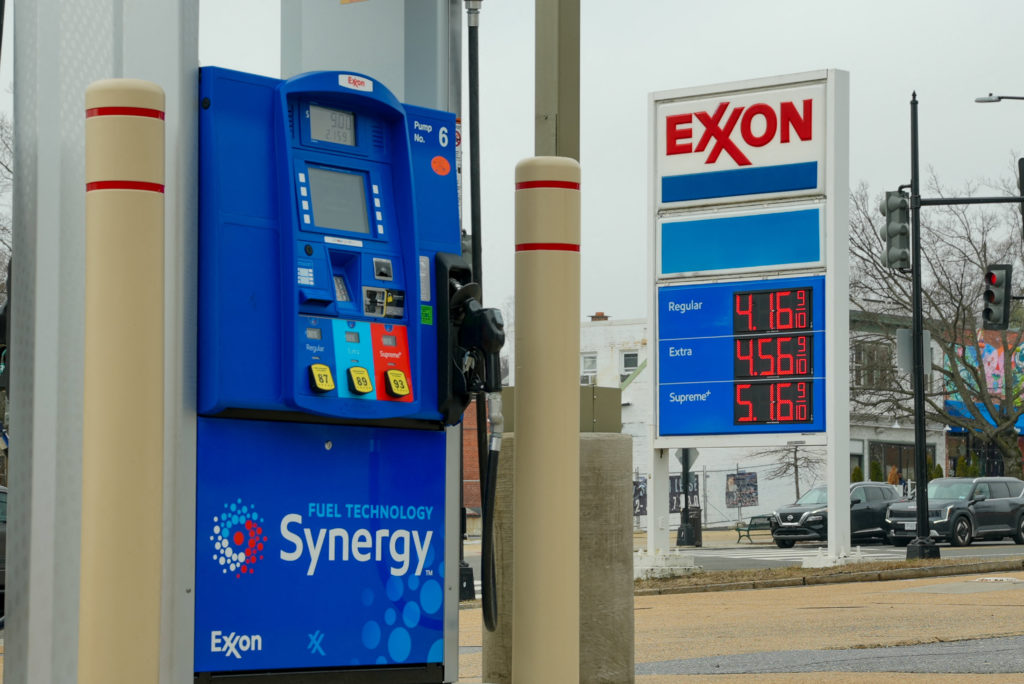
As a direct consequence of these factors, oil prices have soared to new heights. American crude reached $90.90 a barrel, marking a staggering 36% increase in just one week. Brent crude, the international benchmark, rose by 27% within the same time frame, landing at $92.69. This spike inevitably impacts consumers and businesses, translating into higher costs for gasoline, diesel, and jet fuel.
Impact on Consumers
For everyday consumers, the repercussions of rising oil prices are felt at the gas pump. A gallon of regular gasoline recently increased to $3.41—an uptick of 43 cents from the previous week. Diesel, too, saw a significant rise, selling for $4.51, up by about 75 cents. Anecdotal accounts from drivers highlight frustrations over the sudden and steep upward trajectory of fuel costs, compounded by an already challenging economic backdrop.
Long-term Expectations
Statements from U.S. President Donald Trump indicate that military operations are expected to continue for a month or more, casting a shadow over future oil supply scenarios. Observers like Al Salazar, head of macro oil and gas research at Enverus, express concerns that the conflict could extend beyond initial expectations, further contributing to volatility in energy markets.
Global Price Effects
The surge in oil prices has broader implications beyond the U.S., particularly affecting Europe and Asia, which are more reliant on Middle Eastern energy resources. Reports reveal that diesel prices have doubled in Europe, while jet fuel prices have skyrocketed by nearly 200% in Asia. These developments highlight the interconnected nature of global energy markets, where disruptions in one region can reverberate worldwide.
Retaliatory Strikes by Iran
As the situation evolves, Iran’s response to the conflict has included retaliatory measures, further destabilizing the region. Recent attacks, such as a drone strike on the U.S. Embassy in Saudi Arabia and strikes on key facilities in Saudi Arabia and Qatar, have throttled production capabilities. Approximately 9 million barrels of oil per day are currently off the market due to these developments and the anticipation of continued hostilities.
America’s Role
Despite being a net exporter of oil, the U.S. is not insulated from global price fluctuations. U.S. oil prices are influenced by developments abroad, revealing the limitations of domestic production in shielding consumers from international turmoil. Energy experts emphasize the lag time it takes for increased domestic production to translate into market relief—often several months—making immediate relief unlikely.
Consumer Preparedness
Heightened awareness of rising fuel prices has prompted some consumers to act preemptively, stockpiling fuel in expectation of further increases. However, there are rising concerns for those living paycheck to paycheck, who depend on transportation for work and may struggle to absorb these sudden expenses.
Government Initiatives
In an effort to stabilize the market and shore up confidence in the Gulf region, President Trump has proposed an insurance plan intended to mitigate potential losses. This initiative aims to support businesses engaged in maritime trade, yet experts warn that such measures may not effectively address underlying security concerns. Trust in safe navigation has been compromised, making it difficult for traders and transporters to operate as usual.
Security Concerns in Maritime Trade
The underlying issue of safety in maritime shipping routes looms large. Analysts point out that measures must be taken to secure the Strait of Hormuz from ongoing threats, including the use of drones and other aggressive tactics that could target tankers. Without a credible security framework, the potential for future disruptions remains high, casting a long shadow over the oil market.

Live Nation and U.S. Department of Justice Settle Antitrust Lawsuit

Murphy the dog turned into a celebrity at the local market!

Maalik ki👱🏻♀️🤣 animal_s funny moments 😹😹😹#animals #animallovers #petlovers #petcare @Ajju089

Maine Attorney General Appeals to Court Against Overturning Ranked Choice Voting Decision

Ep 48: Life on QUARANTINE, PART 2 — (Funny Dogs Staying Home)

Funniest Dog Videos Ever (Part 1)

An Historic California Political Club: Pioneering Social Influence

The MacDonald Brothers – Celebrity Reflection performance

Funny Cats and Dogs Scared Of Halloween – Try Not To Laugh 😂 | Cool Pets

Democrat Roy Cooper Must Break North Carolina’s Historical Patterns to Sustain Winning Streak in Senate Race

Tyler Jaggers: Coast Guard Rescue Swimmer Passes Away Days After Mission Incident; Fiancée Honors His Memory

Who Is Really Voting in These Polls? The Shocking Truth Behind America’s Approval Numbers

Blueprint for a “Tax-Free America” That Actually Works

Police Issue Warrant for Bar Patron Alleged to Have Assaulted Multiple Individuals

Winter Storm Provides Much-Needed Surge for Tug Hill Snowmobile Industry

Four Forecasts for 2026

It Took 35 Years for T. rex to Reach Full Maturity

Major Indices Experience Weekly Declines as Treasury Yields Reach Four-Month High

EXCLUSIVE: Will Smith’s Former Best Friend Bilaal Breaks Silence in Explosive Tasha K Interview — Lawsuit, Scientology Allegations, and Claims of an Attempt on His Life

2026 NFL Coaching Update: John Harbaugh Nearing Deal with Giants; Mike Tomlin Not Expected to Coach Next Season
Murphy the dog turned into a celebrity at the local market!
Maalik ki👱🏻♀️🤣 animal_s funny moments 😹😹😹#animals #animallovers #petlovers #petcare @Ajju089
Ep 48: Life on QUARANTINE, PART 2 — (Funny Dogs Staying Home)
Funniest Dog Videos Ever (Part 1)
The MacDonald Brothers – Celebrity Reflection performance
Funny Cats and Dogs Scared Of Halloween – Try Not To Laugh 😂 | Cool Pets

Favorite Celebrity

Ultimate Cute Rottweiler Compilation #1 | Best Of Funny Rottweiler Videos

Problem Of Celebrity Star Channel.. Publish Video Problem

Funny and Cute corgi puppies videos compilation 2021❤ Cutest corgis Ever! Part 2
-
 Entertaiment3 days ago
Tyler Jaggers: Coast Guard Rescue Swimmer Passes Away Days After Mission Incident; Fiancée Honors His Memory
-

 Comedy4 days ago
feeding carrot beans and radish to the hungry monkey
-

 Business3 days ago
Netflix Withdraws from Meghan Markle’s $64 Candle Venture
-

 World News2 days ago
Oil and Gas Prices Surge Amid Escalating Conflict in Iran
-

 Crime & Justice2 days ago
Over 30 Injured in Nightclub Bombing in Northern Peru | Crime News
-

 Crime & Justice4 days ago
Police Report: March 6, 2026 | Latest Updates
-

 Science2 days ago
Domino Unveils the Quickest and Safest Way to Scale Enterprise-Agent AI Systems
-

 Comedy2 days ago
61 Funny Dachshund Dogs Videos Instagram, Funny And Cute Dachshund Dog Try Not laugh Videos