
US News
Small Business Owners Uncertain About Refunds Following Supreme Court’s Rejection of Trump’s Tariffs


The Supreme Court’s Tariff Ruling: A New Chapter for Small Businesses
The recent decision by the U.S. Supreme Court to strike down Donald Trump’s tariffs marks a significant shift in the trade landscape, potentially opening the floodgates for up to $175 billion in refunds for businesses that previously paid these import taxes. However, the actual process of reclaiming this money is fraught with uncertainty. Trump himself has suggested that the resolution could linger in the courts for up to five years, leading many to doubt the potential benefits.
The Hidden Costs of Tariffs
Across the nation, small business owners have been grappling with the consequences of these tariffs, often shouldering the financial burden during turbulent times. The Guardian’s exploration into the experiences of small business owners reveals the widespread impact of the tariff impositions.
Small Businesses Struggling to Keep Afloat
Elizabeth Vitanza and her husband, John Ballon, run a lighting and home furnishings company in Los Angeles. They reported that the modern brands they partner with have raised prices by at least 12% over the past year due to increased costs from tariffs. Vitanza expressed her frustration: “None of this is pro-business or pro-American.” This sentiment resonates with many small business owners who feel those at the top are not attuned to their struggles.
Strategic Orders Leading to Unexpected Costs
Specifically, when Trump won re-election in 2024, Vitanza and Ballon preemptively placed a large order with one of their Swedish partners, hoping to sidestep the tariffs. This proactive measure did not shield them; they still faced substantial tariffs on their order. Ballon remarked, “The money we had set aside for renovations or salary increases was suddenly dwindling.” This scenario raises a pressing question: who would dare start a business in such an unpredictable climate?
The Ripple Effects on Manufacturing
The effects extend beyond retail. One anonymous furniture maker from Texas highlighted the impact of tariffs on imported lumber, which significantly raised production costs. With few domestic alternatives available, he was forced to hike prices, illustrating the wider implications of tariffs for manufacturers.
Navigating Uncertainty in Pricing
Rob Coughlin, who manages Granite Gear, a small outdoor gear company in Minnesota, echoed similar concerns. Since the initiation of tariffs, Coughlin’s company faced chaotic fluctuations in their pricing structure. Initially, they dealt with an 18% duty that skyrocketed to 46% after reciprocal tariffs were announced. Although negotiations with Vietnam led to a reduction to 20%, uncertainty still loomed. “How do I present pricing to retailers when I don’t even know what it will be?” he questioned, highlighting the challenges of managing a small brand amidst larger competitors who could dictate market prices.
Cost Increases Impacting Profitability
Dr. Charlie Elrod, the founder of a natural health products company, faced significant cost increases due to tariffs, especially those on Brazilian imports. Despite his efforts to absorb costs for several months, he ultimately increased prices by 5%, an adjustment that didn’t entirely offset the dip in profitability. “Our profitability is definitely lower this year,” he noted, underscoring how tariffs continue to reshape financial landscapes for businesses.
Ongoing Legal Battles and Refund Prospects
Before and after the Supreme Court ruling, over a thousand companies filed lawsuits against the government regarding tariffs. Recently, a U.S. trade court judge mandated that billions of dollars be refunded to importers who paid tariffs deemed illegal. Vitanza is among many tracking their tariffs meticulously, “We’re hoping to file a claim for reimbursement, but we’re not counting on it.”
Complexity Discouraging Refund Claims
The process for claiming refunds feels overwhelming for many. Howard Trenholme, a bakery and café owner in Moab, Utah, admitted he hadn’t even thought about pursuing a refund due to the complexity and costs associated with legal assistance. “The need for legal services likely offsets the remote possibility of a refund,” he noted.
Small Firms Weighing Risks and Rewards
Coughlin shared similar reluctance: “The potential refund doesn’t outweigh the legal fees I could incur.” With past experiences influencing their decisions, many small business owners, like him, are reluctant to engage in a complicated and potentially fruitless pursuit of refunds.
The Bigger Picture
Through the experiences of various business owners, a common thread emerges. The landscape for small businesses has become increasingly fraught with complexity, turning what might have been a straightforward corridor of trade into a labyrinth of legalities and uncertainties. The Supreme Court’s ruling, while momentous, is just a starting point in what promises to be a long and challenging road for these businesses.
US News
Iran Conflict Update: Day 12 of US-Israel Attacks – What’s Happening? | US-Israel War on Iran News
The Ongoing Conflict In Iran: A Deep Dive into Civilian Impact
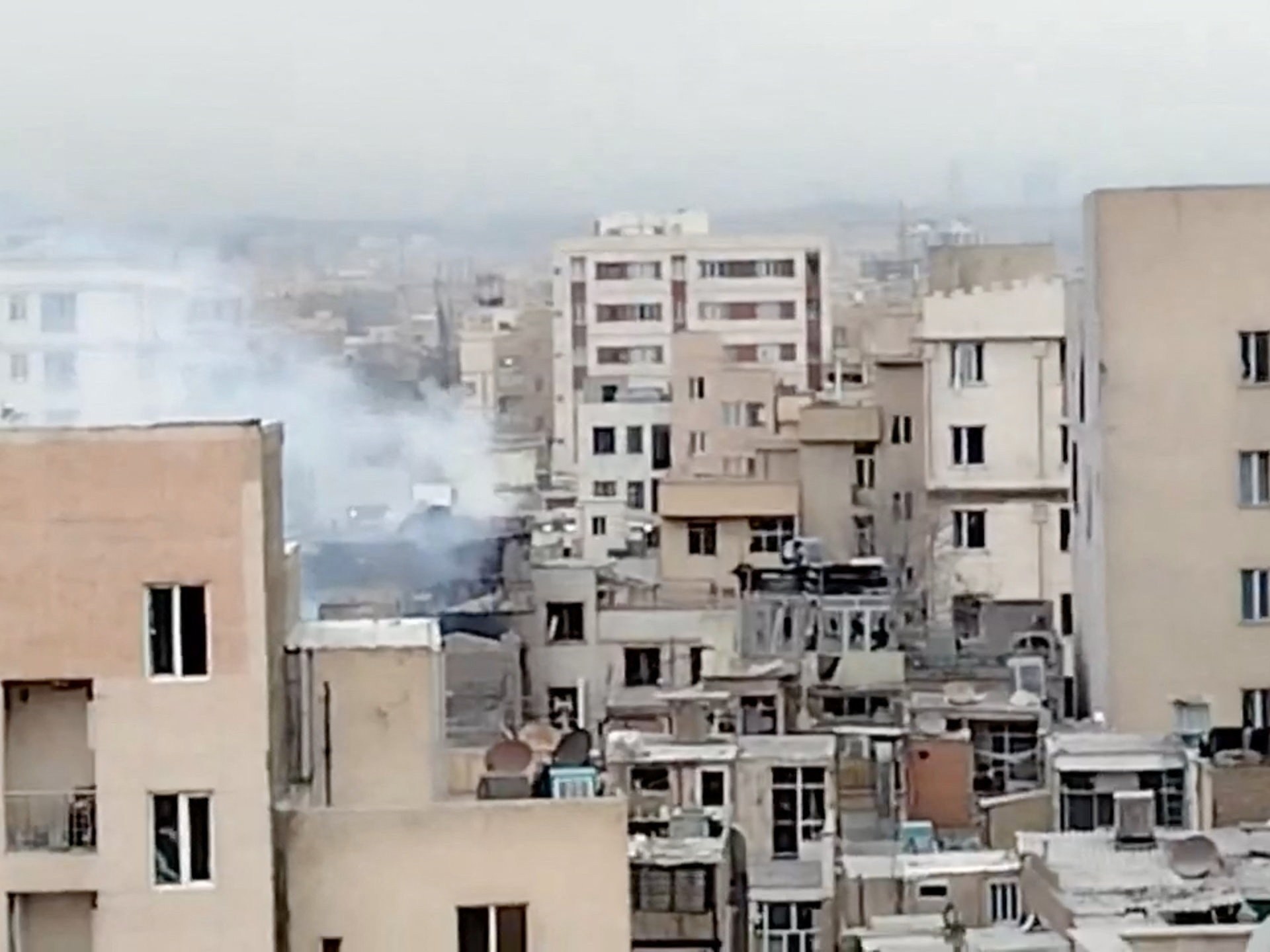
As the United States-Israel conflict in Iran escalates, the numbers presented by Tehran are alarming. Over 1,300 civilians have reportedly lost their lives, with nearly 10,000 civilian sites claimed to have been hit since the start of the hostilities. The situation is dire, unfolding amidst airstrikes, retaliatory attacks, and growing global tension. Here’s a closer look at what’s happening.
Current State of Affairs
The warfare has now entered its twelfth day, with intense bombardments reported across Iran. Civilian installations—homes, hospitals, and places of gathering—have become the unfortunate targets of these air strikes. Tehran’s Mehrabad airport is among the locations struck, indicating a strategic attempt to disrupt logistical and operational capabilities.
Iran’s Claims of Civilian Casualties
Iran’s government has been vocal about the toll the war has taken on its civilians. They argue that the U.S. and Israel are deliberately targeting civilian infrastructure, thereby exacerbating human suffering. Amir Saeid Iravani, Iran’s ambassador to the UN, has called attention to bombings that have resulted in significant civilian infrastructure damage, sparking outrage and condemnation.
The Retaliatory Response
In response to the ongoing attacks, Iran has unleashed a series of missile strikes targeting Israeli locations, including major cities like Tel Aviv and West Jerusalem. The Islamic Revolutionary Guard Corps (IRGC) has launched multiple waves of attacks, featuring an arsenal of “super-heavy” missiles in a strategic move to retaliate against perceived aggressors.
Explosions and Damage
Reports have emerged of powerful explosions in residential areas, creating panic and destruction in urban centers. The Red Crescent has been actively involved in rescue operations, sifting through rubble in search of survivors, underscoring the desperation among the populace.
International Repercussions
As military actions continue, countries neighboring Iran are feeling the repercussions. Nations such as Saudi Arabia and Qatar have intercepted missile attacks, indicating the conflict’s potential to escalate beyond Iranian borders. The United States has reiterated its commitment to bolster defenses in the region, declaring a multi-pronged strategy in response to Iranian provocations.
U.S. Domestic Pressures
The situation is triggering a wave of political pressure within the United States. Lawmakers are questioning the administration’s strategy in the conflict, particularly as U.S. casualties rise amid ongoing military engagements. This scrutiny has led to calls for public hearings to clarify the war’s objectives and the administration’s long-term strategy.
Casualty Figures and Investigations
The Pentagon has confirmed that approximately 140 U.S. service members have been wounded and seven killed as part of Operation Epic Fury. Meanwhile, they are also conducting investigations into potential civilian casualties resulting from recent strikes, notably involving an attack on a girls’ school that left 175 students dead. This particular incident is under intense scrutiny, further complicating the U.S. position in the conflict.
Broader Implications for Civilian Safety
In addition to military actions, the civil landscape in Iran is deteriorating. Reports of pollution from strikes on fuel depots have raised concerns about toxic rainfall, dubbed “black rain.” This polluted precipitation could exacerbate health risks for civilians, particularly in war-torn areas already struggling with the aftermath of air strikes.
Population Displacement and Humanitarian Impact
The humanitarian crisis is becoming more evident as civilian displacement rises. Ukrainian officials have reported over 667,000 people displaced from conflict zones in Lebanon due to intensified Israeli attacks, highlighting the wider regional consequences of the conflict.
The Global Energy Market at Stake
As missile exchanges and airstrikes continue, there has been a noticeable spike in global energy prices. Iran’s targeting of oil facilities not only threatens regional stability but also poses a challenge to global energy markets already grappling with volatility.
Scalability of Military Engagements
The scale of military operations, especially concerning Iran’s missile capabilities, poses a new realm of uncertainty for international stakeholders. The tactical decision to engage various military resources suggests a broader strategy that could lead to an enduring conflict.
As the unfolding crisis continues to gain international attention, the numbers alone tell a harrowing story—a narrative filled with loss, uncertainty, and geopolitical strife. The voices of those affected—civilians caught in the crossfire—become crucial in understanding the full scope of this ongoing crisis.

Tensions Rise as Conflict Intensifies in the Middle East
Current Situation
As the conflict in the Middle East escalates, Iran’s aggressive actions against oil infrastructure and its threats to crucial waterways have left global markets in turmoil. On Tuesday, the United States promised rigorous new military responses as the war marked its 11th day without resolution. This situation has ramifications far beyond the region, affecting economies worldwide.
Escalating Attacks
Iran has ramped up its military operations, striking not only at Israeli targets but also at Gulf Arab nations. Concurrently, Israel has been conducting airstrikes in retaliation against Iran and Lebanon, where it’s engaged in fierce battles against Hezbollah militants. Reports from Tehran indicate that residents have endured some of the heaviest strikes yet, leading to widespread damage and power outages in various neighborhoods. Locals are choosing to flee urban areas for safety, seeking refuge in the countryside.
Rising Casualties in the Gulf
The United Arab Emirates (UAE) reported two casualties from a recent drone strike, adding to the overall death toll, which stands at six in the UAE alone and has injured over 120 individuals. The violence has not been limited to the UAE; Bahrain’s capital, Manama, experienced a shocking strike that resulted in fatalities and injuries among civilians. Since the onset of the conflict, more than 100 missiles and 175 drones have been intercepted in Bahrain.
U.S. Military Actions and Casualties
At the Pentagon, U.S. Defense Secretary Pete Hegseth warned that further military operations would intensify significantly. He noted that only a small number of Iranian missiles had been launched in recent days, indicating a possible shift in the offensive strategy. To date, U.S. military engagements have targeted over 5,000 locations. The Pentagon reported 140 U.S. service members as injured, with most suffering minor injuries, though there have been severe cases resulting in the loss of life.
Iranian Defiance and Threats
Iranian leaders have shown a steadfast resolve, publicly rejecting any ceasefire discussions. Mohammad Bagher Qalibaf, Speaker of Iran’s parliament, stated on social media that the nation is committed to retaliating decisively against perceived aggressors. A high-ranking Iranian official even issued a personal warning to U.S. President Donald Trump, suggesting that past efforts to undermine Iran’s power had failed.
Targeting Global Energy Infrastructure
Iran’s strategy seems aimed at pressuring both the U.S. and its allies through targeted assaults on energy infrastructure. This approach has already caused significant spikes in oil prices, with Brent crude rising to nearly $120 a barrel and stabilizing around $90. The situation is further complicated by the impending crisis in the Strait of Hormuz, where Iran has threatened to block oil shipments, impacting global supply chains.
Displacement and Humanitarian Crisis
The ongoing conflict has led to widespread displacement, with the U.N. refugee agency reporting that over 667,000 individuals in Lebanon are now registered as displaced due to the violence. Additionally, many foreign nationals have begun to evacuate the region, including thousands of U.K. and U.S. citizens returning to their home countries. While some commercial flights from the UAE are returning to normal, airlines have suspended travel to areas directly affected by the conflict.
Broader Impact on Regional and Global Markets
The ramifications of these fighting have reverberated through global markets, prompting both oil prices to surge and the stock market to experience fluctuations. The fear of oil shortages, especially given its critical role in the global economy, looms large as nations grapple with the potential outcomes of this protracted conflict.
In summary, as Iran continues its military onslaught and the U.S. responds with intensified strikes, the complexity of the situation grows, leaving many to wonder how long this cycle of violence will persist and what its ultimate consequences will be for the region and the world at large.
A Deeper Look at Trump’s Remarks on the Recent Iran Conflict
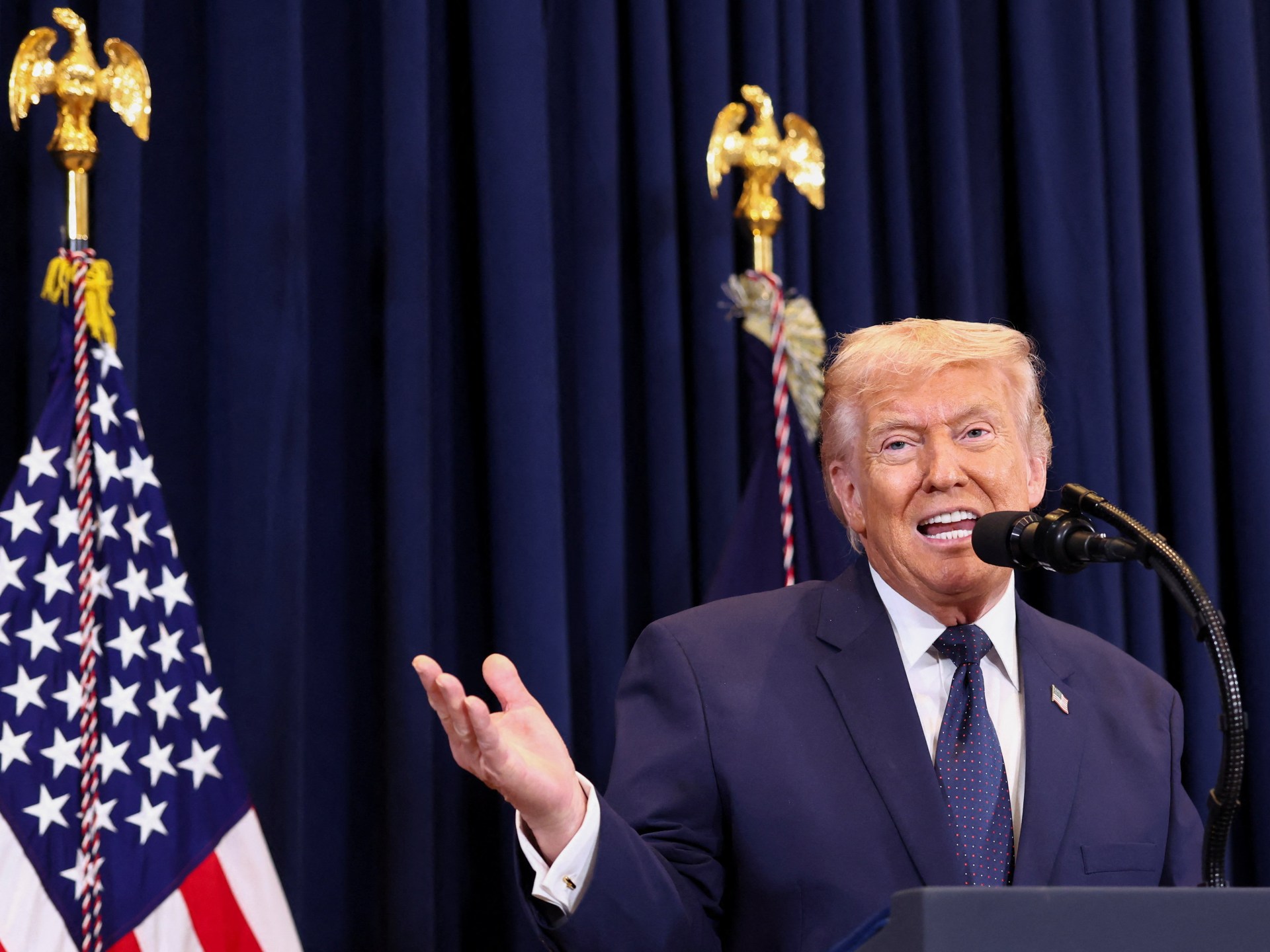
In a recent address to congressional Republicans, U.S. President Donald Trump asserted that the ongoing war with Iran could be concluded “pretty quickly.” This statement came amid rising tensions following a significant military offensive launched by the United States and Israel against Iranian military infrastructure. This military campaign, dubbed “Operation Epic Fury,” began on February 28 and had already resulted in substantial changes in the leadership and military capabilities of Iran.
Operation Epic Fury: The Beginning
On the first day of the operation, the military successfully executed large-scale air and missile strikes, which included targeted assaults on critical Iranian military assets such as missile launchers and naval ships. Notably, the campaign led to the death of Iran’s then-supreme leader, Ayatollah Ali Khamenei. Trump’s address highlighted his perspective on these operations while suggesting that the military objectives were not only necessary but also effective.
Framing the Conflict
During his speech, Trump characterized the military action against Iran as a “little excursion” designed to confront what he termed “evil.” He expressed confidence that the capabilities of the United States military would ensure a rapid resolution. Despite acknowledging that the operation had momentarily affected the U.S. economy, he assured listeners that it would rebound quickly.
Promises of a Swift Conclusion
The President boldly claimed that the war with Iran would finish “pretty quickly.” He attributed this potential outcome to what he described as the “brilliant work” of the U.S. military, asserting that approximately 80% of Iran’s missile launchers had already been neutralized, significantly impairing their operational capabilities.
- Military Successes: Trump underscored that the operation had inflicted heavy damage on Iran’s military arsenal, notably stating that they had “knocked out” many drones and missile systems.
- Naval Dominance: He also declared that the military had sunk “46 top-of-the-line” Iranian naval vessels in mere days, often highlighting his conversations with military officials to underline the decisiveness of these actions.
Threats and Preemptive Strikes
In his account, Trump emphasized the urgency behind the American military response, positing that Iran had been on the verge of launching attacks against U.S. interests and allies in the region. He claimed that Tehran’s readiness to attack was imminent, although the administration has yet to publicize specific evidence backing this assertion.
Celebrating Strategic Eliminations
Furthermore, Trump took a moment to celebrate the elimination of several Iranian military leaders. He expressed relief at what he deemed a vacuum of leadership within Iran, suggesting that the absence of established figures could lead to further instability. This perspective echoes sentiments expressed during his first term when he authorized the assassination of key Iranian figures, such as Qassem Soleimani.
The Quest for Ultimate Victory
While declaring early successes in the conflict, Trump maintained that the U.S. had not achieved sufficient victory. He called for a continued commitment to the mission, aiming for what he termed “ultimate victory.” His historical references to conflicts spanning decades underscored a sense of urgency to resolve what he framed as an enduring challenge in U.S.-Iran relations.
Reaction to Iran’s New Leadership
In light of the transitional leadership in Iran, Trump conveyed disappointment regarding the selection of Mojtaba Khamenei as the new supreme leader. He projected that this change would likely perpetuate existing problems in Iran, questioning the effectiveness of continuity in leadership following the conflict. When pressed about potential strategies against the new leader, Trump remained reticent, opting not to disclose any tactical plans.
Trump’s remarks reflect a complex mixture of military strategy, economic assurance, and geopolitical maneuvering. His confidence in a swift resolution, the framing of military actions as necessary and effective, and the political implications of changing leadership in Iran paint a multi-faceted picture of the current state of U.S.-Iran relations. Through each statement, Trump aims to project strength and decisiveness at a time of considerable geopolitical tension.

World Baseball Classic Tiebreaker Situations

Vista Field Welcomes Its First Business in Kennewick

Prices Predictably Steady—Until War Erupted

Iran Conflict Update: Day 12 of US-Israel Attacks – What’s Happening? | US-Israel War on Iran News

Video Captures SJPD Probe into Possible Hate Crime Following Attack on Two Jewish Men at Santana Row in San Jose

ARBOR Technology Drives Industrial Transformation with Robust Edge AI at Japan IT Week 2026

Maharashtra SSC Science Paper 1 Answer Key 2026 (Available) LIVE: Question Analysis Underway; In-Depth Review

Real Madrid vs Manchester City: Projected Lineup and Team Updates

Govinda’s Daughter Reveals the Past Two Years Have Been ‘Turbulent’ for Her Parents Amid Divorce Speculations

BAFTA winning Sam Mendes breaks down tense action scene from award winning ‘1917’ – BBC

Who Is Really Voting in These Polls? The Shocking Truth Behind America’s Approval Numbers

Tyler Jaggers: Coast Guard Rescue Swimmer Passes Away Days After Mission Incident; Fiancée Honors His Memory

Blueprint for a “Tax-Free America” That Actually Works

Police Issue Warrant for Bar Patron Alleged to Have Assaulted Multiple Individuals

Winter Storm Provides Much-Needed Surge for Tug Hill Snowmobile Industry

Four Forecasts for 2026

It Took 35 Years for T. rex to Reach Full Maturity

Major Indices Experience Weekly Declines as Treasury Yields Reach Four-Month High

EXCLUSIVE: Will Smith’s Former Best Friend Bilaal Breaks Silence in Explosive Tasha K Interview — Lawsuit, Scientology Allegations, and Claims of an Attempt on His Life

2026 NFL Coaching Update: John Harbaugh Nearing Deal with Giants; Mike Tomlin Not Expected to Coach Next Season
BAFTA winning Sam Mendes breaks down tense action scene from award winning ‘1917’ – BBC

♥️ Funny and Cute GUINEA PIGS Video Compilation ♥️ | The Best Guinea Pig Video

Celebrity Pet Expert Harrison Forbes Demo Reel (February 2011)
![Funny Seals 😹 Funny and Cute Seals (Full) [Funny Pets]](https://i0.wp.com/i.ytimg.com/vi/xEQwvItjVWI/maxresdefault.jpg?resize=80%2C80&ssl=1 "Funny Seals 😹 Funny and Cute Seals (Full) [Funny Pets]")
Funny Seals 😹 Funny and Cute Seals (Full) [Funny Pets]

JoCo Cruise 5 Celebrity Artemis crew #3

Funny Parrots Going Crazy – Cutest Parrots Compilation 2020 #2

Celebrity Karaoke KATV Jason Pederson as Ron Burgandy

Goofy Boxer Dogs – Cute and Funny Boxer Dog videos

TikTok Tails With Charli & Dixie D’Amelio | Celebrity Training Sessions

Kankal 🩻👉🏻💀 animal_s funny moments 😹😹😹#animals #animal #viralvideo #funny #petcare @HimanshuRajput089
-
 Entertaiment5 days ago
Tyler Jaggers: Coast Guard Rescue Swimmer Passes Away Days After Mission Incident; Fiancée Honors His Memory
-

 Comedy6 days ago
feeding carrot beans and radish to the hungry monkey
-

 World News4 days ago
Oil and Gas Prices Surge Amid Escalating Conflict in Iran
-

 Business5 days ago
Netflix Withdraws from Meghan Markle’s $64 Candle Venture
-

 Crime & Justice4 days ago
Over 30 Injured in Nightclub Bombing in Northern Peru | Crime News
-

 Science4 days ago
Domino Unveils the Quickest and Safest Way to Scale Enterprise-Agent AI Systems
-

 Crime & Justice5 days ago
Police Report: March 6, 2026 | Latest Updates
-

 US News1 day ago
Trump Assures Republicans: Iran Conflict Could Conclude ‘Fairly Soon’ | Donald Trump News