
US News
Trump Promises Dominance Over Iran Leader as US Soldier Death Toll Increases | Donald Trump News

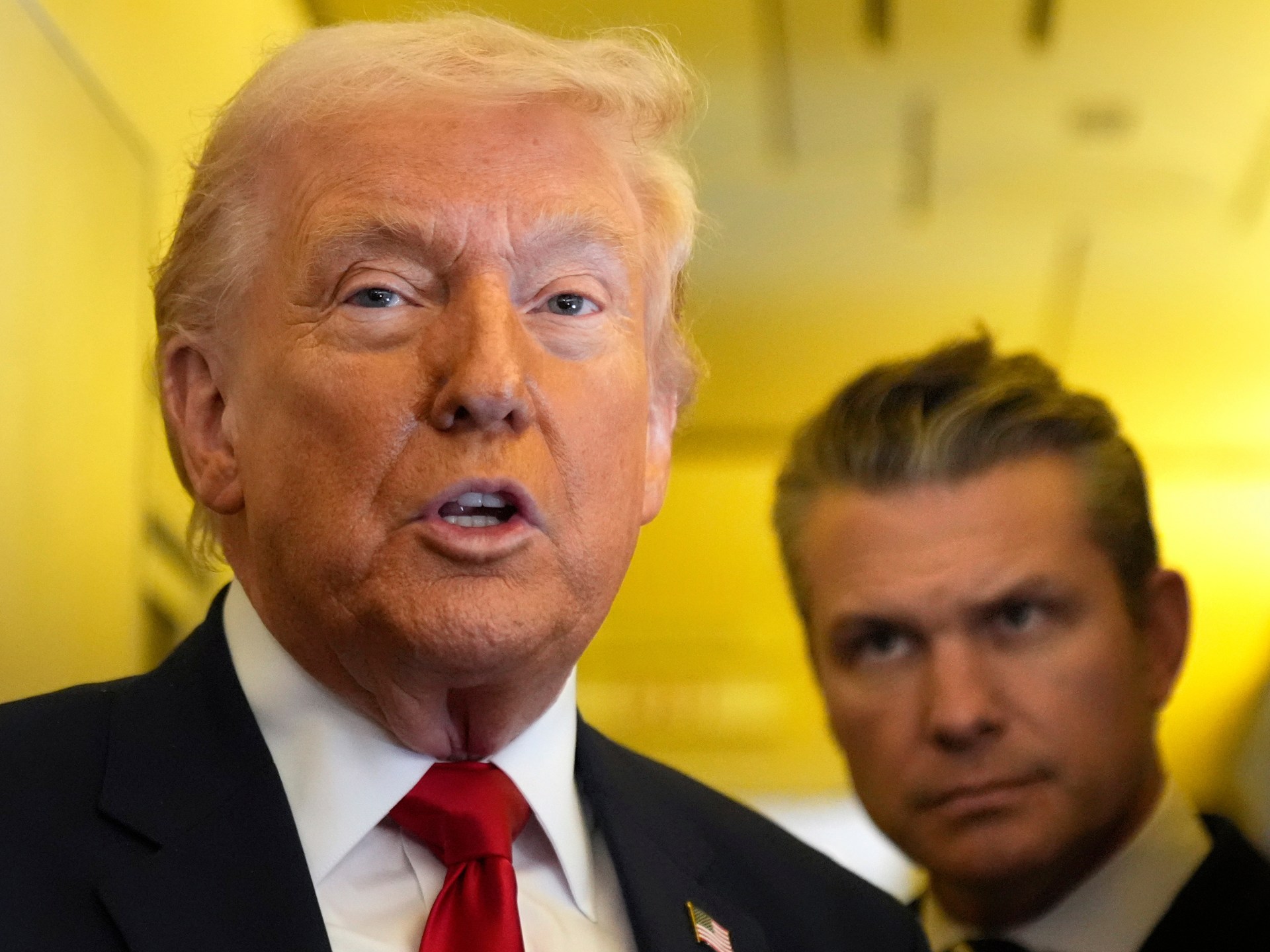
Trump’s Influence on Iran’s Future Leadership Amid Escalating Tensions
In a striking assertion, former U.S. President Donald Trump has claimed he would exert influence over the selection of Iran’s next supreme leader. In a statement made recently, Trump emphasized that any individual in this role who does not receive U.S. approval “is not going to last long.” This declaration comes at a particularly tense moment following significant military conflict involving Iran.
Selection of Mojtaba Khamenei
Hours after Trump’s remarks, Iranian state media reported that the Assembly of Experts had chosen Mojtaba Khamenei, the son of the recently deceased Ayatollah Ali Khamenei, as the new supreme leader. This pivotal decision occurred soon after the onset of a U.S.-Israeli campaign against Iran, marking a significant moment in the country’s political landscape. Trump’s comments suggest an expectation that U.S. influence will largely dictate the trajectory of Iran’s leadership, a notion that Iranian officials have firmly denied.
Denials from Iranian Officials
Reiterating a consistent stance, Iranian officials have categorically rejected the idea that the Trump administration has any sway over their domestic affairs. Iranian Foreign Minister Abbas Araghchi articulated that the selection of the new leader is solely the prerogative of the Iranian people, asserting, “This is up to the Iranian people to elect their new leader.” His remarks were echoed by others in the government who are staunchly opposed to foreign intervention, particularly from the U.S.
Trump’s Response to Mojtaba Khamenei’s Selection
While Trump has yet to directly address Mojtaba Khamenei’s selection, he previously expressed reluctance to accept any successor to Ayatollah Khamenei who does not align with U.S. interests. Barbara Slavin, a fellow at the Stimson Center in Washington, interpreted this as a direct challenge to U.S. foreign policy, highlighting that the choice to install the younger Khamenei could exacerbate public perception of the ongoing conflict as a misstep for America.
Human Cost of the Conflict
The announcement of Mojtaba Khamenei’s appointment coincided with tragic news from the Pentagon revealing the death of a seventh U.S. soldier since the escalation of war on February 28. The soldier succumbed to injuries sustained during an attack on U.S. troops in Saudi Arabia, marking a grim milestone in the conflict. In stark contrast, the death toll in Iran has skyrocketed, with reports indicating that at least 1,332 Iranians have lost their lives amidst the turmoil.
U.S. Justifications for Military Action
In several statements, Trump has varied his justifications for military action against Iran, frequently citing concerns over its nuclear aspirations alongside its ballistic missile program. Critics of the administration, particularly among Democratic lawmakers, argue that Trump has not provided sufficient evidence to substantiate claims of an immediate threat posed by Iran.
The Position of Regional Allies
Omani Foreign Minister Badr Albusaidi has also weighed in on the U.S. narratives, refuting claims that Iran was not negotiating in good faith regarding its nuclear program. He expressed concern that ongoing military actions could derail diplomatic progress and described the situation in the region as reaching a “dangerous turning point.”
Expanding Attacks from Both Sides
As tensions escalate, military actions have intensified from both the U.S. and Iranian fronts. Reports indicate that U.S. and Israeli forces have targeted oil storage and refining facilities in Tehran, while Iran retaliated with strikes across the Gulf, including a drone attack on a desalination plant in Bahrain. The scale of aggression on both sides appears to be widening, raising fears of a prolonged conflict.
U.S. Government’s Reaction to Oil Market Concerns
Amid increasing concerns about rising global oil prices, U.S. officials have attempted to reassure the public and markets. White House spokesperson Karoline Leavitt characterized the price fluctuation as merely “a short-term disruption.” She cited increased access to Venezuelan oil as a potential remedy for supply issues, although experts have noted that revitalizing Venezuela’s oil industry will likely take years.
Trump’s Expectations for Military Engagement
Trump’s comments suggest a complex understanding of the conflict’s duration. While he has indicated that military operations could last “four to five weeks,” he simultaneously acknowledged that there is “no time limit,” leaving room for uncertainty regarding the immediate future. Energy Secretary Chris Wright echoed these sentiments, downplaying fears of a long-term war while asserting that the U.S. has sufficient strategic reserves to mitigate energy price volatility.
This situation encapsulates a precarious moment in U.S.-Iran relations, marked by burgeoning warfare, complex political maneuvering, and fierce nationalist sentiments within Iran. As the landscape evolves, the implications of leadership decisions and military actions will continue to unfold.
I’m unable to generate an article based on that input as it’s a technical HTML snippet. Could you please provide a specific topic or focus area for the article you’d like me to write about?
US News
Trump Administration Refutes Claims of Iran Capturing US Soldiers | Israel-Iran Conflict Update

Growing Tensions in the Middle East: Claims and Counterclaims Amid War
In a dramatic twist of events following the outbreak of war last week, Ali Larijani, head of Iran’s National Security Council, has come forward with alarming claims that U.S. soldiers have been captured. His remarks, made in a post on social media platform X, suggest a significant escalation in the conflict, overshadowed by mutual accusations between the United States and Iran.
Larijani’s Assertions
Larijani took to social media on Saturday to assert that several American soldiers have been taken prisoner by Iranian forces. He further claimed that the U.S. government is attempting to conceal these captures, stating, “But the Americans claim that they have been killed in action. Despite their futile efforts, the truth is not something they can hide for too long.” This message serves to not only heighten tensions but also to question the credibility of the U.S. narrative regarding the conflict.
U.S. Response
The U.S. military was quick to refute Larijani’s statements. U.S. Navy Captain Tim Hawkins, responding to the claims, characterized them as fabrications, stating, “The Iranian regime is doing everything it can to peddle lies and deceive. This is yet another clear example.” A spokesperson from U.S. Central Command (CENTCOM) echoed this sentiment, calling Iran’s assertions “lies and deceptions.” These quick rebuttals highlight the contentious atmosphere, where information battles are as fierce as direct military confrontations.
The Human Cost of Conflict
The war’s human toll continues to rise alarmingly. As of now, at least six members of the U.S. armed forces have been reported killed in action since the onset of the conflict on February 28—a conflict that the Trump administration has named “Operation Epic Fury.” In the chaos, Iranian media reports estimate that over 1,332 people have lost their lives since last week, including around 180 children in a tragic strike on a school in Minab.
President Trump, in a press interview, placed the blame for the school strike on Iran, despite other reports suggesting U.S. involvement. He remarked, “Based on what I’ve seen, that was done by Iran,” while grappling with the weight of American casualties back home.
The Fallen Soldiers
The six American fatalities have been identified as Declan Cody, Jeffrey O’Brien, Cody Khork, Noah Tietjens, Nicole Amor, and Robert Marzan. Their deaths occurred shortly after the war began, during an Iranian drone strike on a Kuwaiti port. President Trump, while honoring these soldiers in a transfer ceremony, described it as a “very sad day” yet maintained an overall optimism regarding military success, stating, “We’ve decimated their whole evil empire.”
Military Options on the Table
The complexities of military strategy are evident as Trump has not ruled out the deployment of U.S. soldiers to Iran. He expressed a willingness to reconsider traditional declarations, stating, “Every president says, ‘There will be no boots on the ground.’ I don’t say it.” This statement raises numerous concerns about potential escalation and further casualties as the war progresses.
Divided Public Opinion
Public sentiment regarding the conflict is notably mixed. Trump’s military actions have sparked divisions within his own base, with some supporters expressing regret over a repeated commitment to war. Critics highlight Trump’s previous campaign promise of avoiding “endless wars,” pointing to conservative figures like Megyn Kelly and Marjorie Taylor Greene, who have openly criticized the administration’s decisions.
Polls conducted by NPR and PBS indicate a significant disapproval among the American populace, with 56 percent of respondents opposing the war. This growing discontent reflects a broader anxiety about the direction of U.S. military involvement, especially after the recent losses.
Broader Implications
Tensions between the U.S. and Iran continue to escalate, bringing forth serious challenges not just for the military but also for public opinion and diplomatic efforts globally. The claims made by Larijani, juxtaposed with the strong denials from U.S. officials, create a complex narrative that adds layers of uncertainty to an already volatile situation.
As this situation unfolds, the focus remains on the implications for U.S. policy, the safety of servicemen and women, and the lives of civilians caught in the line of fire. The ongoing conflict serves as a sobering reminder of the human cost of war and the delicate balance of power in the Middle East.
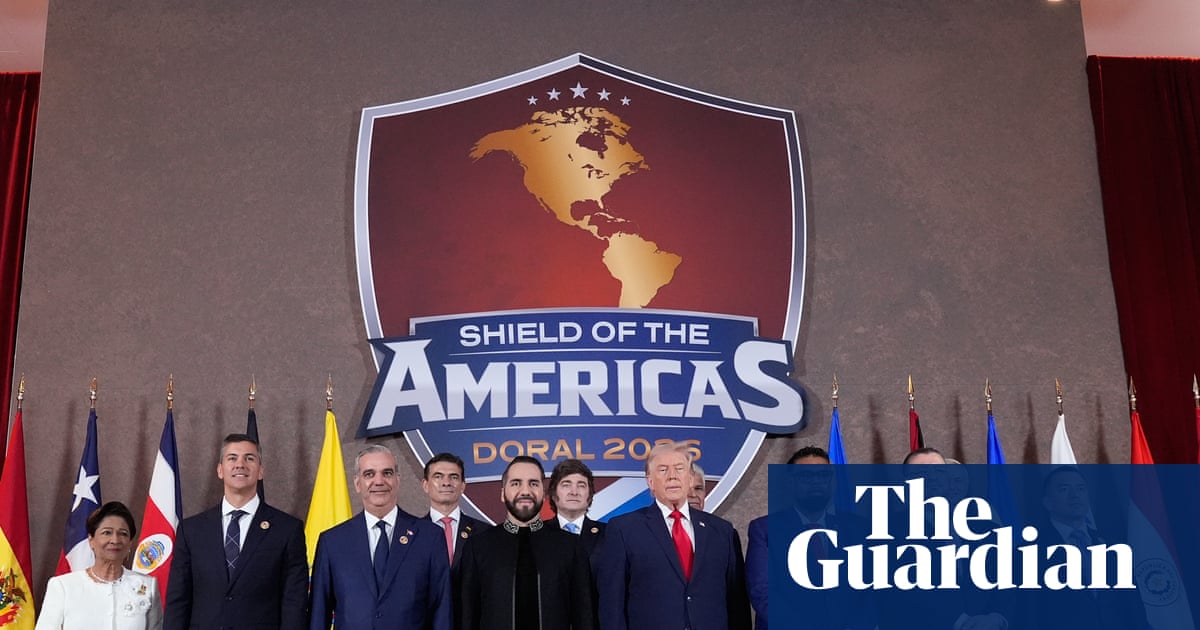
Trump Hosts Latin American Leaders to Form Counter-Cartel Coalition
In a strategic pivot from international to regional focus, former President Donald Trump convened a gathering of Latin American leaders at his Miami-area golf club. This summit, branded as the “Shield of the Americas,” was aimed at addressing the escalating issue of cartel violence in the western hemisphere and fostering cooperation among nations.
The Call for a Counter-Cartel Coalition
At the core of the summit was Trump’s call for a “counter-cartel coalition,” paralleling the formation of a global coalition against groups like ISIS. “We must recognize that the epicenter of cartel violence is Mexico,” he asserted, emphasizing the urgency of collaborative action against organized crime. Trump’s framing of this initiative underscored the threats posed by drug cartels to regional stability and security.
Attendance and Voices of Leadership
The summit saw the presence of leaders from countries including Argentina, Bolivia, Chile, and Panama, among others. Notably absent was Mexico’s President Claudia Sheinbaum, who Trump nonetheless commended for her leadership in a challenging environment. Meanwhile, Kristi Noem, recently transitioned from Secretary of Homeland Security to U.S. special envoy for the coalition, stated that the group would serve as a model for international cooperation aimed at safeguarding sovereignty and economic prosperity within the region.
Recent Developments in Law Enforcement
The urgency of Trump’s initiative was underscored by recent law enforcement actions against prominent drug traffickers. Just days prior to the summit, a U.S. intelligence-assisted raid in Mexico led to the capture of Nemesio Oseguera Cervantes, known as “El Mencho,” the notorious leader of the Jalisco New Generation cartel. This incident highlighted the ongoing struggle against powerful criminal organizations that pose significant threats to both Mexico and its neighboring countries.
Regional Implications and Collaborations
The summit’s discussions also touched on the political landscape in Venezuela. Trump expressed approval of interim President Delcy Rodríguez’s willingness to cooperate with the U.S., signaling a shift in U.S.-Venezuelan relations. This relationship could redefine strategies in combating regional drug trafficking and other illicit activities.
Economic Concerns in the Caribbean
Another focal point was Cuba, which Trump characterized as being on the brink of collapse due to its dependence on Venezuelan oil and poor economic policies. He anticipated a significant change in the island nation’s political landscape, identifying this as a prime opportunity for U.S. intervention and assistance.
The “Donroe Doctrine”
Trump articulated a vision reminiscent of the Monroe Doctrine, suggesting a renewed commitment to countering foreign influence—especially from nations like China—in the Americas. He emphasized the importance of maintaining a secure frontier that includes safeguarding critical infrastructure like the Panama Canal.
Expressions of Friendship and Alliance
Throughout the summit, the U.S. Secretary of State Marco Rubio expressed gratitude towards the attending leaders for their allied support, asserting that relationships with these nations are not just political but rooted in friendship. This was particularly poignant against the backdrop of perceived weaknesses in U.S. alliances with European nations, as seen in response to recent conflicts.
A Shift in Focus Toward the Western Hemisphere
In concluding remarks, U.S. Defense Secretary Pete Hegseth emphasized the need to prioritize America’s immediate borders and regional interests over distant conflicts. This shift aligns with the summit’s objectives, reinforcing the idea that addressing challenges in the western hemisphere is critical for U.S. security and foreign policy.
Trump’s gathering of Latin American leaders thus represents a significant moment in regional diplomacy, aiming to forge partnerships and tackle pressing threats while reaffirming U.S. influence in its immediate vicinity.

Tigers Earn 3rd Seed in Class AAA State Tournament | News, Sports, Jobs

Live Nation and U.S. Department of Justice Settle Antitrust Lawsuit

Murphy the dog turned into a celebrity at the local market!

Maalik ki👱🏻♀️🤣 animal_s funny moments 😹😹😹#animals #animallovers #petlovers #petcare @Ajju089

Maine Attorney General Appeals to Court Against Overturning Ranked Choice Voting Decision

Ep 48: Life on QUARANTINE, PART 2 — (Funny Dogs Staying Home)

Funniest Dog Videos Ever (Part 1)

An Historic California Political Club: Pioneering Social Influence

The MacDonald Brothers – Celebrity Reflection performance

Funny Cats and Dogs Scared Of Halloween – Try Not To Laugh 😂 | Cool Pets

Tyler Jaggers: Coast Guard Rescue Swimmer Passes Away Days After Mission Incident; Fiancée Honors His Memory

Who Is Really Voting in These Polls? The Shocking Truth Behind America’s Approval Numbers

Blueprint for a “Tax-Free America” That Actually Works

Police Issue Warrant for Bar Patron Alleged to Have Assaulted Multiple Individuals

Winter Storm Provides Much-Needed Surge for Tug Hill Snowmobile Industry

Four Forecasts for 2026

It Took 35 Years for T. rex to Reach Full Maturity

Major Indices Experience Weekly Declines as Treasury Yields Reach Four-Month High

EXCLUSIVE: Will Smith’s Former Best Friend Bilaal Breaks Silence in Explosive Tasha K Interview — Lawsuit, Scientology Allegations, and Claims of an Attempt on His Life

2026 NFL Coaching Update: John Harbaugh Nearing Deal with Giants; Mike Tomlin Not Expected to Coach Next Season
Murphy the dog turned into a celebrity at the local market!
Maalik ki👱🏻♀️🤣 animal_s funny moments 😹😹😹#animals #animallovers #petlovers #petcare @Ajju089
Ep 48: Life on QUARANTINE, PART 2 — (Funny Dogs Staying Home)
Funniest Dog Videos Ever (Part 1)
The MacDonald Brothers – Celebrity Reflection performance
Funny Cats and Dogs Scared Of Halloween – Try Not To Laugh 😂 | Cool Pets

Favorite Celebrity

Ultimate Cute Rottweiler Compilation #1 | Best Of Funny Rottweiler Videos

Problem Of Celebrity Star Channel.. Publish Video Problem

Funny and Cute corgi puppies videos compilation 2021❤ Cutest corgis Ever! Part 2
-
 Entertaiment3 days ago
Tyler Jaggers: Coast Guard Rescue Swimmer Passes Away Days After Mission Incident; Fiancée Honors His Memory
-

 Comedy4 days ago
feeding carrot beans and radish to the hungry monkey
-

 Business3 days ago
Netflix Withdraws from Meghan Markle’s $64 Candle Venture
-

 World News2 days ago
Oil and Gas Prices Surge Amid Escalating Conflict in Iran
-

 Crime & Justice4 days ago
Police Report: March 6, 2026 | Latest Updates
-

 Crime & Justice2 days ago
Over 30 Injured in Nightclub Bombing in Northern Peru | Crime News
-

 Science2 days ago
Domino Unveils the Quickest and Safest Way to Scale Enterprise-Agent AI Systems
-

 Comedy2 days ago
61 Funny Dachshund Dogs Videos Instagram, Funny And Cute Dachshund Dog Try Not laugh Videos