
US News
Donald Trump’s Conflicting Stance on Iran Raises Unanswered Questions | US-Israel Tensions over Iran

The First Week of War: Unanswered Questions and Uncertain Futures
As the first week of the conflict with Iran unfolded, crucial questions loomed large. What does victory look like in this context? How long can we expect this crisis to last? Most disturbingly, was the United States responsible for a tragic strike on a girls’ elementary school that has emerged as an early flashpoint in the war?
The Presidential Trip: A Glimpse into Uncertainty
On a Saturday afternoon, while aboard Air Force One en route to Florida, President Donald Trump shared his thoughts in a press gaggle. This informal setup often leads to spontaneous dialogue, and on this day, it offered an unfiltered window into his uncertainty regarding Iran. Accompanied by Defense Secretary Pete Hegseth and special envoy Steve Witkoff, Trump fumbled through questions about his goals and expectations.
His earlier statements had indicated a desire for “unconditional surrender” from Iran, but what that meant remained ambiguous at best. “I said ‘unconditional’,” Trump explained. His words were vague, lacking clarity on whether he sought the downfall of the Iranian regime or a mere negotiation to end hostilities.
The Timeline of Conflict
In prior interviews, Trump optimistically suggested that the U.S. military campaign could be completed in four to five weeks. However, when pressed for specifics on the flight, the tone shifted dramatically. “I don’t know,” he replied nonchalantly. “Whatever it takes.” This admission showcased a stark contrast to his previous assertions and highlighted an unsettling uncertainty about the timeline and scope of the conflict.
The Controversial Strike
One of the most shocking moments of the trip came when journalists questioned Trump about the bombing of a girls’ school in southwest Iran, which resulted in over 160 casualties, many of whom were children. In a surprising response, Trump asserted, “No, in my opinion based on what I’ve seen, that was done by Iran.” His claim surprised members of the press and his own team alike.
This assertion raised eyebrows, especially since videos of the strike indicated that it appeared to involve a U.S. Tomahawk cruise missile, a weapon not known to be in Iran’s arsenal. Trump’s confident assertion lacked the necessary evidence and cast doubt on the credibility of U.S. intelligence regarding the incident, deepening existing concerns about accountability in wartime actions.
The Transfer of Service Members
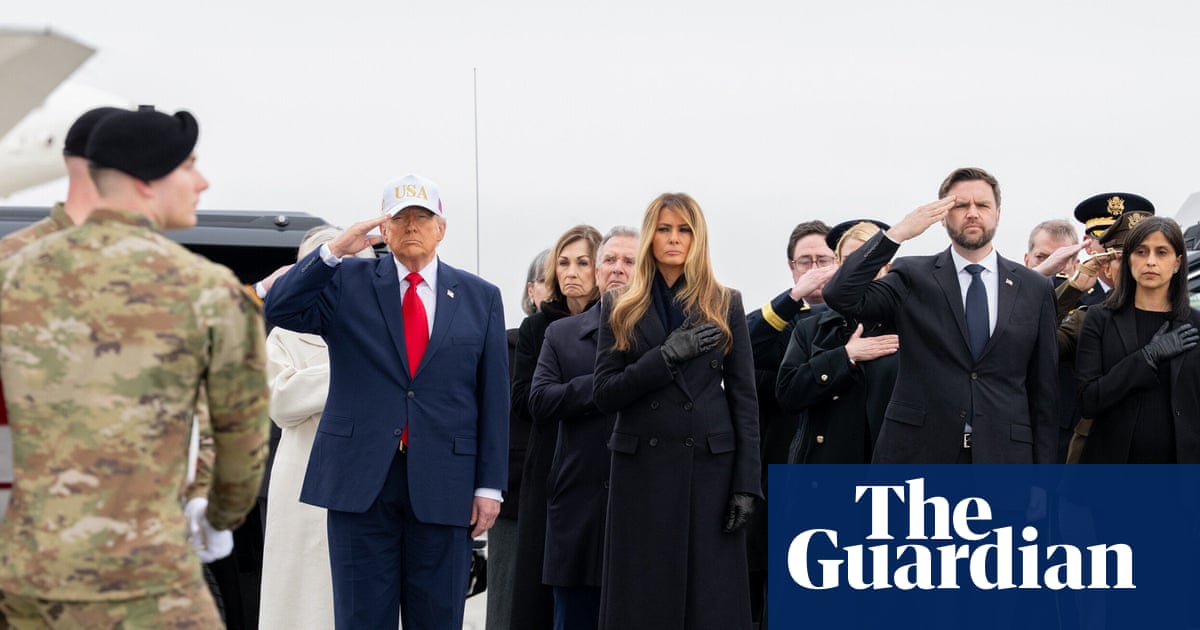
The urgency of the conflict took on a more somber tone when Trump faced the sacrifice of American lives. Just hours after the dignified transfer of six service members who lost their lives in Operation Epic Fury, he commented on the ongoing nature of the war. Despite the gravity of this loss, Trump maintained a brash optimism, asserting, “No, we’re winning the war by a lot. We decimated their whole evil empire.”
This statement was alarming, particularly given the recent, visceral experience of mourning the military’s fallen. The emotional disconnect raised questions about leadership and the ease with which such personal tragedies can be overshadowed by broader military ambitions.
The Dichotomy of Trump’s Leadership Style
Trump’s remarks reflect a fundamental shift in his demeanor. During his 2024 presidential campaign, he often spoke about the emotional toll of war, recalling the haunting cries of grieving parents. Yet now, it seems he has adopted a more detached stance. When asked if witnessing the transfer had made him reconsider the course of action, he simply shook his head, downplaying the human cost of warfare.
In stark contrast to his earlier reflections on the burdens of command, Trump now appears almost resolute in his belief that warfare is an acceptable, if tragic, part of statecraft. This sentiment was underscored by his straightforward admission that deaths are a “part of war,” a perspective that could be perceived as callous or pragmatic depending on one’s viewpoint.
The Symbolism of the Presidential Cap
The visual spectacle of the presidential aircraft and accompanying motorcade also carried weight. Against the morose backdrop of the overcast sky, Trump exited his SUV wearing a bright white baseball cap adorned with “USA” in bold letters. This juxtaposition—between the somber reality of the dignified transfer and Trump’s assertive American nationalism—served as a reminder that much of the war’s direction ultimately rests in his hands.
This week of conflict has revealed a myriad of complexities, uncertainties, and controversial decisions that evoke both concern and curiosity as the war with Iran unfolds. The continued lack of clear answers regarding objectives, timelines, and accountability leaves many to ponder the path forward in this precarious geopolitical landscape.


Discover New Career Opportunities at the Inaugural Coffee and Careers Discussion
March 11, 2026
Welcome to Coffee and Careers
If you’re looking to explore new avenues in your professional journey, mark your calendars for a unique event: the inaugural Coffee and Careers Discussion, hosted by the human resources team of the Behavioral Health Network. This engaging gathering will provide attendees with a relaxed atmosphere to learn about diverse career paths in the field of behavioral health—over a warm cup of coffee, no less!
What to Expect
Set in a welcoming environment, this event promises more than just an ordinary career fair. Attendees will have the opportunity to hear from notable speakers who are making waves in the industry. Each speaker brings a wealth of experience and insights:
- Nancy Hubbard from the Institute for Organizational Leadership (IOL)
- Kristie Scott representing Rushford
- Rachel Jakoboski from St. Vincent’s
These industry veterans will share their journeys, shedding light on various roles within the behavioral health sector.
Engagement and Networking
One of the highlights of the Coffee and Careers Discussion is the interactive Q&A session. This is your chance to ask burning questions about career pathways, industry challenges, or any surprises in the field that prospective job seekers might want to know. This interaction not only facilitates knowledge exchange but also builds a sense of community among attendees.
Networking opportunities abound, providing a platform to forge connections and partnerships. Whether you’re a recent graduate, a seasoned professional, or someone contemplating a career change, this event can help you connect with like-minded individuals and potential mentors in the behavioral health arena.
Coffee: The Perfect Companion
Of course, no discussion about careers would be complete without coffee! Attendees will enjoy complimentary brews throughout the event, ensuring that discussions are energetic and engaging. There’s something about sharing a flavorful cup of coffee that makes conversations flow more freely, potentially sparking collaboration and ideas for future endeavors.
Reserve Your Spot!
If you’re as excited about this opportunity as we are, don’t hesitate! Reserve your seat now to ensure you don’t miss out on what promises to be an enriching experience. Click here to secure your place.
Got Questions?
If you have any inquiries or need further clarification, feel free to reach out via email at taylor.becchetticaron@hhchealth.org. The team is more than happy to assist you with any questions you may have regarding the event or topics to be discussed.

US News
Iran Conflict Update: Day 12 of US-Israel Attacks – What’s Happening? | US-Israel War on Iran News
The Ongoing Conflict In Iran: A Deep Dive into Civilian Impact
As the United States-Israel conflict in Iran escalates, the numbers presented by Tehran are alarming. Over 1,300 civilians have reportedly lost their lives, with nearly 10,000 civilian sites claimed to have been hit since the start of the hostilities. The situation is dire, unfolding amidst airstrikes, retaliatory attacks, and growing global tension. Here’s a closer look at what’s happening.
Current State of Affairs
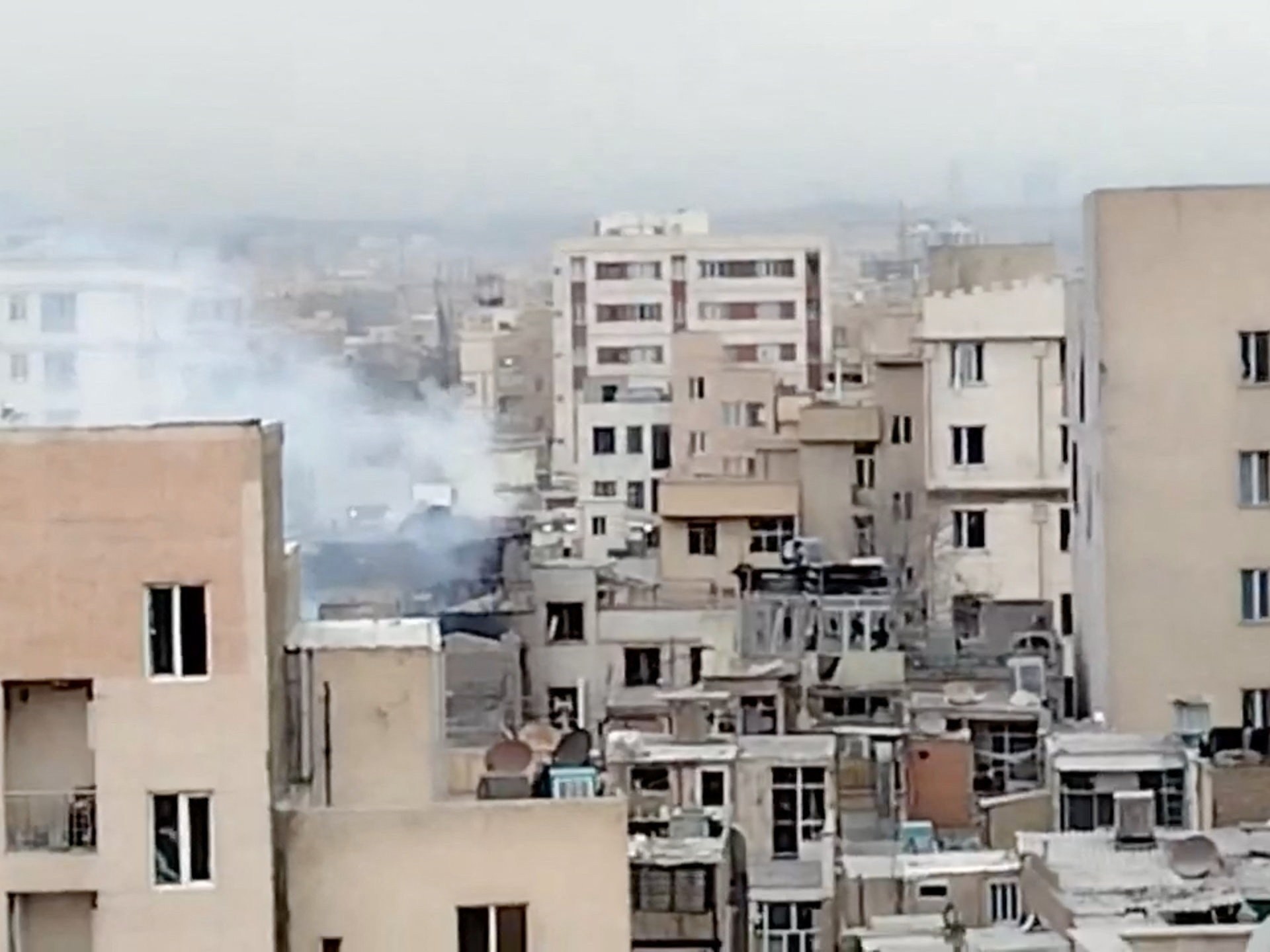
The warfare has now entered its twelfth day, with intense bombardments reported across Iran. Civilian installations—homes, hospitals, and places of gathering—have become the unfortunate targets of these air strikes. Tehran’s Mehrabad airport is among the locations struck, indicating a strategic attempt to disrupt logistical and operational capabilities.
Iran’s Claims of Civilian Casualties
Iran’s government has been vocal about the toll the war has taken on its civilians. They argue that the U.S. and Israel are deliberately targeting civilian infrastructure, thereby exacerbating human suffering. Amir Saeid Iravani, Iran’s ambassador to the UN, has called attention to bombings that have resulted in significant civilian infrastructure damage, sparking outrage and condemnation.
The Retaliatory Response
In response to the ongoing attacks, Iran has unleashed a series of missile strikes targeting Israeli locations, including major cities like Tel Aviv and West Jerusalem. The Islamic Revolutionary Guard Corps (IRGC) has launched multiple waves of attacks, featuring an arsenal of “super-heavy” missiles in a strategic move to retaliate against perceived aggressors.
Explosions and Damage
Reports have emerged of powerful explosions in residential areas, creating panic and destruction in urban centers. The Red Crescent has been actively involved in rescue operations, sifting through rubble in search of survivors, underscoring the desperation among the populace.
International Repercussions
As military actions continue, countries neighboring Iran are feeling the repercussions. Nations such as Saudi Arabia and Qatar have intercepted missile attacks, indicating the conflict’s potential to escalate beyond Iranian borders. The United States has reiterated its commitment to bolster defenses in the region, declaring a multi-pronged strategy in response to Iranian provocations.
U.S. Domestic Pressures
The situation is triggering a wave of political pressure within the United States. Lawmakers are questioning the administration’s strategy in the conflict, particularly as U.S. casualties rise amid ongoing military engagements. This scrutiny has led to calls for public hearings to clarify the war’s objectives and the administration’s long-term strategy.
Casualty Figures and Investigations
The Pentagon has confirmed that approximately 140 U.S. service members have been wounded and seven killed as part of Operation Epic Fury. Meanwhile, they are also conducting investigations into potential civilian casualties resulting from recent strikes, notably involving an attack on a girls’ school that left 175 students dead. This particular incident is under intense scrutiny, further complicating the U.S. position in the conflict.
Broader Implications for Civilian Safety
In addition to military actions, the civil landscape in Iran is deteriorating. Reports of pollution from strikes on fuel depots have raised concerns about toxic rainfall, dubbed “black rain.” This polluted precipitation could exacerbate health risks for civilians, particularly in war-torn areas already struggling with the aftermath of air strikes.
Population Displacement and Humanitarian Impact
The humanitarian crisis is becoming more evident as civilian displacement rises. Ukrainian officials have reported over 667,000 people displaced from conflict zones in Lebanon due to intensified Israeli attacks, highlighting the wider regional consequences of the conflict.
The Global Energy Market at Stake
As missile exchanges and airstrikes continue, there has been a noticeable spike in global energy prices. Iran’s targeting of oil facilities not only threatens regional stability but also poses a challenge to global energy markets already grappling with volatility.
Scalability of Military Engagements
The scale of military operations, especially concerning Iran’s missile capabilities, poses a new realm of uncertainty for international stakeholders. The tactical decision to engage various military resources suggests a broader strategy that could lead to an enduring conflict.
As the unfolding crisis continues to gain international attention, the numbers alone tell a harrowing story—a narrative filled with loss, uncertainty, and geopolitical strife. The voices of those affected—civilians caught in the crossfire—become crucial in understanding the full scope of this ongoing crisis.

Tensions Rise as Conflict Intensifies in the Middle East
Current Situation
As the conflict in the Middle East escalates, Iran’s aggressive actions against oil infrastructure and its threats to crucial waterways have left global markets in turmoil. On Tuesday, the United States promised rigorous new military responses as the war marked its 11th day without resolution. This situation has ramifications far beyond the region, affecting economies worldwide.
Escalating Attacks
Iran has ramped up its military operations, striking not only at Israeli targets but also at Gulf Arab nations. Concurrently, Israel has been conducting airstrikes in retaliation against Iran and Lebanon, where it’s engaged in fierce battles against Hezbollah militants. Reports from Tehran indicate that residents have endured some of the heaviest strikes yet, leading to widespread damage and power outages in various neighborhoods. Locals are choosing to flee urban areas for safety, seeking refuge in the countryside.
Rising Casualties in the Gulf
The United Arab Emirates (UAE) reported two casualties from a recent drone strike, adding to the overall death toll, which stands at six in the UAE alone and has injured over 120 individuals. The violence has not been limited to the UAE; Bahrain’s capital, Manama, experienced a shocking strike that resulted in fatalities and injuries among civilians. Since the onset of the conflict, more than 100 missiles and 175 drones have been intercepted in Bahrain.
U.S. Military Actions and Casualties
At the Pentagon, U.S. Defense Secretary Pete Hegseth warned that further military operations would intensify significantly. He noted that only a small number of Iranian missiles had been launched in recent days, indicating a possible shift in the offensive strategy. To date, U.S. military engagements have targeted over 5,000 locations. The Pentagon reported 140 U.S. service members as injured, with most suffering minor injuries, though there have been severe cases resulting in the loss of life.
Iranian Defiance and Threats
Iranian leaders have shown a steadfast resolve, publicly rejecting any ceasefire discussions. Mohammad Bagher Qalibaf, Speaker of Iran’s parliament, stated on social media that the nation is committed to retaliating decisively against perceived aggressors. A high-ranking Iranian official even issued a personal warning to U.S. President Donald Trump, suggesting that past efforts to undermine Iran’s power had failed.
Targeting Global Energy Infrastructure
Iran’s strategy seems aimed at pressuring both the U.S. and its allies through targeted assaults on energy infrastructure. This approach has already caused significant spikes in oil prices, with Brent crude rising to nearly $120 a barrel and stabilizing around $90. The situation is further complicated by the impending crisis in the Strait of Hormuz, where Iran has threatened to block oil shipments, impacting global supply chains.
Displacement and Humanitarian Crisis
The ongoing conflict has led to widespread displacement, with the U.N. refugee agency reporting that over 667,000 individuals in Lebanon are now registered as displaced due to the violence. Additionally, many foreign nationals have begun to evacuate the region, including thousands of U.K. and U.S. citizens returning to their home countries. While some commercial flights from the UAE are returning to normal, airlines have suspended travel to areas directly affected by the conflict.
Broader Impact on Regional and Global Markets
The ramifications of these fighting have reverberated through global markets, prompting both oil prices to surge and the stock market to experience fluctuations. The fear of oil shortages, especially given its critical role in the global economy, looms large as nations grapple with the potential outcomes of this protracted conflict.
In summary, as Iran continues its military onslaught and the U.S. responds with intensified strikes, the complexity of the situation grows, leaving many to wonder how long this cycle of violence will persist and what its ultimate consequences will be for the region and the world at large.

“Diamond In The Fluff” Winners Announcement – by Celebrity Judge, Jonathan David
![🦆 Cute and Funny Ducks! 🦆 Duck Videos to Make You Smile 🦆 [Funny Pets]](https://i0.wp.com/i.ytimg.com/vi/seJmEmq2sNQ/maxresdefault.jpg?resize=80%2C80&ssl=1 "🦆 Cute and Funny Ducks! 🦆 Duck Videos to Make You Smile 🦆 [Funny Pets]")
🦆 Cute and Funny Ducks! 🦆 Duck Videos to Make You Smile 🦆 [Funny Pets]

Ronnie Eldridge: A Legendary Figure in New York Politics

2026 World Baseball Classic: Quarterfinal Matchups in MLB

RTL Group Places Its Bets on Streaming Transition

Explore Various Career Opportunities | Hartford HealthCare

Potential Hate Crime, Series of Car Thefts, and Alysa Liu’s Debut at Paris Fashion Week – NBC Bay Area

3 Questions: Strengthening Our Planetary Defenses | MIT News

Energy and Climate Insights Unit

Cavaliers’ James Harden Scores 30 Points and Dishes Out Eight Assists Against Nets

Who Is Really Voting in These Polls? The Shocking Truth Behind America’s Approval Numbers

Tyler Jaggers: Coast Guard Rescue Swimmer Passes Away Days After Mission Incident; Fiancée Honors His Memory

Blueprint for a “Tax-Free America” That Actually Works

Police Issue Warrant for Bar Patron Alleged to Have Assaulted Multiple Individuals

Winter Storm Provides Much-Needed Surge for Tug Hill Snowmobile Industry

Four Forecasts for 2026

It Took 35 Years for T. rex to Reach Full Maturity

Major Indices Experience Weekly Declines as Treasury Yields Reach Four-Month High

EXCLUSIVE: Will Smith’s Former Best Friend Bilaal Breaks Silence in Explosive Tasha K Interview — Lawsuit, Scientology Allegations, and Claims of an Attempt on His Life

2026 NFL Coaching Update: John Harbaugh Nearing Deal with Giants; Mike Tomlin Not Expected to Coach Next Season
“Diamond In The Fluff” Winners Announcement – by Celebrity Judge, Jonathan David
🦆 Cute and Funny Ducks! 🦆 Duck Videos to Make You Smile 🦆 [Funny Pets]

funniest celebrity audience reactions

Funniest Cats And Dogs Videos 😁 – Best Funny Animal Videos 2024 🥰#7
![Buenos Aires, Argentina via Celebrity Infinity Holiday Cruise [2017]](https://i0.wp.com/i.ytimg.com/vi/jxVdOMONzVM/hqdefault.jpg?resize=80%2C80&ssl=1 "Buenos Aires, Argentina via Celebrity Infinity Holiday Cruise [2017]")
Buenos Aires, Argentina via Celebrity Infinity Holiday Cruise [2017]

2021 Funny videos of little bunnies 🐇 cute bunnies

MERU Celebrity trip enjoyed ever lasting

Dressage riding lesson be like.. | 😂 Funny Horse Videos

21:00 Celebrity Infinity ~ Icy Strait, AK

🐼 Panda Funny Moment Videos Compilation
-
 Entertaiment6 days ago
Tyler Jaggers: Coast Guard Rescue Swimmer Passes Away Days After Mission Incident; Fiancée Honors His Memory
-

 Comedy7 days ago
feeding carrot beans and radish to the hungry monkey
-

 World News5 days ago
Oil and Gas Prices Surge Amid Escalating Conflict in Iran
-

 Business6 days ago
Netflix Withdraws from Meghan Markle’s $64 Candle Venture
-

 Crime & Justice5 days ago
Over 30 Injured in Nightclub Bombing in Northern Peru | Crime News
-

 US News2 days ago
Trump Assures Republicans: Iran Conflict Could Conclude ‘Fairly Soon’ | Donald Trump News
-

 Science5 days ago
Domino Unveils the Quickest and Safest Way to Scale Enterprise-Agent AI Systems
-

 Crime & Justice6 days ago
Police Report: March 6, 2026 | Latest Updates