
Technology
Enterprise IT and Communications Technology News | Pipeline Magazine


Telecom Transformation in 2026: The New Wave of Digital Connectivity

As we step into early 2026, the telecom industry is experiencing a rapid evolution fueled by a blend of advanced technologies and innovative strategies. Key topics shaping this transformation include the operationalization of 5G Standalone networks, the embrace of Open RAN frameworks, the integration of non-terrestrial networks, and the deployment of AI-native operations. Organizations are not only enhancing security measures against emerging threats but also expanding their sovereign and hyperscale cloud capabilities, facilitating multi-orbit IoT connectivity, and deploying AI-driven solutions to elevate customer experiences.
This editorial roundup from Pipeline Magazine provides an overview of significant developments, categorizing announcements to illuminate how operators, vendors, and ecosystem players are forging intelligent, resilient, and monetizable networks aimed at comprehensive digital transformation.
Advancements in 5G Standalone Networks
Telecom operators and equipment providers are making notable strides in advancing 5G Standalone architectures. The focus is on deploying scalable Open RAN solutions, improving satellite backhaul, and ensuring seamless direct-to-device connectivity. Upgrades to subsea and terrestrial fiber networks are also enhancing performance. These advancements aim to deliver ultra-reliable, high-capacity networks designed to support enterprise edge applications and cater to the growing demand for global connectivity.
Vodafone’s Strategic Expansion in Greece
In a significant move to strengthen its wholesale internet offerings, Vodafone has partnered with global internet exchange NetIX in Greece. This collaboration allows third-party ISPs, content providers, and operators to access enhanced interconnectivity, facilitating bandwidth options of 100 Gbps and 400 Gbps. Vodafone’s self-built infrastructure, including the Thetis Express subsea fiber cable, positions Greece as a crucial digital corridor in Europe. The strategic partnership promotes SD-WAN extensions and managed private network services, addressing the surge in internet demand, with 87% of Greece’s population online by late 2025.
Groundbreaking Certification in Hybrid eCall Systems
In a notable achievement, Anritsu secured the industry’s first European EN 18052:2025 certification for its Hybrid eCall evaluation solution, amping up road safety standards across the continent. The eCall Tester MX703330E, built on the MD8475B Signalling Tester platform, underwent thorough testing by cetecom advanced. This solution streamlines the testing process for automotive manufacturers, supporting compliance with upcoming Next Generation eCall requirements for new EU vehicle approvals starting January 1, 2026. By ensuring seamless emergency call continuity, Anritsu is contributing significantly to safer mobile societies.
Carma Technology’s Milestone in Road Usage Charges
In collaboration with the North Central Texas Council of Governments, Carma Technology Corporation has launched the largest road usage charge (RUC) pilot in the U.S. to date. This impactful initiative enrolled over 41,000 participants, amassing more than 64 million miles of real-world driving data. Utilizing a smartphone-first, cloud-based solution devoid of manual activation or proprietary devices demonstrates the scalability and operational flexibility of the pilot. Insights from this initiative affirm the feasibility of adopting mileage-based funding alternatives and improving interoperability with tolling systems.
Rakuten Mobile’s Leap into Open RAN
Japanese telecommunications leader Rakuten Mobile is deploying 1Finity massive MIMO Open RAN radios across its virtualized, cloud-native network. The incorporation of the 3.7 GHz 32A37 mMIMO O-RU model, adapted to interoperate with O-RAN open fronthaul, significantly boosts network capacity and enhances coverage while maintaining energy efficiency. This strategic move underscores Rakuten’s commitment to sustainable and high-performance telecommunications.
SmarTone’s Partnership with Ericsson
In an effort to enhance its network capabilities, SmarTone has designated Ericsson as its primary provider of 5G Advanced technology. This partnership focuses on reinforcing network performance and underscoring the importance of programmable network objectives. Utilizing cutting-edge Massive MIMO radios, including the energy-efficient AIR 3255 model, SmarTone is set to lower power consumption and minimize the carbon footprint of their network.
The developments in the telecom industry so far in 2026 showcase an exciting intersection of technology and strategy where operators and vendors are innovating to meet new demands, ensuring robust connectivity, and paving the way for a digitally transformed future.

Understanding the Global Cyberattack on Stryker
On March 11, Stryker, a leading medical technology company known for its innovative products and services in the healthcare sector, made an alarming announcement: it had fallen victim to a cyberattack. The news drew immediate attention, not only for its implications for Stryker but also for the hospitals and healthcare facilities that rely heavily on its technology. This article delves into the details of the incident, its potential impact on health services, and the responses from industry experts.
The Nature of the Attack
Stryker reported that its Microsoft environment was specifically impacted by the cyberattack. However, the company’s preliminary investigations indicated that there was no trace of ransomware or malware involved in the breach. This distinction is critical, as ransomware attacks typically involve the encryption of data, demanding payment for its release. Stryker reassured stakeholders that they believed the incident had been contained, suggesting a level of control over the situation, at least for the time being.
Implications for Hospitals and Health Systems
Given Stryker’s integral role in the healthcare ecosystem, concerns naturally arose regarding the potential impact of this cyberattack on hospitals. John Riggi, the national advisor for cybersecurity and risk at the American Hospital Association (AHA), addressed these concerns directly. He confirmed that while there were reports of the attack, there was no evidence at that time pointing to direct disruptions in U.S. hospitals. Nevertheless, Riggi highlighted the importance of vigilance as hospitals began to assess how their operations might be affected, particularly in terms of services, technology, and supply chain dependencies on Stryker’s offerings.
Ongoing Monitoring and Assessments
Although the immediate risk seemed mitigated, the situation remains fluid. Hospitals and health systems are urged to continually evaluate their operational capabilities and supply chains connected to Stryker. Reports continue to surface about the nature of the cyberattack, prompting healthcare providers to scrutinize their relationships with the company further. Awareness and preparedness are paramount, especially in an industry where technology and data integrity are critical for patient care and safety.
Collaboration and Communication in Crisis
Effective communication and collaboration between Stryker, healthcare providers, and governmental authorities are key components in addressing the cyber threat. Riggi emphasized that Stryker is actively sharing information with the hospital field and federal agencies to grasp the situation better and assess any ramifications. This collaborative approach aims to enhance the collective response to cyber threats, ensuring that hospitals are well-informed and prepared for any necessary adjustments.
Resources for Cybersecurity Preparedness
As cyber threats evolve, the need for robust cybersecurity measures in the healthcare sector becomes increasingly vital. The AHA offers resources and threat intelligence to help organizations navigate these challenges. For those seeking more information about cybersecurity risks and countermeasures, Riggi is available for inquiries at his email address, jriggi@aha.org. Healthcare professionals are encouraged to utilize resources from the AHA’s dedicated cybersecurity portal, where they can stay updated on the latest threats and best practices in safeguarding their systems.

The Realities and Innovations in Planetary Defense
When people envision asteroids, the mind often drifts to dramatic portrayals found in blockbuster films like “Armageddon.” The truth, however, is less about global catastrophe and more about the myriad smaller asteroids that can impact our daily lives. While colossal, kilometer-sized asteroids are rare events occurring every tens of millions of years, smaller decameter-scale asteroids—about the size of a building—strike Earth with alarming regularity, roughly every few decades. As astronomers refine their techniques for detecting and tracking these smaller objects, the necessity for planetary defense grows ever more salient, particularly for protecting critical space infrastructure such as GPS and global communications.
MIT’s Role in Planetary Safety
In an exciting development, a team at MIT, led by Associate Professor Julien de Wit and Research Scientist Artem Burdanov, has pioneered a groundbreaking asteroid-detection method. Utilizing the incredible capabilities of the James Webb Space Telescope (JWST), they can now identify and characterize these smaller asteroids, extending their reach deep into the main asteroid belt. This innovation marks a significant leap forward in planetary safety, as it enables scientists to track potential asteroid threats more effectively.
Recently, they co-led observations of 2024 YR4, which gained attention when it was first discovered. Their findings reassured the public that this particular asteroid would not collide with the Moon—an event that could significantly disrupt Earth’s satellite systems.
What is Planetary Defense?
Burdanov explains that planetary defense encompasses the scientific and engineering endeavors aimed at preventing asteroids and comets from hitting our planet. Historically, the focus has been on larger asteroids, but the advent of new observational techniques allows for a broader scope that includes the monitoring of much smaller asteroids capable of causing disruptions.
De Wit adds that while larger asteroids like those thought to have caused mass extinctions maintain their fascination, smaller asteroids present a more immediate threat, particularly given our society’s reliance on space-based technology. An impact from one of these smaller objects may not result in direct human casualties, but the consequences on our communications and navigation systems could be significant. This shift in focus highlights the evolving nature of planetary defense: it’s no longer just about safeguarding against extinction events but also about protecting our technological infrastructure.
The Importance of Advanced Observations
The role of telescopes such as the JWST cannot be understated in this context. As Assistant Professor Richard Teague elaborates, we are entering an era of extensive sky surveys that produce vast amounts of data. MIT is working on optimizing the analysis of this data to quickly identify and follow up on potential threats. The challenge arises with the smaller asteroids, as they are especially difficult to detect from ground-based telescopes due to their size. This makes space observatories like the JWST an integral asset in our planetary defense efforts.
Teague mentions the ambitious initiatives underway to develop a systematic approach to this new challenge—from detection to risk assessment to mitigation. MIT’s unique combination of experts in both astronomy and engineering puts it in an advantageous position to tackle these problems effectively.
The Upcoming “Asteroid Revolution”
Researcher Saverio Cambioni describes a forthcoming “asteroid revolution,” propelled not only by the JWST but also by the imminent Vera Rubin Observatory in Chile. This new facility aims to increase the detection rate of small space objects dramatically, potentially by a factor of ten. However, Cambioni cautions that detection is merely the first step; much work remains in characterizing these objects. MIT’s capabilities through observatories like the Wallace and Haystack will be crucial in bridging the gap between discovery and detailed analysis.
Engaging the Next Generation
One of the most exciting aspects of MIT’s efforts in planetary defense is its engagement with students. De Wit emphasizes the importance of involving the next generation of scientists in this vital work. MIT has designed courses and labs that allow undergraduate students to actively participate in observations and data analysis, fostering a new wave of astronomers equipped to carry this crucial work into the future.
Through these initiatives, students are not just spectators; they are integral contributors to ongoing research that holds significance for the safety of our planet. The combination of cutting-edge research and active student involvement creates a rich educational environment that empowers the new generation to approach planetary defense with both knowledge and passion.
A Collective Future in Space Awareness
As our understanding of asteroids deepens and our technology advances, the collective responsibility of planetary defense will only grow. The collaborative efforts at institutions like MIT highlight how interdisciplinary initiatives can effectively confront challenges that may not only be about our planet’s survival but also about the integrity of our way of life in an increasingly interconnected, space-dependent world. The journey in planetary defense is just beginning, and the contributions being made by researchers today will undoubtedly shape the framework for future endeavors.
Technology
Chowbus Secures $81 Million to Enhance Its AI-Driven Platform for Independent Restaurants
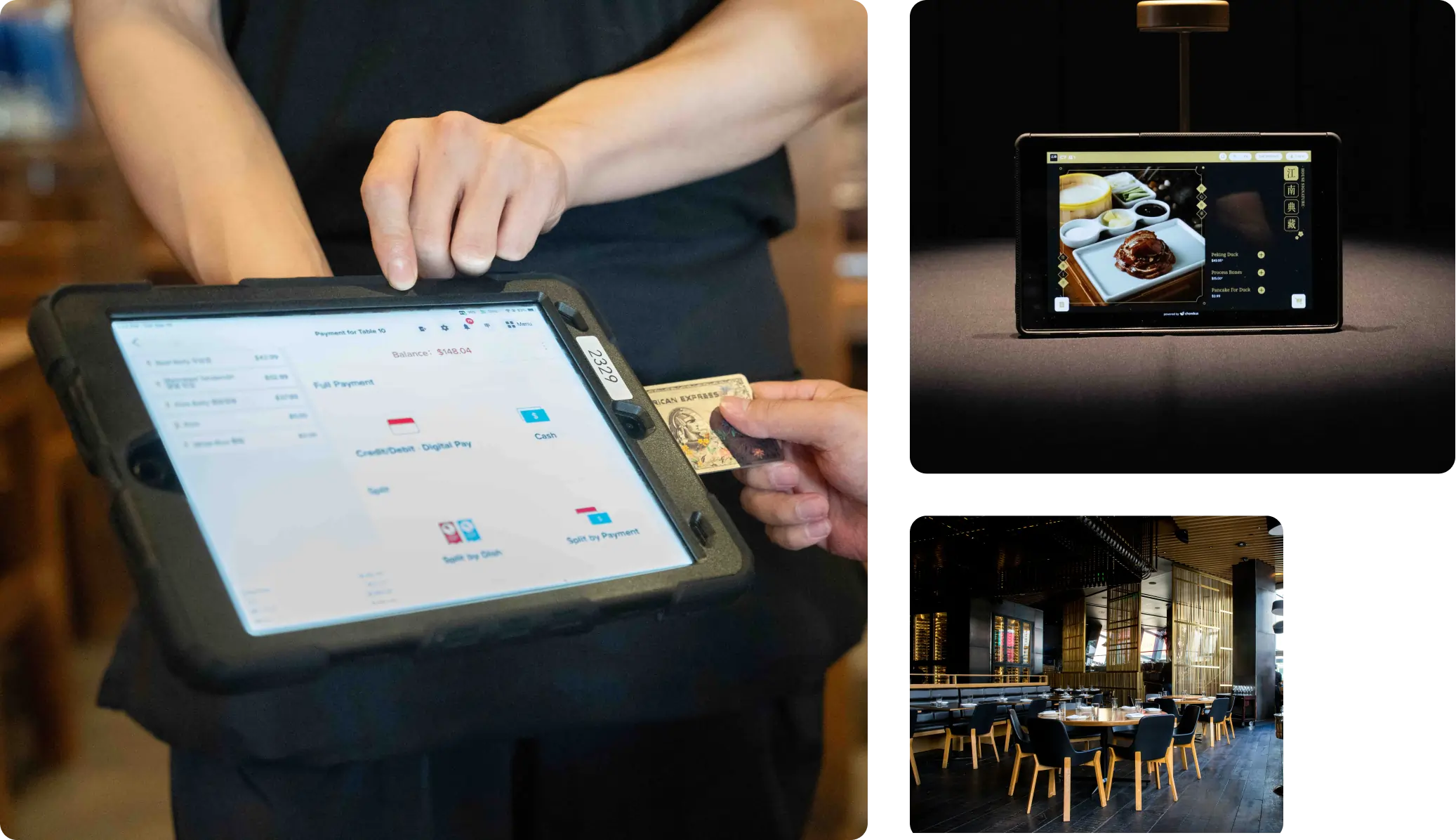
Chowbus, a restaurant technology company based in Chicago, has recently attracted $81 million in new funding aimed at expanding its operations beyond merely offering point-of-sale (POS) software. Founded with a mission to support independent restaurants with cultural roots, Chowbus is undergoing a significant transformation into a more comprehensive operating platform. The funding round was spearheaded by Prysm Capital and Left Lane Capital, with notable contributions from Dutchess, Fika, and Avid Bank. This investment is particularly notable given that Chowbus has reported over $120 million in annual recurring revenue, a ninefold increase over the past four years, along with a staggering $4 billion in annualized processed transaction volume from restaurants across all 50 U.S. states and Canada.
This influx of capital marks a pivotal shift in Chowbus’s strategy, moving away from its initial focus on integrated POS and management tools. The company is now looking to dive deeper into operational services that extend beyond traditional software offerings. Areas that Chowbus aims to expand into include marketing automation, accounting workflows, supply ordering, and insurance services—key categories where restaurant operators often incur significant costs. By layering these diverse services onto its existing technology platform, Chowbus aspires to become a holistic operating partner for independent restaurant operators rather than just another vendor.
Chowbus co-founder and CEO Linxin Wen emphasized the company’s commitment to technology, equality, and purposeful reinvention in announcing the new funding. He cited the early success of Chowbus’s AI Digital Ads product, which serves as an example of how artificial intelligence can democratize marketing efforts, allowing independent restaurants to effectively compete against larger national chains. The company now has ambitious plans to build what it describes as a next-generation AI restaurant platform that can support multiple operational functions from a unified environment.
Founded in 2016 by Linxin Wen and CTO Suyu Zhang, Chowbus originally aimed to enhance digital ordering and delivery capabilities primarily for Asian restaurants. Recognizing that many immigrant and culturally specific businesses were underserved by mainstream technology solutions—including marketing tools and language support—Chowbus launched a marketplace to connect diners with Asian restaurants while also providing essential digital ordering infrastructure and customer data analytics to merchants.
Over time, Chowbus has successfully broadened its product offerings to encompass POS capabilities, integrated online ordering, loyalty programs, and advanced marketing services. This evolution has allowed the company to transition from being a consumer-focused marketplace to a business infrastructure platform that serves thousands of restaurants nationwide. Today, Chowbus’s technology is integral to various aspects of restaurant operations, encompassing order processing, payments, customer acquisition, and performance analytics.
Chowbus maintains a steadfast focus on culturally rooted restaurants, which is central to its business model. Notably, the Asian restaurant sector alone comprises about 16% of the total U.S. restaurant market and is projected to grow to approximately $240 billion by 2026. Despite facing economic challenges like inflation, this sector has experienced a remarkable 135% growth over the past 25 years, creating a substantial opportunity for tech providers that can address the unique operational hurdles and marketing challenges encountered by independent operators in these communities.
However, Chowbus is entering a competitive and rapidly changing landscape. Established DIS providers such as Square, Toast, and Lightspeed have been expanding their platforms beyond basic payments and order management into adjacent services like payroll, marketing automation, inventory management, and financial tools. This strategy is part of a broader movement toward what some are calling the “restaurant operating system,” wherein a single platform manages nearly every facet of restaurant operations.
Simultaneously, specialized platforms like DoorDash, Uber Eats, and Olo are advancing along the value chain, providing merchant analytics, advertising products, and logistics solutions, thus embedding themselves more deeply into restaurant operational processes. A new wave of startups focused on AI is also entering the scene, offering automation tools aimed at optimizing menu choices, forecasting demand, scheduling labor, and managing digital marketing campaigns.
In light of this competitive environment, Chowbus seeks to distinguish itself through a dual approach of vertical focus and service integration. While many technology providers target the restaurant industry indiscriminately, Chowbus remains dedicated to prioritizing culturally specific restaurants, particularly those centered around Asian cuisines. This segment often relies more on word-of-mouth marketing and community networks, which differ significantly from the strategies employed by larger chain operations.
By integrating AI-driven marketing and operational tools directly into its platform, Chowbus aims to empower independent operators by offering capabilities that traditionally necessitated larger corporate infrastructures. For instance, the AI Digital Ads product automates local advertising campaigns by leveraging transaction data and customer behavior insights to optimize marketing strategies.
This overarching strategy reflects a significant trend within the restaurant technology sector. More vendors are looking to capture a greater portion of restaurant operating budgets by extending their services from software subscriptions into additional layers focused on marketing, finance, procurement, and logistics. Given that restaurants typically allocate several times more of their budgets to these operational services than to software, this shift opens up substantial revenue opportunities for technology platforms.
For Chowbus, securing $81 million in funding is crucial for accelerating this ambitious expansion plan. The company intends to make significant investments in AI development, deepen integrations with various operational tools, and broaden its geographic reach. If effective, these efforts could establish Chowbus as a pivotal technology platform for restaurant segments that have historically lacked access to comprehensive digital resources compared to their larger chain counterparts.
As the restaurant industry embarks on a rapid digital transformation, platforms capable of merging software, data, and operational services into a unified ecosystem are likely to gain increasing prominence. Chowbus is banking on the idea that by concentrating on culturally rooted restaurants and harnessing artificial intelligence to streamline daily operations, it can emerge as a vital technology partner for numerous independent operators navigating an increasingly intricate and competitive marketplace.

Celebrity Constellation Cruise Vlog Day 3 Afternoon: Cozumel Run, Evening Onboard

99% Lose this TRY NOT TO LAUGH Challenge – Funny Kittens Video

Could the US Military Turn Against Trump? – Podcast | US News

Iran’s Conflict with Israel and the United States

Morning Briefing: Business Updates for March 13, 2026

Lusa – Business News – Portugal: Stock Market Declines on Thursday Morning

Iran Intensifies Attacks on Gulf Infrastructure and Transport Networks | US News

Tracy Police Achieve Lower Crime Rates and Faster Response Times Through Modern Technology

Enterprise IT and Communications Technology News | Pipeline Magazine

Enhanced Capsule Technique Revolutionizes Single-Cell Analysis

Who Is Really Voting in These Polls? The Shocking Truth Behind America’s Approval Numbers

Tyler Jaggers: Coast Guard Rescue Swimmer Passes Away Days After Mission Incident; Fiancée Honors His Memory

Blueprint for a “Tax-Free America” That Actually Works

Police Issue Warrant for Bar Patron Alleged to Have Assaulted Multiple Individuals

Winter Storm Provides Much-Needed Surge for Tug Hill Snowmobile Industry

Four Forecasts for 2026

It Took 35 Years for T. rex to Reach Full Maturity

Major Indices Experience Weekly Declines as Treasury Yields Reach Four-Month High

EXCLUSIVE: Will Smith’s Former Best Friend Bilaal Breaks Silence in Explosive Tasha K Interview — Lawsuit, Scientology Allegations, and Claims of an Attempt on His Life

2026 NFL Coaching Update: John Harbaugh Nearing Deal with Giants; Mike Tomlin Not Expected to Coach Next Season
Celebrity Constellation Cruise Vlog Day 3 Afternoon: Cozumel Run, Evening Onboard
99% Lose this TRY NOT TO LAUGH Challenge – Funny Kittens Video

celebrity pets con andrea estevez

😍 Cute and Funny 😜 Moments with Hedgehogs 🦔 Compilation 🥰 Милые и Смешные 😃 Моменты с Ежами 🦔

Decoration Day, How To Be A Celebrity, Paper Moon, And Where To Get A Drink Of Water

Adulting Dogs | Funny Dog Video Compilation 2017

Reacting To My South Park Episode!

15 minutes of funny cat behavior / No music, just lovely cats sounds

Amy McCones Celebrity Cruise Line Audition Reel

Boston Terrier — Funny And Adorable Videos And Tik Toks Compilation
-
 Entertaiment7 days ago
Tyler Jaggers: Coast Guard Rescue Swimmer Passes Away Days After Mission Incident; Fiancée Honors His Memory
-

 Comedy1 week ago
feeding carrot beans and radish to the hungry monkey
-

 World News6 days ago
Oil and Gas Prices Surge Amid Escalating Conflict in Iran
-

 Crime & Justice6 days ago
Over 30 Injured in Nightclub Bombing in Northern Peru | Crime News
-

 Business7 days ago
Netflix Withdraws from Meghan Markle’s $64 Candle Venture
-

 US News3 days ago
Trump Assures Republicans: Iran Conflict Could Conclude ‘Fairly Soon’ | Donald Trump News
-

 Science6 days ago
Domino Unveils the Quickest and Safest Way to Scale Enterprise-Agent AI Systems
-

 Crime & Justice2 days ago
Video Captures SJPD Probe into Possible Hate Crime Following Attack on Two Jewish Men at Santana Row in San Jose