
World News
Trump Seeks International Support for Reopening the Strait of Hormuz, But Challenges Loom Ahead


U.S. Allies and Rivals Respond to Trump’s Call on Strait of Hormuz
Recently, President Donald Trump took to social media, urging U.S. allies to step up their naval presence in the Strait of Hormuz, a major global trade route. His bold declaration comes amidst escalating tensions related to Iranian threats targeting shipping in this critical corridor, which sees around a fifth of the world’s oil pass through its waters every day.
The Geopolitical Landscape of the Strait of Hormuz
The Strait of Hormuz is not just any waterway; it links the Persian Gulf to the open ocean, serving as a lifeline for global oil supplies. About 3,000 ships traverse this strategic passage monthly, making it essential for international trade. However, the ongoing conflict in the region has led to numerous attacks on vessels, significantly disrupting shipping operations and pushing oil prices upward.
Trump’s Rallying Cry
In a recent post on Truth Social, Trump expressed confidence that multiple nations—including China, France, Japan, South Korea, and the U.K.—would mobilize naval assets to patrol the strait and ensure the safe passage of ships. “Many countries… will be sending War Ships,” he stated, emphasizing the importance of a coordinated approach. In a follow-up post, he placed further emphasis on working with these nations to expedite efforts for a joint military presence.
Mixed Responses from Allies
Despite Trump’s assertions, responses from the countries he mentioned have been tepid at best. For instance, Tokyo, a close ally of the U.S., did not promptly reply to his request. Japan’s foreign ministry specified that any decision regarding naval deployments would be made through its independent judgment. Similarly, the French government has yet to officially affirm its commitment to Trump’s proposal, although it has already deployed ships within the wider region for reassurance.
China’s response was particularly cautious, focusing more on calling for a cessation of hostilities rather than committing to naval action in the Strait of Hormuz. This reflects a broader trend: while Trump’s call for international maritime security resonated, many nations are weighing the risks and potential backlash involved in sending military assets into a highly volatile environment.
U.K. and South Korea’s Dilemma
British Energy Secretary Ed Miliband indicated that the best approach to opening the strait would involve de-escalating the ongoing conflict rather than an outright military solution. The U.K. is reportedly in discussions with the U.S. regarding potential support but has not confirmed direct participation in naval operations. South Korea, meanwhile, has pledged to review its options carefully but has not immediately committed any naval resources either.
Experts Weigh In
Analysts are skeptical about the feasibility of mobilizing a multinational naval force to ensure safe passage in such a contested area. H.A. Hellyer, a senior associate fellow at the Royal United Services Institute in London, remarked that although France might be inclined to join a defensive posture, it falls short of an operational mission. Moreover, Michael A. Horowitz, a geopolitical analyst, emphasized the high stakes involved in protecting shipping lanes, pointing out the risks associated with positioning military assets in a narrow corridor where Iran can launch short-range attacks.
Iran’s Position and Diplomatic Efforts
Amid these geopolitical tensions, Iran has indicated a willingness to negotiate the passage of vessels through the Strait of Hormuz. Foreign Minister Abbas Araghchi stated that various countries had reached out to discuss safe passage, signifying some willingness on Iran’s part to maintain a degree of operational control in the corridor.
Trump has expressed skepticism about the military outcomes, conceding that although U.S. military capabilities against Iran may be strong, asymmetric threats like drones and close-range missiles remain a challenge. This acknowledgment highlights the complexities of black-and-white military strategies in multifaceted conflict scenarios.
Tension with European Allies
Complicating matters further, Trump’s relationship with European allies has become strained. Just days before urging allies to join him in the Strait, he publicly criticized the U.K. for not allowing U.S. military operations using British bases, deeming them unnecessary. His comments seemed to reflect frustration with allies who are reticent to engage militarily in the Middle East, preferring instead to focus on diplomatic solutions.
Trump has also warned of repercussions for Spain after it limited U.S. military access to its bases, displaying a confrontational approach that some speculate could further alienate key allies.
The situation remains fluid, with a complex set of diplomatic and military considerations at play. As nations navigate these treacherous waters, both literally and figuratively, the international community watches closely to see what actions will be taken to secure this vital trade route.
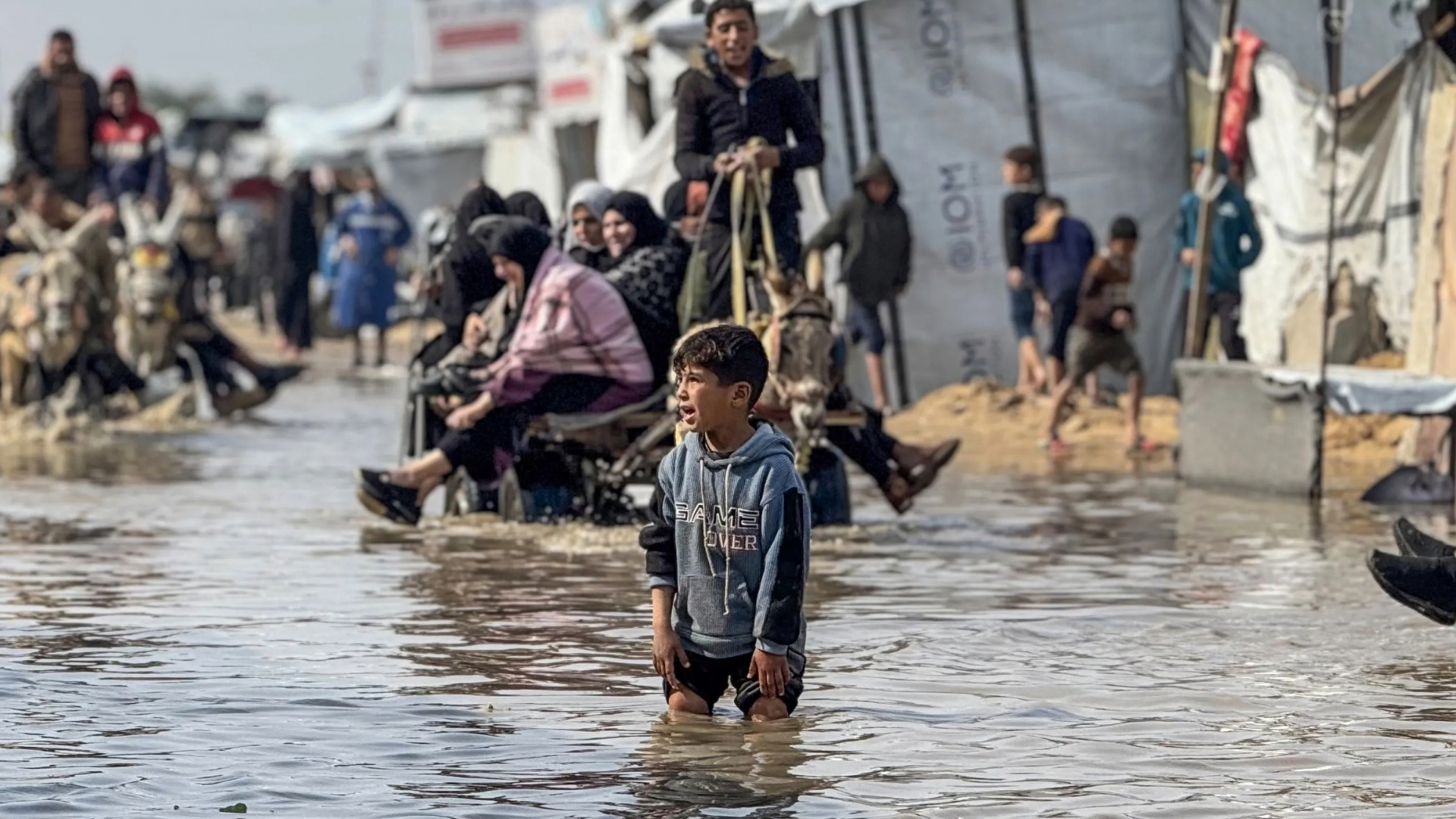
The Growing Crisis Amid US and Israel’s Engagement in Iran: Implications for Palestine
The complexities surrounding the US and Israel’s ongoing military actions against Iran have sparked intense discussions across diplomatic circles. As the conflict escalates, the ramifications for Palestine and the dire humanitarian needs of its people are becoming increasingly urgent and concerning.
A Catastrophe Amplified
The situation in Gaza has been catastrophic for years, but recent events have exacerbated the humanitarian crisis. Until just last month, there was some optimism regarding reconstruction efforts in Gaza, led by US support. Limited food aid was entering through the Rafah border crossing, and a trickle of Gazans were able to move in and out as restrictions eased, albeit marginally.
However, this glimmer of hope has been clouded by the US and Israel’s aggressive military operations in Iran. With bombs falling and tensions rising, global attention has shifted dramatically away from Gaza, creating a vacuum that further endangers the fragile ceasefire and diplomatic engagement efforts in the region.
US Foreign Policy: A Shift in Focus
For years, the United States has maintained a complex stance in the Middle East, often oscillating between support for Israel and the promotion of Palestinian welfare. With the current war on Iran, however, US policies appear to be more militaristic than humanitarian, leaving little room for dialogue concerning Palestine. Diplomatic efforts that had hoped to address the Palestinian situation are now overshadowed by conflict-related issues, stripping advocacy groups of their platform to discuss urgent humanitarian necessities.
The way forward is uncertain. The diplomatic landscape, already fraught, may become even more convoluted as military priorities take precedence over humanitarian concerns. Quick shifts in policy and public opinion could mean limited support for Palestine amid a war widely covered in global media.
The Human Toll
As military campaigns unfold, the people of Palestine continue to suffer the most. Reports detail the increasing number of casualties, worsened living conditions, and the incessant struggle for basic necessities. Thousands of families are stranded as both immediate aid efforts and plans for longer-term reconstruction stall. The international community’s focus on the Iranian conflict has diverted resources and attention from Gaza, resulting in a humanitarian crisis that grows worse by the day.
The Role of Key Voices
In discussing these pressing issues, key figures play indispensable roles. James Bays, the presenter, is set to lead the discussion featuring experts like Abdulla Al-Etaibi, Mohammed Salah, and Gordon Gray. They bring a wealth of knowledge from various fields, ranging from international diplomacy to grassroots advocacy. Their insights will delve into how current events influence both the humanitarian crisis and diplomatic negotiations.
-
Abdulla Al-Etaibi, an Assistant Professor in International Affairs, will offer perspectives on how the geopolitical landscape is shifting amid increased military actions and what that means for peace efforts.
-
Mohammed Salah, founder of Tech From Palestine NGO, highlights the role of technology and grassroots movements in the Palestinian struggle, emphasizing how local empowerment can counterbalance international neglect.
-
Gordon Gray, former US Ambassador and Deputy Assistant Secretary of State for Near Eastern Affairs, can provide an insider’s perspective on how US foreign policy is being reshaped by the escalating conflict in Iran and its implications for Middle Eastern diplomacy.
Shaky Ceasefires and Future Diplomatic Efforts
With the focus diverted from Gaza, the future of diplomatic efforts remains tenuous. A ceasefire that was once in reach may now slip further from grasp, as both US and Israeli military actions instigate further resistance and unrest within Palestine. This shaky situation poses a significant barrier to any sort of peace process, leading many to question whether sustained humanitarian access and advocacy will continue to lose ground in the broader narrative of Middle Eastern conflict.
In summary, the current war against Iran by both the US and Israel isn’t just a military engagement; it is also a defining moment for Palestinian rights and humanitarian aid. As attention shifts, the outcomes for those suffering in Gaza grow increasingly uncertain, and the avenues for diplomatic discussion continue to narrow.

IVORY COAST: A Historic Homecoming
In a poignant chapter of cultural restoration, the Ivory Coast has welcomed back its sacred “talking drum,” known as the Djidji Ayôkwé, after more than a century. Taken by French forces in 1916 during colonial times, this impressive drum—standing over 10 feet tall—carries immense cultural significance for the Ebrié community. The act of repatriation marks not just the return of an artifact, but a significant step in healing the wounds of colonial history.
The journey of the Djidji Ayôkwé, also referred to as the “Panther Lion,” spanned various esteemed venues in France, including the Trocadéro Museum and the Quai Branly Museum in Paris. Upon its arrival at Abidjan International Airport, local chiefs gathered to honor its return, a testament to the drum’s enduring cultural legacy.

Ivorian Culture Minister Françoise Remarck expressed the emotional weight of the day, describing it as a historic moment that resonates deeply with the community’s identity and heritage. The return of a culturally significant object like the Djidji Ayôkwé not only enriches the local history but also revitalizes the community’s pride in their cultural roots.
MEXICO: Unearthing the Past
In a striking find, the construction of a railway bypass in Mexico led to the discovery of a 1,000-year-old pre-Columbian town. Located in the Cocóspera River valley in Sonora, about 100 miles south of Tucson, this archaeological site, dubbed La Ciénega (meaning “The Marsh”), offers insights into ancient civilizations that inhabited the region.
Excavations revealed the foundations of up to 60 dwellings alongside a cemetery containing the remains of 40 individuals and 28 urns filled with ashes. Experts from the National Institute of Anthropology and History are now hard at work examining these artifacts, which illuminate the historical cultural ties that existed in this area, shedding light on the intertwined histories of what is now Mexico and the United States.
ITALY: A Major Artistic Acquisition
Italy has recently made headlines with its bold investment in art, having spent around $35 million on a rare Caravaggio painting. The piece, dating back to 1598 and depicting Maffeo Barberini—a nobleman who ascended to become Pope Urban VIII—is set to become a central attraction at Rome’s Palazzo Barberini.

This jaw-dropping purchase marks one of the most significant state investments in art in recent memory, underscoring Italy’s dedication to preserving its rich cultural tapestry and ensuring that such masterpieces remain accessible for future generations to admire and study.
CANADA: A Controversial Resignation
In a recent and controversial incident in Canada, Niagara Regional Chair Bob Gale resigned from his position after facing scrutiny for owning a signed copy of Hitler’s “Mein Kampf.” The backlash was swift, with anti-racism groups calling for accountability, leading Gale to step down mere hours after the revelation.
In his resignation letter, Gale acknowledged the controversial nature of the book without specifically naming it, referring to it simply as a “historical book found in many libraries.” This incident has sparked discussions about free speech, the responsibilities of public figures, and the importance of confronting historical narratives.
JAPAN: Sporting Triumphs
In the realm of sports, Japan celebrated a remarkable achievement as alpine skier Momoka Muraoka won a silver medal in the giant slalom sitting race at the Milano Cortina Winter Paralympics. This victory elevated her status as Japan’s most decorated winter para athlete, a testament to her resilience and dedication.
At just 29 years old, Muraoka, who has been in a wheelchair since the age of four, has accrued an impressive collection of 11 medals since her Paralympic debut in Sochi in 2014. Her achievements not only inspire many in Japan but resonate globally, serving as a powerful reminder of the potential of athletes with disabilities.

The Mirage of Dubai: A Glitzy Illusion with Cracks in the Facade
The Allure of Dubai
Dubai, often billed as a desert paradise, has long attracted those seeking a glamorous escape from their everyday lives. Ever since it emerged as a global hub for luxury, business, and leisure, the allure of Dubai has woven itself into the fabric of Western aspiration. Colin Robertson captures this sentiment eloquently when he notes in The Sun that while he enjoys a “sunshine break,” he harbors no desire to visit this so-called “soulless sandpit.” For many, the city represents not just a vacation destination, but a lifestyle choice—a stark contrast to the rainy, crime-ridden landscapes of home.
Influencers and a Glamorous Image
One aspect driving Dubai’s image is its population of expats and social media influencers. They paint a picture of a life filled with extravagant brunches, luxurious cars, and endless sunshine—juxtaposed against the struggles of those left behind in their home countries. In doing so, they often overlook the hard-working immigrant laborers who keep the city’s economy ticking. This glossy narrative comes with a caveat, as the influencers often forget to share the underlying realities of living in a place dependent on transient workers and a pretty facade.
Dreams Turned Sour
However, the appeal of Dubai has begun to falter, particularly in light of geopolitical tensions. Recent news of Iranian drone strikes targeting the UAE raises pressing questions about the stability of this once-sacrosanct refuge. As instability looms, the glamorous lifestyle begins to dissipate, revealing a more precarious existence for those who once flaunted their lives in a seemingly utopian setting. As the atmosphere shifts, the calls for evacuation from Dubai have an almost bitter twist: the very individuals who benefited from tax-free living may find themselves relying on the very taxes of their home countries for their safe passage.
A Shattering Reputation
The UAE has carefully constructed its image as a safe haven, designed to attract wealthy expats and exiled business elites fleeing higher taxes and regulatory scrutiny back home. This carefully curated persona, likened to a “real-life Truman Show,” is in danger of being undermined by the unpredictability of war. Gaby Hinsliff notes in The Guardian that the very fabric of Dubai’s appeal—security and stability—may soon unravel. The looming threat of conflict brings into question whether the glitz and glamour can mask the very real dangers posed by regional warfare.
The Threats of Dependence
The reliance of Gulf states on air conditioning and desalinated water compounds the precariousness of this oasis. A successful strike on power stations or vital water resources could have catastrophic consequences—not just for the lifestyle of expats but for the survival of millions. Although many strikes have been intercepted, whispers of vulnerability underpin the façade of safety that Dubai projects. The geopolitical chess game being played in the region adds layers of complexity that contenders for the dream life in Dubai may be unaware of.
Adaptation and Resilience
Despite the unease, not all hope is lost for Dubai. Many wealthy residents choose to stay put, valuing the lifestyle and tax advantages that the city offers. Some migrants, when faced with uncertainty, may even seek to return in hopes of retaining their lucrative residency status. Simeon Kerr in Financial Times highlights that while Dubai’s allure may be dimmed, it remains a dynamic crossroads where East meets West—a testament to its resilience in the face of looming threats.
The Irony of Tax-Free Living
The expat’s dream of tax-free living shines with irony as those who fled home for a life of luxury are now facing harsh realities. As they navigate the treacherous waters of insecurity, the fantasy they sold themselves—and the world—begins to crack. The glamorous images that once defined their lives now seem like distant memories, echoing the vulnerabilities that lie beneath the surface.
Conclusion
The juxtaposition of Dubai’s radiant surface against the growing shadows of insecurity illustrates the ever-evolving narrative of this expansive city. What was once a dream destination may soon revert to a more complex reality—a reminder of the perils that come with chasing an illusion drenched in sunlight.

250227 まるでセレブ😂リーと舗装道路を歩くCelebrity Chihuahuas Walk on the paved road with Lee

Orange Cat Activities

Town Hall on Immigration with Mayor Karen Bass

Trump Seeks International Support for Reopening the Strait of Hormuz, But Challenges Loom Ahead

Brevard’s Annual Meeting Honors Local Businesses | News

Trump: US Might Target Iran’s Kharg Island Again ‘Just for Fun’ | US-Israel Tensions Over Iran

Man Arrested for Murder in Airport Heights Shooting

High Demand for Ukraine’s Anti-Drone Technology Amid Iranian Aggressions Against Neighbors

A Landmark Journey for Antarctic Research

MATCH PREVIEW: Arsenal vs Bayer Leverkusen – Team News, Lineups, and Predictions

Who Is Really Voting in These Polls? The Shocking Truth Behind America’s Approval Numbers

Tyler Jaggers: Coast Guard Rescue Swimmer Passes Away Days After Mission Incident; Fiancée Honors His Memory

Blueprint for a “Tax-Free America” That Actually Works

Police Issue Warrant for Bar Patron Alleged to Have Assaulted Multiple Individuals

Winter Storm Provides Much-Needed Surge for Tug Hill Snowmobile Industry

Four Forecasts for 2026

It Took 35 Years for T. rex to Reach Full Maturity

Major Indices Experience Weekly Declines as Treasury Yields Reach Four-Month High

feeding carrot beans and radish to the hungry monkey

EXCLUSIVE: Will Smith’s Former Best Friend Bilaal Breaks Silence in Explosive Tasha K Interview — Lawsuit, Scientology Allegations, and Claims of an Attempt on His Life
250227 まるでセレブ😂リーと舗装道路を歩くCelebrity Chihuahuas Walk on the paved road with Lee
Orange Cat Activities

Miranda Kerr: Mindfulness and Meditation for Stress Management | Celebrity Meditation Series
![Funny Chinchilla 🐭Funny and Cute Chinchilla (Full) [Funny Pets]](https://i0.wp.com/i.ytimg.com/vi/gCRe9YMMYbM/maxresdefault.jpg?resize=80%2C80&ssl=1 "Funny Chinchilla 🐭Funny and Cute Chinchilla (Full) [Funny Pets]")
Funny Chinchilla 🐭Funny and Cute Chinchilla (Full) [Funny Pets]

Tag Celebrity Crush

Prank Pets | Funny Pet Video Compilation 2017

12:13am 2m15s Statendam and Celebrity Century 12:33am 7m10s returning to Vancouver

Funny Parrots Going Crazy – Funniest Parrots Compilation 2020

21:20 Celebrity Infinity goes out of sight Em still on WA cam

Dogs vs GIANT Evil Nun Prank! Funny Dogs Maymo, Potpie & Indie
-
 Entertaiment1 week ago
Tyler Jaggers: Coast Guard Rescue Swimmer Passes Away Days After Mission Incident; Fiancée Honors His Memory
-
 Comedy1 week ago
feeding carrot beans and radish to the hungry monkey
-

 World News1 week ago
Oil and Gas Prices Surge Amid Escalating Conflict in Iran
-

 US News6 days ago
Trump Assures Republicans: Iran Conflict Could Conclude ‘Fairly Soon’ | Donald Trump News
-

 Business1 week ago
Netflix Withdraws from Meghan Markle’s $64 Candle Venture
-

 Crime & Justice1 week ago
Over 30 Injured in Nightclub Bombing in Northern Peru | Crime News
-

 Business4 days ago
Major Multi-Country Oil Release Agreement Falls Short of Lowering Prices
-

 Technology5 days ago
ARBOR Technology Drives Industrial Transformation with Robust Edge AI at Japan IT Week 2026
