Technology
Japan Unveils 10nm Nanoimprint Technology to Alleviate EUV Bottleneck Challenges

The Pioneering Development of Nanoimprint Lithography by Dai Nippon Printing
Overview of Nanoimprint Lithography Technology
Japan’s Dai Nippon Printing (DNP) has recently made headlines with its groundbreaking advancements in nanoimprint lithography (NIL) technology. Specifically, DNP announced its successful development of NIL with circuit line widths as fine as 10 nanometers. This innovation is set to cater to the ever-increasing demands of 1.4nm-class logic semiconductor circuits.
The company has already begun customer evaluations for this technology and aims for mass production by 2027. This initiative not only highlights DNP’s commitment to innovation but also underscores the rising demand for advanced logic chips in areas such as smartphones, data centers, and NAND Flash applications.
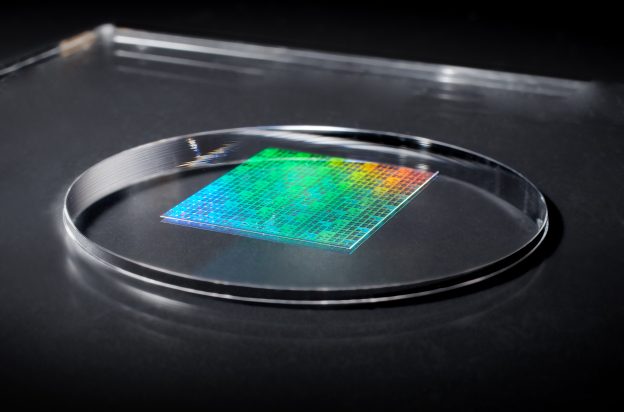

Upcoming Showcase at SEMICON Japan 2025
An exciting opportunity for enthusiasts and industry professionals alike is the SEMICON Japan 2025, set to take place at Tokyo Big Sight. DNP plans to showcase its 10nm-linewidth NIL technology at this crucial event, providing attendees a glimpse into the future of semiconductor manufacturing and the incredible potential of NIL.
The demand for increasingly powerful devices leads to the continuous improvement of extreme ultraviolet (EUV) lithography. However, EUV technology requires massive capital investments, complicating the construction of fabrication plants while raising challenges related to energy consumption and environmental sustainability.
Evolution of DNP’s Nanoimprint Technology
Since 2003, DNP has been on an uninterrupted quest to refine its nanoimprint technology. The approach involves directly imprinting circuit patterns onto substrate materials, which offers a viable path for chipmakers looking to mitigate the energy consumption associated with traditional lithography.
The newly introduced 10nm-linewidth NIL technology serves as a promising alternative to EUV processes in specific patterning stages. For semiconductor manufacturers who have yet to adopt EUV tools, this development provides a significant option for advanced logic processes.
Environmental Benefits and Energy Efficiency
One of the most compelling aspects of DNP’s newly developed NIL technology is its environmental benefits. By enabling ultra-fine semiconductor manufacturing, this method can reduce lithography energy consumption to about one-tenth that of currently dominant processes. This leap in efficiency addresses both economic and environmental concerns within the semiconductor industry.
Collaborative Efforts with Semiconductor Manufacturers
DNP is actively engaging in discussions with various semiconductor manufacturers and has initiated evaluation programs for this new NIL technology. The company emphasizes its dedication to continuous improvement in nanoimprint methods and plans to expand production capacity in alignment with future market demands. By positioning its NIL technology as a key growth driver within its semiconductor segment, DNP is poised not just for innovation but also for a major market presence.
Final Thoughts on the Future of Semiconductor Manufacturing
As the semiconductor landscape evolves, the collaboration between companies like DNP and manufacturers will be pivotal in developing sustainable solutions. The rise of nanoimprint lithography as a viable alternative to EUV opens exciting avenues for the future, balancing the necessity for efficiency, cost-effectiveness, and environmental responsibility.
Please note that this article cites information from Dai Nippon Printing (DNP).