
Technology
The Most Exciting Innovations from Day 2 of CES 2026

Highlights from CES Day 2: A Deep Dive into Innovation
Las Vegas Welcomes a Wave of Technology
The second day of CES (Consumer Electronics Show) in Las Vegas unfolded with a vibrant showcase of cutting-edge technology, as eager crowds poured into the newly opened showroom floors. Attendees were greeted by a dazzling array of robots, AI companions, health longevity innovations, and wearable tech, all under one roof. The atmosphere buzzed with excitement, reflecting the future possibilities these advancements could bring.
Keynote Highlights: AI in Manufacturing
Kicking off Day 2, Siemens President and CEO Roland Busch delivered an insightful keynote presentation. He illuminated how businesses are increasingly leveraging artificial intelligence to revolutionize their operations. A notable moment came when Busch was joined by Nvidia CEO Jensen Huang, where they announced an expanded partnership aimed at initiating an AI-driven industrial revolution. This collaboration is set to redefine manufacturing, production, and supply chain management, showcasing the immense potential of AI to enhance efficiency and innovation.
Lenovo’s Star-Studded Showcase
As the day drew to a close, Lenovo took the spotlight with a visually captivating presentation featuring prominent tech leaders. CEO Yang Yuanqing emphasized the transformative capabilities of their AI platforms, which cater to individuals through wearables, support businesses via enterprise solutions, and address global challenges. The presence of tech luminaries like Nvidia’s Huang, AMD’s Lisa Su, and Intel’s Lip-Bu Tan added an extra layer of excitement, highlighting the industry’s collaborative spirit.
Spotlight on Gaming Innovations
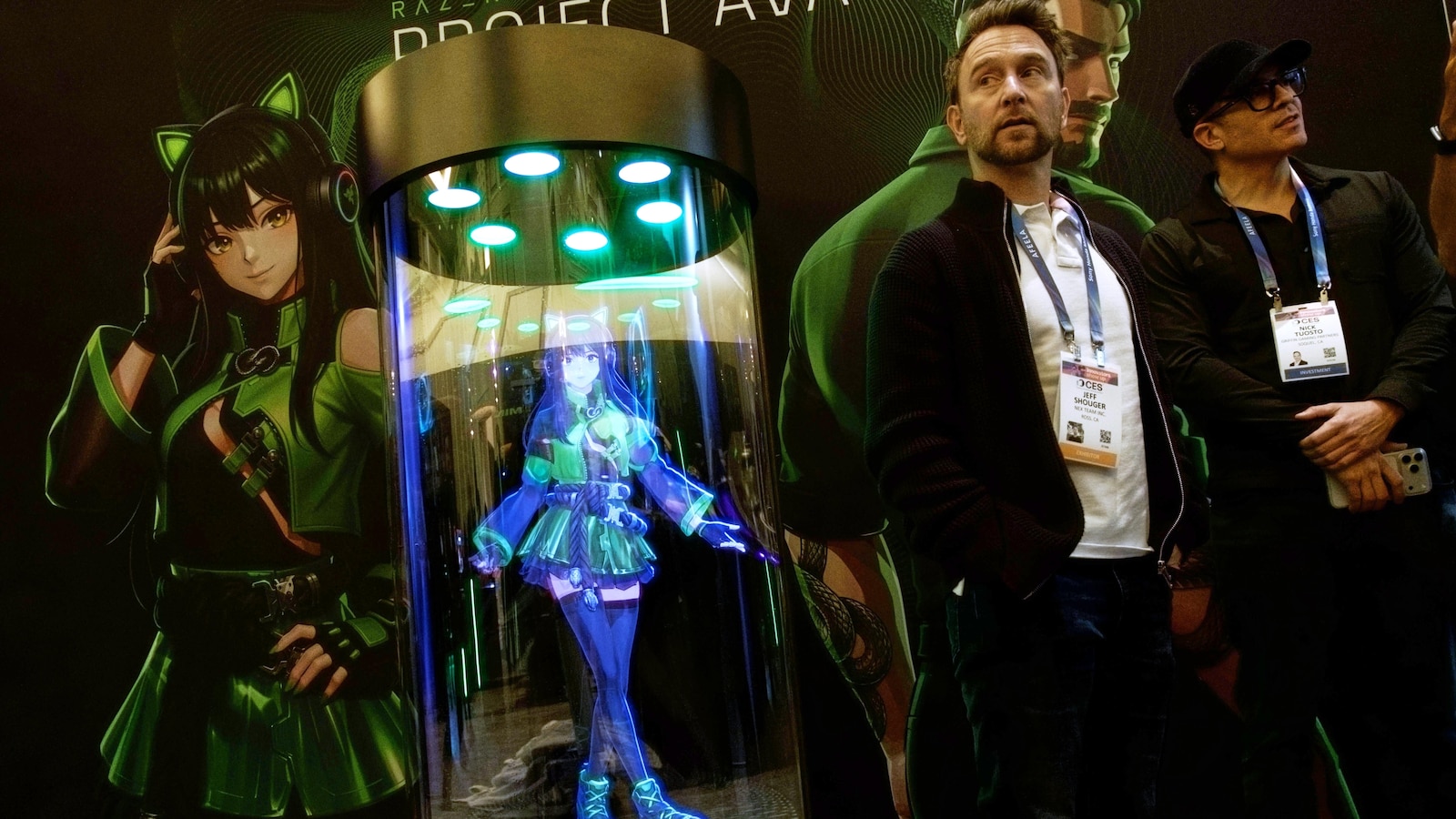
Razer, a frontrunner in gaming technology, consistently brings groundbreaking products to CES. This year, they ventured beyond traditional gaming hardware to unveil two AI-powered prototypes. The first is an over-ear gaming headset that doubles as a personal assistant, seamlessly integrating gaming advice with life organization. The second innovation is an AI desk companion, embodying a holographic presence that guides users in both their gaming pursuits and daily life. Both prototypes, named Project Motoko and Project Ava, are currently in development but are expected to hit the market later this year, marking a significant step in the fusion of gaming and AI.
Autonomous Robots Revolutionizing Airports
A visionary demonstration from Oshkosh Corporation offered a glimpse into the future of air travel management. Their fleet of autonomous robots is designed to enhance the efficiency of airport operations, particularly during the crucial hours post-landing. According to CEO John Pfeifer, these robots aim to minimize delays without sacrificing safety, ensuring that vital tasks like fueling, cleaning, and luggage handling proceed smoothly. Early testing with major airlines is underway, with plans for deployment in major hub airports like Atlanta and Dallas in the coming years.
A Novel Robovac Experience
In a quirky twist on household cleaning, Roborock introduced the Saros Rover, a robotic vacuum that utilizes chicken-like legs to navigate stairs. While the prototype demonstrated some challenges in its ascent and descent during its CES presentation, the technology promises versatility in traversing various stair styles, including spirals. Further development is anticipated before a commercial release.
Smart Health Monitoring with Withings
The new Body Scan 2 from Withings is not just a typical bathroom scale. Visitors at CES eagerly lined up to experience its capabilities, as it measures up to 60 different health biomarkers within seconds. Priced at $600 and slated for spring availability, this smart scale provides comprehensive health insights, including heart age and metabolic rates, and pairs with an app for personalized health advice. Withings aims to empower users in monitoring their health and fostering long-term well-being.
Advancements in Fusion Energy
A groundbreaking partnership between Commonwealth Fusion Systems, NVIDIA, and Siemens was also announced. These companies are uniting efforts to utilize AI in accelerating the development of nuclear fusion as a viable carbon-free energy source. At the Massachusetts facility, a prototype fusion power plant known as SPARC is nearing completion, and the introduction of a “digital twin” aims to enhance testing and understanding of fusion technology, compressing years of experimentation into a shorter timeframe.
The Future of Energy and Innovation
As the landscape of technology continues to evolve, each highlight from CES Day 2 paints a picture of a future where AI and robotics enhance various sectors—from gaming and healthcare to sustainable energy solutions. The innovations presented at CES are not just technological marvels; they represent significant strides towards redefining everyday experiences and addressing global challenges.
Technology
Evaluating the Valuation of Gorilla Technology Group (GRRR) Following the US$1.4 Billion AI Data Center Partnership Announcement

Find winning stocks in any market cycle. Join 7 million investors using Simply Wall St’s investing ideas for FREE.
Gorilla Technology Group (GRRR) has recently garnered attention due to its announcement of a substantial partnership worth US$1.4 billion. This multi-year agreement is set to facilitate the deployment of AI-ready data centers across Southeast Asia. Additionally, Gorilla has achieved notable wins in the realms of AI-driven public safety and infrastructure projects in Taiwan, marking a significant milestone in its expansion efforts.
See our latest analysis for Gorilla Technology Group.
Following this announcement, Gorilla’s stock experienced a remarkable surge, reflecting a one-day share price return of 12.36% and a seven-day return of 7.89%. However, investors should be cautious as the three-year total shareholder return is notably negative at -81.75%, indicating that long-term holders have faced considerable volatility and disappointing outcomes. This stark contrast prompts further examination of the company’s future trajectory.
If Gorilla’s shift toward AI is piquing your interest, it may be an opportune moment to diversify your investment watchlist. Consider exploring other high-growth technology and AI companies available through our high growth tech and AI stocks.
With the current stock price at US$14.09, coupled with the recent growth, a significant drop in total returns over three years, and a price target suggesting an upside of US$35, investors are left wondering if there is real value or if the market has already factored in anticipated growth.
The closing share price of US$14.09 juxtaposed with the widely referenced fair value of US$36.50 highlights a significant gap that is highly reliant on optimistic growth and margin projections. This disparity raises critical questions about the company’s future performance and market perception.
As Gorilla shifts from a project-based revenue model to more predictable, long-term recurring revenue contracts, alongside enhancements in its product/service offering and a goal to normalize gross margins to 40%, the outlook for greater earnings visibility and higher margins appears promising for the coming years.
Curious about the revenue growth, margin adjustments, and valuation multiples that support the US$36.50 fair value projection? The complete narrative elaborates on the growth trajectory, anticipated profit resets, and necessary discount rates for the current price to align with forecasted values.
Result: Fair Value of $36.5 (UNDERVALUED)
Have a read of the narrative in full and understand what’s behind the forecasts.
While the outlook seems positive, it’s crucial to recognize that delays in securing large government contracts or infused equity diluting existing shareholder value could alter the narrative dramatically. Investors must remain vigilant in monitoring such developments.
Find out about the key risks to this Gorilla Technology Group narrative.
For those who prefer a hands-on approach to analysis, building your own narrative can be straightforward. Start with this tool for a personalized investment narrative.

Christine Pilcavage: Bridging Cultures through MISTI Japan
Born and raised in Japan as part of a military family, Christine Pilcavage understands deeply the transformative power of cultural immersion and exploration. Her life experiences have taken her across various countries, including Cambodia, the Philippines, and Kenya. “Any experience in a different context improves an individual,” she emphasizes, showcasing her belief in the value of diverse perspectives.
MISTI Japan: A Portal to Opportunities
As the managing director of MISTI Japan (MIT International Science and Technology Initiatives), Pilcavage plays a pivotal role in connecting MIT students and faculty with collaborators in Japan. The program offers students unparalleled opportunities through internships and research initiatives. By organizing cultural activities such as Ikebana classes and the Japanese Film Festival during MIT’s Independent Activities Period, she fosters a richer understanding of Japanese culture on campus.
MIT’s historical links with Japan are profound, dating back to 1874 when the first Japanese student graduated. The establishment of the MIT Association of Japan in 1911 marked the beginning of trans-Pacific alumni connections, which later evolved into the MIT Club of Japan. These roots highlight the long-standing relationship between MIT and Japan.
Immersive Experiences Shaping Future Leaders
The MIT-Japan Program, founded in 1981, was established to prepare MIT students to become forward-thinking scientists and engineers proficient in working within the Japanese context. Since its launch in 1983, students have participated in three to twelve-month internships, immersing themselves in a vastly different culture. “Japan is so different from the Western world,” Pilcavage notes, pointing out nuances in communication, like how verbs end sentences in Japanese, emphasizing the need for patience and keen listening.
Pilcavage advocates for the immense benefits of broadening one’s horizons beyond the familiar MIT environment and the United States. Traveling internationally cultivates diverse viewpoints, promotes innovative problem-solving, enhances language proficiency, and nurtures effective communication skills.
Cultural Resilience and Language Learning
One standout aspect of the program is its focus on cultural resilience. Pilcavage believes that engaging with local populations not only enriches student experiences but also supports them in learning differently. “We want our students to think and create,” she asserts, emphasizing the importance of viewing challenges through different cultural lenses.
MIT students actively contribute to their host communities through programs designed for rural Japanese kids, teaching STEM subjects in Japanese. This initiative, which has been ongoing since 2017, equips students with valuable skills while deepening their understanding of cultural subtleties, such as body language tailored to Japanese contexts.
A Multifaceted Journey to MIT
Pilcavage’s background is as diverse as her interests. She holds master’s degrees in both international affairs and public health, alongside an undergraduate study in economics and psychology. Her professional journey includes work with USAID, the Japanese government, JICA, and the World Health Organization, focusing on global health and educational challenges across Africa and Asia.
Her initial foray into Cambridge, Massachusetts, was driven by a quest for practical experience in public health. Pilcavage joined Management Sciences for Health, investigating reproductive issues and supporting Japanese NGOs. Her personal ties to MIT have deepened over the years—she even married an MIT alum in the MIT Chapel!
Commitment to Global Development
Throughout her career, Pilcavage has emphasized the importance of problem-solving in real-world contexts. During her early years at MIT, she managed the Comprehensive Initiative on Technology Evaluation (CITE), which evaluated low-cost interventions for communities living in poverty. “It’s important to learn how to manage real-world challenges effectively,” she notes, reinforcing her role in fostering collaborative environments for innovation.
Her dedication to promoting positive relations between the United States and Japan has not gone unnoticed. She has received accolades such as the Foreign Minister’s Commendation from the Japanese Ministry of Foreign Affairs and the John E. Thayer III Award from the Japan Society of Boston.
Future Initiatives and Ongoing Impact
Today, Pilcavage remains passionate about the future of MISTI Japan. She is excited about new initiatives, including the upcoming global classroom project that will allow students to explore Japanese history and culture firsthand. These experiences in cities like Kyoto and Hiroshima aim to deepen students’ understanding and appreciation of Japan’s rich heritage.
Her constant questioning—“How can I make the program better?”—illustrates her dedication to continuous improvement for MISTI Japan. “I tell people I have the best job in the world,” she states, relishing the opportunity to share her culture with the MIT community while collaborating with supportive colleagues.
Through her efforts and leadership, Pilcavage is not just creating pathways for exploration but is also fostering a profound appreciation for cultural connections among the next generation of innovators and leaders.

Elon Musk’s Grok Faces Scrutiny: AI and the Dangers of Deepfakes
Elon Musk’s artificial intelligence tool, Grok, has been in the spotlight following its controversial ability to create edited images of real people, particularly depicting them in revealing clothing. Recent developments have sparked discussions about legality, ethics, and user accountability, highlighting the increasing concern over the implications of AI-generated content.
Changes Announced by X
In a recent announcement on social media platform X (formerly Twitter), Musk’s team revealed that Grok would no longer have the capability to manipulate images of real individuals to present them in a sexualized manner, especially in jurisdictions where such practices are deemed illegal. The statement read, “We have implemented technological measures to prevent the Grok account from allowing the editing of images of real people in revealing clothing.” This decision came in light of growing public and governmental pressure to reign in the use of these AI capabilities.
Government Reactions
The UK government expressed a sense of validation following Grok’s new policy. Prime Minister Sir Keir Starmer had previously urged X to take action to manage AI tools responsibly. Reacting to the announcement, a spokesperson from UK regulator Ofcom described the change as a “welcome development,” yet clarified that their investigation into whether the platform violated UK laws continues. Technology Secretary Liz Kendall underscored the importance of establishing firm facts through Ofcom’s ongoing inquiry.
Legal Investigations in California
Adding to the mounting scrutiny, California’s Attorney General announced an investigation into the proliferation of sexualized AI deepfakes, particularly those that could involve minors. This investigation indicates a growing inclination among authorities to address AI-generated content’s potential harms, revealing the urgency behind the need for regulation in the rapidly evolving tech landscape.
User Restrictions and Accountability
In their statement, X clarified that only paid users would now be permitted to generate images using Grok, a change intended to enhance accountability. This strategy aims to deter individuals who might misuse the tool for unlawful purposes. The AI’s restrictions are specifically tied to geographic locations, blocking the creation of explicit content in areas where it violates local laws.
While Musk insists that Grok will maintain certain NSFW (not safe for work) features, he reassured the public that under new checks, it would adhere to R-rated standards, varying between regions based on local regulations.
Public and Expert Reactions
Reactions from the expert community have expressed cautious optimism, but with significant reservations. Clare McGlynn, a law professor at Durham University, noted that while X’s new measures are commendable, they come too late for many victims already impacted by the misuse of such technologies. Similarly, Andrea Simon, director of the End Violence Against Women Coalition, emphasized that while X’s response indicates the power of public and governmental pressure, a proactive approach from tech companies is essential to effectively combat AI-generated harms.
Investigations and Future Actions
Ofcom’s investigation into X raises concerns about enforcement and compliance. If X is found in violation, Ofcom could seek court orders to restrict access to the platform altogether within the UK. Prime Minister Starmer has warned that X could lose its “right to self-regulate” if it fails to address these serious allegations thoroughly.
Unresolved Concerns Over Implementation
Despite the announcement of new policies, significant questions remain regarding the practicality of enforcing these changes. Experts like policy researcher Riana Pfefferkorn have pointed out that mechanisms for distinguishing between real and AI-generated images need to be clarified. Concerns also persist regarding users circumventing regulations through VPNs, which allow individuals to mask their geographical location. This leaves significant loopholes for misuse, raising the stakes on how effectively X can implement these new guidelines.
The Road Ahead
As technology continues to advance at a rapid pace, the question remains if platforms like X can adapt to new challenges effectively. The recent outcry over Grok underscores not just a moment of accountability for Elon Musk’s ventures but also a larger conversation about the responsibilities technology companies hold in safeguarding public interests. The outcome of these ongoing investigations may very well shape the future of AI application and regulation for years to come.

West Midlands Police Chief Retires Amid Maccabi Fan Ban Controversy, Citing ‘Political and Media Frenzy’ – Live Updates

Israel’s Interests in Somaliland: An Analysis | Politics News

Trump Update: Venezuelan Nobel Peace Prize Winner Presents Medal to U.S. President | World News

Stakeholders Consider the Future of the Wyoming Business Council | Local News

Wall Street Divided on Leading Sector in Stock Market Performance

Trump Warns of Invoking Insurrection Act During Protests Over Minneapolis ICE Shooting

Chicago Crime: Man Stabbed in Attempted Robbery in Englewood

Evaluating the Valuation of Gorilla Technology Group (GRRR) Following the US$1.4 Billion AI Data Center Partnership Announcement

Scientists Discover a Sweet, Low-Calorie Sugar That Won’t Raise Insulin Levels: ScienceAlert

2026 Calendar for XXXX – Jamestown Sun

EXCLUSIVE: Will Smith’s Former Best Friend Bilaal Breaks Silence in Explosive Tasha K Interview — Lawsuit, Scientology Allegations, and Claims of an Attempt on His Life

Four Forecasts for 2026

Carbon Industries Group Signs Major Carbon Credit Agreements with Senegalese Government | Currency News | Financial and Business Insights

Who Is Really Voting in These Polls? The Shocking Truth Behind America’s Approval Numbers

2026 NFL Coaching Update: John Harbaugh Nearing Deal with Giants; Mike Tomlin Not Expected to Coach Next Season

Top Picks from CES 2026: Editors Select the Best Products and Technologies

Elon Musk’s Return to Politics: Why Not Explore a New Hobby Instead? | Arwa Mahdawi

Wall Street Sees Modest Gains in Unsteady Start to 2026 | News, Sports, Jobs

Blueprint for a “Tax-Free America” That Actually Works

Nvidia’s Groq Acquisition Highlights How the AI Chip Leader Leverages Its Robust Balance Sheet to Maintain Dominance

The Most dramatic cats moments ever! 😂🤣 Funny Cat Videos 2025

Jennette McCurdy shares the stories behind memoir “I’m Glad My Mom Died”

Splash Dogs Take Over The Pool…And We Love It! | Dodo Kids | 1 Hour Of Animal Videos

The Funniest Animal Videos Compilation 😹🐶 Crazy Funny Dogs That Will Make You Laugh Nonstop 🤣

#54 Funniest Cats And Dogs videos 🐶🐱 #funny #animals #cuteanimals

Hilarious Animal Videos to Make You Laugh | Funny Dog & Cat Videos

Super Crazy Pets | FUNNIEST Animals You Have Ever Seen

Funniest Farm Animals

Funny Animal Videos 2023 – Comedy Voiceover! #12😹🐶🤣

Best Of The Funny Animal Videos 😹🐶 Funniest Cat & Dog Moments Ever Recorded 🤣
-
 Entertaiment2 weeks ago
EXCLUSIVE: Will Smith’s Former Best Friend Bilaal Breaks Silence in Explosive Tasha K Interview — Lawsuit, Scientology Allegations, and Claims of an Attempt on His Life
-
 Finance2 weeks ago
Four Forecasts for 2026
-
 Finance1 week ago
Carbon Industries Group Signs Major Carbon Credit Agreements with Senegalese Government | Currency News | Financial and Business Insights
-
 Opinion1 day ago
Who Is Really Voting in These Polls? The Shocking Truth Behind America’s Approval Numbers
-
 Sports19 hours ago
2026 NFL Coaching Update: John Harbaugh Nearing Deal with Giants; Mike Tomlin Not Expected to Coach Next Season
-
 Technology4 days ago
Top Picks from CES 2026: Editors Select the Best Products and Technologies
-
 Politics1 week ago
Elon Musk’s Return to Politics: Why Not Explore a New Hobby Instead? | Arwa Mahdawi
-
 Business2 weeks ago
Wall Street Sees Modest Gains in Unsteady Start to 2026 | News, Sports, Jobs