
World News
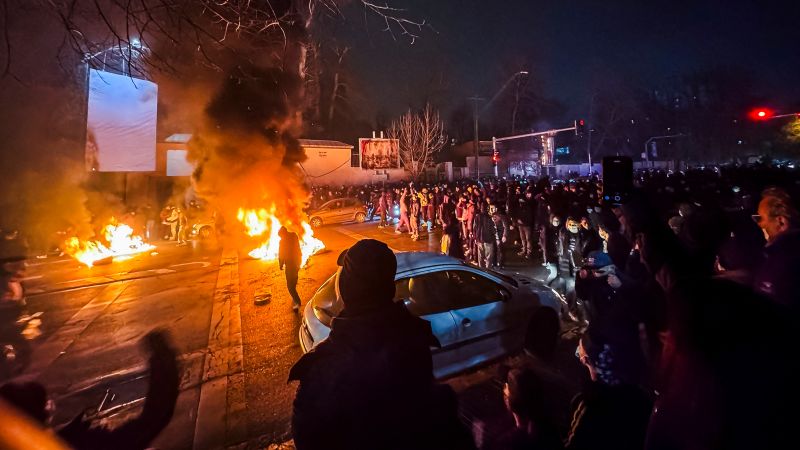
Live Updates: Iran Protesters Continue to Resist Amid Internet Blackout

The Return of a Legacy: Reza Pahlavi and the Growing Call for Monarchy in Iran
A Voice from the Past
In recent weeks, Iran has found itself in the throes of protests that echo sentiments from its tumultuous past. Among those making headlines is Reza Pahlavi, the son of the last Shah of Iran, who was ousted in the 1979 Islamic Revolution. Pahlavi has proclaimed that U.S. President Donald Trump is “ready to help” Iranian protesters facing a harsh government crackdown. His remarks come as demonstrations across Iran have intensified, with many calling for the reinstatement of the monarchy, a symbol of a pre-revolutionary order.
Chants for Change
Videos from recent protests depict demonstrators chanting fervently for the return of Reza Pahlavi. They shout slogans like “This is the last battle. Pahlavi will return,” and echo the phrase “Javid Shah” (long live the king), highlighting a growing frustration with the current regime. Other chants honor Reza Shah, the founder of the Pahlavi dynasty, indicating a palpable nostalgia for a different era.
Pahlavi’s Aspirations
Based in the United States, Reza Pahlavi has positioned himself as a de facto leader among Iranian opposition groups. He actively expresses support for the protests and calls for a coordinated, nationwide effort to oppose the Iranian government. His declaration of leadership marks a significant shift in the landscape of Iranian politics.
A Historical Perspective
Reza Pahlavi, only 16 years old when his father was ousted, has lived in exile since the revolution. Over the years, the topic of restoring the monarchy became increasingly taboo within Iran. As such, the renewed interest in the Pahlavi name is both surprising and significant.
Divisive Legacy
While Pahlavi has stepped into the spotlight as a representative of the opposition, he remains a polarizing figure. Political analysts like Arash Azizi argue that though he has emerged as a frontrunner in the opposition landscape, he struggles to unify diverse factions under his banner. His presence evokes nostalgia for some and apprehension for others, creating a complex dynamic in the current political climate.
A Reflection of Despair
Analysts suggest that the rallying around Pahlavi indicates a deeper crisis within Iran’s Islamic Republic, hinting that the regime may have reached a stalemate. Vali Nasr, a respected scholar on Iranian affairs, posits that Iranians are not embracing Pahlavi due to a sense of community or belonging; rather, they feel disillusioned, desperately seeking an alternative to their current plight.
The Symbolism of the Shah
The resurgence of Pahlavi’s name and the chants for monarchy represent more than just a longing for the past; they reveal the failures of the current governmental structure to address public grievances. This moment invites further inquiry into the nuanced relationship between the Iranian populace and the legacy of the Pahlavi dynasty.
Understanding the Movement
As the tides of protest sweep across Iran, the dialogue around monarchy, democracy, and governance resonates deeply. What drives people to call for a return to a regime long since dismantled? The answer lies in a confluence of unmet aspirations and deep-seated historical narratives that continue to shape Iranian identity.
Watch and Learn
For a comprehensive look at Reza Pahlavi’s life and significance in contemporary politics, check out CNN’s profile, highlighting how nearly 50 years post-revolution, he is once again capturing the attention of both devoted supporters and skeptics alike.
As protests evolve and the call for change gains momentum, the legacy of the Pahlavi family remains a pivotal point in understanding the complexities of Iran’s political future.
World News
Trump Update: Venezuelan Nobel Peace Prize Winner Presents Medal to U.S. President | World News

Nobel Prize Controversy: The Roche of Power and Perception
A Long-Coveted Prize
The Nobel Peace Prize has always held a prestigious position in the international community. Recently, this accolade generated waves as yet another political narrative unfolded. Donald Trump, the former U.S. president, has repeatedly declared his desire to receive the prize, declaring himself deserving for having “stopped more than eight wars.” His boasts highlight a dramatic tension between perception and reality concerning peacemaking and political machinations.
The 2022 Recipient: María Corina Machado
In October, the Nobel Committee turned the spotlight elsewhere, awarding María Corina Machado, a prominent figure in the Venezuelan opposition, for her valor in opposing Nicolás Maduro’s oppressive regime. Machado’s unwavering stance against dictatorship resonates with many who yearn for democracy and human rights in Venezuela. The choice to honor her, rather than figures like Trump, has sparked conversations about the criteria for such a prestigious award and what it signifies in the complex tapestry of global politics.
Reactions from the White House
The announcement of Machado as the winner did not sit well in the White House. Steven Cheung, the director of communications, expressed discontent, implying that the Nobel Committee had prioritized political considerations over genuine efforts for peace. This reaction underscores the inherent tensions in awarding a prize that intertwines moral righteousness with geopolitical strategies, often leading to unexpected fallout.
Machado’s Dedication
Despite the political backlash, Machado accepted the prize with grace, using the platform to not only highlight the plight of her fellow Venezuelans but also to extend gratitude toward Trump for his “decisive support.” In a notable turn of events, she even proposed sharing the prize with him, a sentiment that seemed to intrigue the former president. Trump responded favorably, calling the idea a “great honor”, thus intertwining their narratives even further.
The Nobel Committee’s Stance
However, the Nobel Committee was quick to clarify its position on such a proposition. In a recent statement, they asserted, “A Nobel Prize can neither be revoked, shared, nor transferred to others.” Their unequivocal stance emphasizes that once awarded, the decision is not subject to negotiation or reinterpretation—an uncompromising reflection of the integrity they believe the prize embodies.
Future Relations and Political Dynamics
Yet, the implications of Machado’s gesture extend beyond mere words. Following her acceptance of the prize, observers speculated whether such overtures would alter Trump’s perception of her leadership capabilities. Previously, after a US operation led to the capture of Maduro in Caracas, Trump appeared to endorse Maduro’s vice-president, Delcy Rodríguez, as a preferable successor, labeling Machado as “not respected” enough to lead the country. This criticism adds another layer to the already intricate relationship between the U.S., Venezuela, and the narrative surrounding perceived leaders.
In an age where politics and international recognition often clash, the Nobel Peace Prize remains a powerful symbol that transcends borders. The unfolding drama between Trump and Machado reminds us that accolades can sharpen ambitions but can also be mired in controversy and differing interpretations of what constitutes true dedication to peace. Each player in this unfolding narrative brings their unique perspective, intertwining their legacies with regional and global implications.

Willamette University’s Rising Star: The Full-Time MBA Program
Willamette University’s full-time MBA program has recently made headlines by ascending nine spots to rank no. 97 among more than 500 MBA programs nationwide, according to the latest U.S. News & World Report rankings. This remarkable advancement not only highlights the program’s quality but also reflects the concerted efforts of the faculty and administration to prioritize student success and educational excellence.
A Benchmark in Achievement
The recognition of Willamette’s MBA program stems from its strong performance across several key criteria: career attainment success, peer assessments, and the excellence of its student body. These benchmarks are critical indicators of an MBA program’s efficacy, and Willamette’s impressive ranking attests to its commitment to creating pathways for graduate students that lead to rewarding careers.
Leadership Vision: Meeting Change Head-On
Romana Autrey, the Dean of the Atkinson Graduate School of Management, encapsulates the essence of Willamette’s approach to business education when she states, “Atkinson meets change at full speed — and prepares students to do the same.” Under her stewardship, the school focuses on continuously innovating its programs to equip students with essential skills, such as resilience and creative problem-solving, which are indispensable in today’s fast-paced world. This forward-thinking philosophy is central to providing students with the tools they’ll need to navigate the complexities of modern business landscapes.
A Legacy of Excellence in the Pacific Northwest
The Atkinson Graduate School of Management boasts a robust legacy of excellence within the Pacific Northwest. Over the years, it has garnered national recognition as a standout institution for business education. The emphasis on experiential management education fills the curriculum with hands-on learning opportunities that prepare students for real-world challenges. This practice-oriented approach is underpinned by a strategic vision that prioritizes relevance in an ever-evolving market.
Building Connections and Partnerships
In alignment with its strategic mission, Willamette University is actively forging partnerships with major innovators and organizations across the region. These collaborations open a wealth of interdisciplinary opportunities for graduate students, enhancing the learning experience and broadening career possibilities. By leveraging these essential partnerships, Willamette is positioning its MBA students to thrive in industries that are shaping the future.
Preparing for the Future
Willamette’s curriculum is intentionally designed to address the growing demand for skills in fields such as accounting, artificial intelligence, and healthcare administration. As markets shift and new career paths emerge, the university is committed to updating its courses to ensure students are well-prepared for lucrative and evolving careers. This forward-looking approach enables students to transform their classroom projects into practical solutions for real-world issues, providing a rich resource that continues to benefit them long after graduation.
An Individualized Learning Environment
At the heart of Willamette’s appeal is its close-knit and individualized learning atmosphere. Unlike larger institutions where students may feel like just another number, Atkinson fosters meaningful connections between students and faculty. This personalized support helps to cultivate future leaders who are not only knowledgeable but also responsible and empathetic business professionals. The faculty’s dedication to mentoring students ensures that each individual has the guidance and resources necessary to succeed.
By focusing on innovation, practical experience, and individualized support, Willamette University’s full-time MBA program sets itself apart as a leading choice for aspiring business leaders. Each student’s journey through the program is uniquely tailored to provide them with the skills and networks that will serve them well in their careers.

U.S.-Iran Tensions and the Halt on Executions
In a surprising turn of events, former President Donald Trump recently communicated that he learned from sources that the Iranian regime has ceased its violent crackdown on protesters. Reports indicate that the regime has not only stopped killing demonstrators but has also halted plans for executions—actions Trump previously warned could provoke a strong U.S. military response. This announcement coincided with statements from Iran’s judiciary confirming that an imminent execution of a protester would no longer proceed.
The Case of Erfan Soltani
Erfan Soltani, a 26-year-old Iranian citizen, was initially expected to become the first protester to face execution following a series of nationwide demonstrations against the government. His case had garnered attention from the State Department and various human rights advocacy groups. However, reports from Iran’s judiciary explained that he would not face capital punishment. Although charged with “colluding against the country’s internal security and propaganda activities against the regime,” his allegations do not warrant the death penalty, as clarified by state media sources.
Reassurances from Human Rights Organizations
Human rights organizations, including the Hengaw Organization, based in Norway, stated that Soltani’s execution had been “postponed” based on information from his relatives. Amnesty International echoed this sentiment, indicating that there was no immediate plan for execution, thus providing a layer of hope for Soltani’s family and supporters. This shift in the Iranian regime’s position offers a glimmer of respite amid ongoing turmoil.
Statements from Iranian Officials
Iran’s Foreign Minister, Abbas Araghchi, also weighed in on the situation. During an interview with Fox News, Araghchi reassured the public that there would be “no hanging today or tomorrow,” reflecting a more lenient stance from the Iranian authorities. His comments seem to suggest a shift away from the previously aggressive measures that characterized the regime’s response to dissent.
Trump and U.S. Military Options
In a statement made in the Oval Office, Trump expressed optimism about the cessation of violence, declaring, “It’s stopped. It’s stopping, and there’s no plan for executions.” He has been vocal about his readiness to support Iranian protesters, reiterating that the U.S. would intervene militarily if necessary. According to U.S. officials, Trump has communicated to his advisers that any military action must result in a swift and decisive blow to the Iranian regime. However, the administration has yet to secure the necessary guarantees for such an operation.
The Dynamics of Protest and Security Response
As protests continue, the dynamics between security forces and demonstrators remain tense. Trump provided insights into the confrontations, stating, “People were shooting at them with guns, and they were shooting back.” This commentary illustrates the brutal realities faced by both sides in these conflicts and underscores the complexities involved in potential U.S. military intervention.
A Call to Action
Amid the tumultuous landscape of Iranian politics, the recent developments concerning Soltani’s case and the regime’s apparent withdrawal from executions signify a noteworthy, albeit cautious, shift. As advocacy for human rights continues to ramp up globally, the eyes of the international community remain fixed on Iran, eager for change and the preservation of dignity for its citizens.

West Midlands Police Chief Retires Amid Maccabi Fan Ban Controversy, Citing ‘Political and Media Frenzy’ – Live Updates

Israel’s Interests in Somaliland: An Analysis | Politics News

Trump Update: Venezuelan Nobel Peace Prize Winner Presents Medal to U.S. President | World News

Stakeholders Consider the Future of the Wyoming Business Council | Local News

Wall Street Divided on Leading Sector in Stock Market Performance

Trump Warns of Invoking Insurrection Act During Protests Over Minneapolis ICE Shooting

Chicago Crime: Man Stabbed in Attempted Robbery in Englewood

Evaluating the Valuation of Gorilla Technology Group (GRRR) Following the US$1.4 Billion AI Data Center Partnership Announcement

Scientists Discover a Sweet, Low-Calorie Sugar That Won’t Raise Insulin Levels: ScienceAlert

2026 Calendar for XXXX – Jamestown Sun

EXCLUSIVE: Will Smith’s Former Best Friend Bilaal Breaks Silence in Explosive Tasha K Interview — Lawsuit, Scientology Allegations, and Claims of an Attempt on His Life

Four Forecasts for 2026

Carbon Industries Group Signs Major Carbon Credit Agreements with Senegalese Government | Currency News | Financial and Business Insights

Who Is Really Voting in These Polls? The Shocking Truth Behind America’s Approval Numbers

2026 NFL Coaching Update: John Harbaugh Nearing Deal with Giants; Mike Tomlin Not Expected to Coach Next Season

Top Picks from CES 2026: Editors Select the Best Products and Technologies

Elon Musk’s Return to Politics: Why Not Explore a New Hobby Instead? | Arwa Mahdawi

Blueprint for a “Tax-Free America” That Actually Works

Wall Street Sees Modest Gains in Unsteady Start to 2026 | News, Sports, Jobs

Nvidia’s Groq Acquisition Highlights How the AI Chip Leader Leverages Its Robust Balance Sheet to Maintain Dominance

The Most dramatic cats moments ever! 😂🤣 Funny Cat Videos 2025

Jennette McCurdy shares the stories behind memoir “I’m Glad My Mom Died”

Splash Dogs Take Over The Pool…And We Love It! | Dodo Kids | 1 Hour Of Animal Videos

The Funniest Animal Videos Compilation 😹🐶 Crazy Funny Dogs That Will Make You Laugh Nonstop 🤣

#54 Funniest Cats And Dogs videos 🐶🐱 #funny #animals #cuteanimals

Hilarious Animal Videos to Make You Laugh | Funny Dog & Cat Videos

Super Crazy Pets | FUNNIEST Animals You Have Ever Seen

Funniest Farm Animals

Funny Animal Videos 2023 – Comedy Voiceover! #12😹🐶🤣

Best Of The Funny Animal Videos 😹🐶 Funniest Cat & Dog Moments Ever Recorded 🤣
-
 Entertaiment2 weeks ago
EXCLUSIVE: Will Smith’s Former Best Friend Bilaal Breaks Silence in Explosive Tasha K Interview — Lawsuit, Scientology Allegations, and Claims of an Attempt on His Life
-
 Finance2 weeks ago
Four Forecasts for 2026
-
 Finance1 week ago
Carbon Industries Group Signs Major Carbon Credit Agreements with Senegalese Government | Currency News | Financial and Business Insights
-
 Opinion1 day ago
Who Is Really Voting in These Polls? The Shocking Truth Behind America’s Approval Numbers
-
 Sports20 hours ago
2026 NFL Coaching Update: John Harbaugh Nearing Deal with Giants; Mike Tomlin Not Expected to Coach Next Season
-
 Technology4 days ago
Top Picks from CES 2026: Editors Select the Best Products and Technologies
-
 Politics1 week ago
Elon Musk’s Return to Politics: Why Not Explore a New Hobby Instead? | Arwa Mahdawi
-
 Business2 weeks ago
Wall Street Sees Modest Gains in Unsteady Start to 2026 | News, Sports, Jobs